  1. Home
  2. Space
  3. News

Virgin Galactic cleared to fly space tourists on SpaceShipTwo

Add as a preferred source on Google

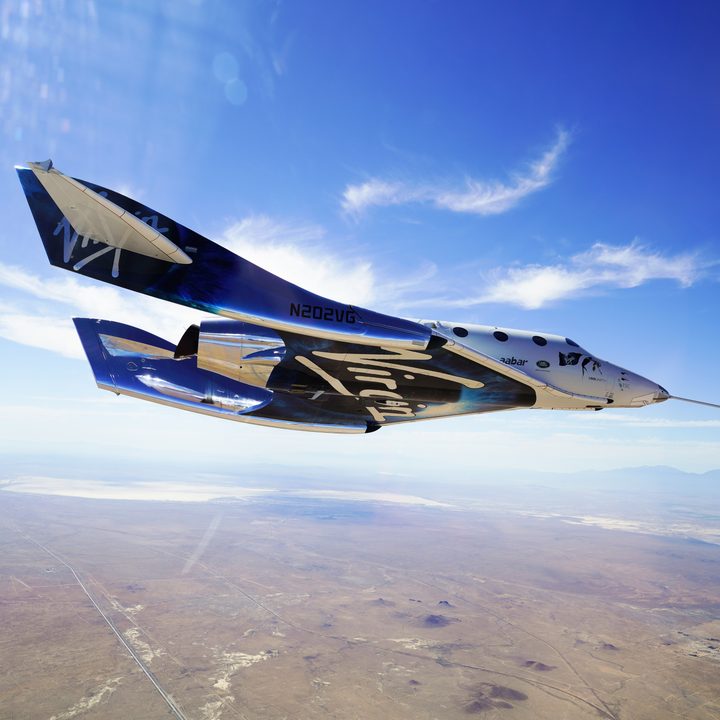
VSS Unity glides home after second supersonic flight in 2018
VSS Unity glides home after its second supersonic flight in 2018 Virgin Galactic

The age of space tourism is almost here. This week, Virgin Galactic was cleared to fly not only employees but also paying customers, on its suborbital spaceplane, the SpaceShipTwo.

Recommended Videos

“Virgin Galactic today announced that the Federal Aviation Administration (FAA) updated the Company’s existing commercial space transportation operator license to allow the spaceline to fly customers to space,” the company said in a statement. “The adjustment to Virgin Galactic’s operator’s license, which the Company has held since 2016, marks the first time the FAA has licensed a spaceline to fly customers.”

The company also announced it was aiming to perform three further test flights this summer, following a series of tests including making it to the boundary of space last month.

“We’re incredibly pleased with the results of our most recent test flight, which achieved our stated flight test objectives,” said Michael Colglazier, Chief Executive Officer of Virgin Galactic. “The flight performed flawlessly, and the results demonstrate the safety and elegance of our flight system. Today’s approval by the FAA of our full commercial launch license, in conjunction with the success of our May 22 test flight, give us confidence as we proceed toward our first fully crewed test flight this summer.”

There is currently one active SpaceShipTwo vehicle called the VSS Unity, with two more under construction. The plane travels to the border of space, which is why it is classified as a suborbital vehicle, and the plan is to accept paying customers aboard these flights in the future.

The company did not announce a date at which it plans to fly its first paying customers. But according to SpaceNews, the flights conducted this summer will include one flight for four Virgin Galactic employees, one flight including founder Richard Branson, and one flight carrying three people for the Italian Air Force.

Virgin Galactic founder Richard Branson isn’t the only CEO intending to personally test out his space tourism service. The founder of Blue Origin, Amazon founder Jeff Bezos, is also intending to participate in the company’s first crewed test flight next month.

Georgina Torbet
Georgina has been the space writer at Digital Trends space writer for six years, covering human space exploration, planetary…
China’s answer to SpaceX’s reusable rockets literally catches boosters in a net
SpaceX catches boosters on legs. China just used a net.
Ammunition, Missile, Weapon

SpaceX's playbook for recovering a rocket booster generally involves legs, a precisely controlled vertical landing, and either a concrete pad or a drone ship. 

China just managed to pull off something similar, but in a slightly different way, and on July 10, it tested the method as well.

Read more
Dimming the sun sounds unhinged, but this new study on El Niño makes a surprisingly good case for it
A natural test case, Australia's worst-ever wildfire season, suggests the idea deserves serious consideration.
Nature, Outdoors, Sky

When I first saw "scientists propose dimming the sun," I rolled my eyes. It sounds like a science fiction movie cooked up after watching many climate documentaries. But a new study, published on July 8, 2026, in the journal Science Advances, seems to have a genuinely compelling argument.

A Super El Niño is currently forming in the Pacific, feared to be the most intense in decades. It could escalate floods, wildfires, and extreme heat events worldwide. However, Researchers at UC San Diego's Scripps Institution of Oceanography, led by climate scientists Kate Ricke and Jessica Wan, are now proposing one of the most interesting solutions I’ve come across.

Read more
You can now walk through space and gaze into a black hole at this VR exhibit
Smithsonian Starstruck lets you drift past dying stars and see the origin point of the universe for as little as $18 a person.
Smithsonian Starstruck featured

Most planetarium shows ask you to sit still and look up. The Smithsonian's new VR exhibit takes a different approach, letting visitors walk through the vast expanse of the universe, drifting past stars, planets, and a black hole to get a physical sense of its true scale.

A $29 ticket to the edge of the galaxy

Read more