1. Home
  2. Space
  3. News

Virgin Galactic delays the launch of its commercial space tourism service

Add as a preferred source on Google

Virgin Galactic and Blue Origin have emerged as the two leaders in the race to launch a commercial service for sub-orbital space tourism flights.

But while Blue Origin edges toward the launch of its own service — following two successful crewed flights in three months — Virgin Galactic has revealed it is delaying its own commercial launch from the middle of next year to the final quarter of 2022.

Recommended Videos

The company, founded by billionaire businessman Richard Branson, is about to embark on an “enhancement program” to improve the vehicle performance and flight-rate capability of the two vehicles at the center of its flights: the VSS Unity spacecraft and the VMS Eve carrier aircraft.

In an apparent setback for Virgin Galactic, the company said that a recent laboratory-based test “flagged a possible reduction in the strength margins of certain materials used to modify specific joints, and this requires further physical inspection.”

It added that while its vehicles are designed to withstand forces much greater than those experienced during flight, its test flight protocols “have clearly defined strength margins, and further analysis will assess whether any additional work is required to keep them at or above established levels.”

Once all the necessary checks and enhancements have been carried out, Virgin Galactic will be ready to conduct its next test flight, Unity 23, in probably mid-2022.

Safety is always at the top of the list for such space-based endeavors, but Virgin Galactic faces extra scrutiny following the loss of a test pilot in a flight crash in 2014.

After making significant improvements to its spacecraft and performing numerous test flights over the last few years, the company flew Richard Branson to the edge of space in July.

Amazon founder Bezos rode his own rocket to the edge of space in Blue Origin’s first crewed launch just a few weeks later, and earlier this week, the company blasted William Shatner skyward, with the 90-year-old Star Trek icon becoming the oldest person ever to make such a trip.

Virgin Galactic is already taking bookings for space tourism trips, charging $450,000 per seat — a massive increase on the $250,000 asking price during an earlier phase of ticket sales.

Blue Origin is allowing people to put their name down for a flight on its rocket but hasn’t revealed how much they will have to pay for the 10-minute trip of a lifetime.

Critics have accused both Bezos and Branson of wasting money on what they see as a pointless endeavor for the super-rich, though both men claim their efforts will inspire young engineers and ultimately help to create technology that can solve problems on Earth.

Trevor Mogg
Contributing Editor
Not so many moons ago, Trevor moved from one tea-loving island nation that drives on the left (Britain) to another (Japan)…
Space is becoming Bezos and Musk’s next data center site, and we have every reason to worry
The AI boom is coming for the night sky
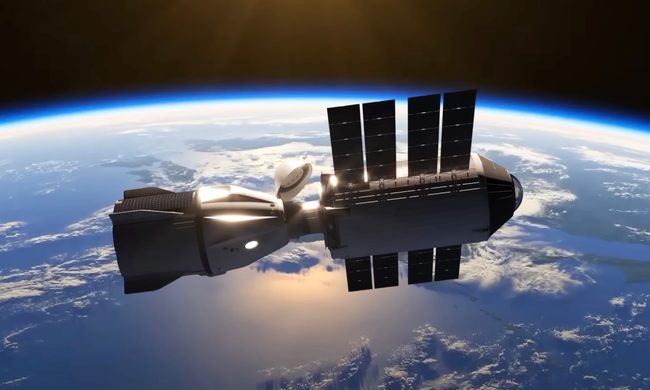
How Vast's space station will look in orbit.

AI data centers already consume vast amounts of electricity and water on Earth, so Silicon Valley has begun looking somewhere considerably more spacious... literally.

Elon Musk's SpaceX and Jeff Bezos' Blue Origin, along with several other companies, have proposed enormous constellations of satellites designed to operate as orbital data centers. However, environmental groups and former space officials are now warning that putting them into orbit at the proposed scale could have severe consequences for Earth's atmosphere and the night sky.

Read more
The first possible exomoon is here, and it makes our Moon look hilariously tiny
Scientists may have found the first exomoon, except this one is the size of Jupiter
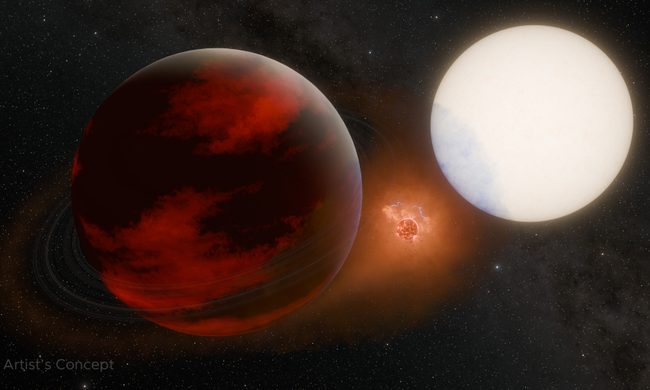
This artist’s concept depicts a potential volcanic moon between the exoplanet WASP-49 b, left, and its parent star. New evidence indicating that a massive sodium cloud observed near WASP-49 b is produced by neither the planet nor the star has prompted researchers to ask if its origin could be an exomoon.

We have already discovered more than 6,000 planets outside of our immediate neighborhood. Yet, finding a moon orbiting one of those distant worlds has proved considerably harder. Astronomers may finally have something close to the real deal, but this particular object stretches the word “moon” almost beyond recognition.

Using the European Southern Observatory’s Very Large Telescope in Chile, researchers detected strong evidence for a moon-like object in the CD-35 2722 system. Further observations are still necessary to confirm the discovery, but it could become the first confidently detected natural satellite outside our solar system. There is still one tiny complication though. This moon is apparently massive.

Read more
China’s answer to SpaceX’s reusable rockets literally catches boosters in a net
SpaceX catches boosters on legs. China just used a net.
Ammunition, Missile, Weapon

SpaceX's playbook for recovering a rocket booster generally involves legs, a precisely controlled vertical landing, and either a concrete pad or a drone ship. 

China just managed to pull off something similar, but in a slightly different way, and on July 10, it tested the method as well.

Read more