  1. Home
  2. Mobile
  3. Web
  4. Legacy Archives

United Arab Emirates set to limit BlackBerry

Add as a preferred source on Google
Image used with permission by copyright holder

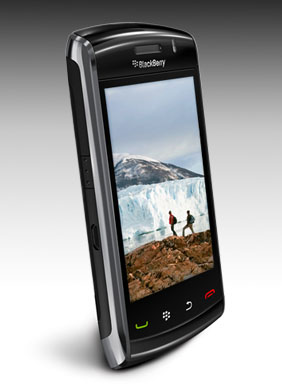
Canada’s Research in Motion has been under an increasing amount of pressure from international governments to provide security services with real-time access to encrypted BlackBerry communications. Although RIM has worked with governments to reach compromises—including likely locating BlackBerry servers within the borders of some countries rather than in overseas data centers—RIM has steadfastly maintained there is no major back door to its encrypted corporate services that it can open for lawful government access. Now, the United Arab Emirates—the country which first raised the specter of banned BlackBerry services if it couldn’t get access—is pushing ahead with restricting who is eligible to use BlackBerry encrypted services.

According to plans outlined earlier in April, the United Arab Emirates plans to restrict access to full-encrypted BlackBerry Enterprise services to companies with at least 20 user accounts. Firms and organizations with fewer accounts would be required to shift to BlackBerry Internet Service, which still provides access to email, calendaring, and other BlackBerry services, but which should be easier for authorities to monitor since the traffic moves over the standard Internet rather than via encrypted communications to gateway services.

Recommended Videos

Last year, the United Arab Emirates threatened to bar BlackBerry services entirely, claiming RIM’s practice of storing messages and other information in offshore data centers was illegal. Emirati mobile operator Etisalat sent notices to BlackBerry subscribers requiring them to install an “update” to access new features; RIM later identified the “update” as spyware that enabled Etisalat to monitor BlackBerry communications. A few months later, RIM reached an undisclosed arrangement with the UAE that enabled BlackBerry services to continue operation.

Governments’ concern over fully-encrypted communications provided by BlackBerry Enterprise stems from the possibility terrorists or militants could use the services to securely plan attacks and other destabilizing actions. Governments are demanding the ability to access mobile communications lawfully—in real time or near-real time—in order to combat potential threats. However, free speech and human rights activists have noted that many of the governments seeking access to secured services also suppress political speech and other content they deem harmful or blasphemous, and note that government access to secured communications could be used as a tool of repression. A back door to secured communications could also be accessed by clever attackers, or abused by corrupt officials.

RIM and other major Internet operators—like Nokia, Google, and Skype—face similar concerns in a number of countries, including India.

Geoff Duncan
Former Contributor
Geoff Duncan writes, programs, edits, plays music, and delights in making software misbehave. He's probably the only member…
Topics
The best note-taking apps for iOS and Android
I tested these apps for months so your notes never have to switch homes again.
iPhone showing note-taking apps

Choosing a note-taking app is not easy. What note-taking app you choose depends on your needs, the platform you use, and of course, the cost. The process becomes even more complicated as it seems that there’s a new shiny app released every other week. 

That’s why I always suggest choosing a note-taking app that has all the features you need and can last you for a long time. Also, don’t chase new apps. The real power of a note-taking app comes when all your notes live in one place, making it easy to spot connections between them.

Read more
The best phones in 2026: our 14 favorite smartphones right now
We tested phones across all price brackets so that you can make the best pick based on your needs and budget.
Google Pixel 10 Pro Fold vs Galaxy Z Fold 7 cameras

Choosing the right smartphone in 2026 is no easy task. Apple and Android manufacturers now have strong options at almost every price, while better cameras, longer battery life, improved software support, new AI features, and more refined foldable designs have made the market more competitive than ever. But picking one is not easy, especially if your budget is tight, or you are just legitimately concerned about getting the best value for your money and need a reliable daily driver for long-term usage.

We have tested and compared the leading smartphones available today, looking beyond the spec sheet to see how they actually perform in daily use. Camera quality, battery life, performance, display quality, software, design, and long-term value all play a part in our recommendations. Whether you are looking for a powerful flagship, a dependable budget phone, a compact device, or a foldable, this guide should help narrow down your choices.

Read more
Snapchat Planets Meaning: Order, Rankings, and How Friend Solar System Works
Snapchat Planets turns your best friends list into a solar system, and yes, your orbit says a lot
Snapchat Planets being shown on the Snapchat app on iPhone.

Snapchat+ includes several exclusive features, but few have generated as much curiosity as Snapchat Planets. Part of the app's Friend Solar System, it transforms your Best Friends list into a planetary ranking, assigning each of your top eight friends a planet based on how often you interact.

From Mercury, which represents your closest friend, to Neptune, which represents your eighth closest, the system offers a quick visual snapshot of your interactions. But what do the different planets actually mean, and how does Snapchat decide who gets which one?

Read more