1. Home
  2. Computing
  3. Trash
  4. News

This SSD is one of the fastest we’ve seen, but you probably can’t use it

Add as a preferred source on Google

Significantly faster SSDs will become available in 2022 thanks to the impending arrival of the PCIe 5.0 standard, and with CES around the corner, one company has teased its first PCIe Gen 5 M.2 SSDs.

Adata, a Taiwanese memory and storage manufacturer, confirmed its presence for CES 2022, an upcoming technology conference where companies showcase their latest products. Adata in particular will unveil product lines ranging from DDR5 memory to gaming peripherals.
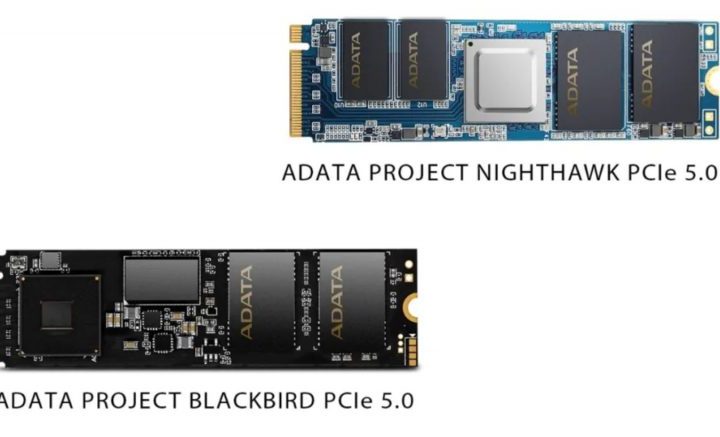
Two PCIe 5.0 SSDs from Adata.
Image used with permission by copyright holder

Another product it will introduce at the event on January 5 is its PCIe 5.0 solid-state drives. Specifically, Adata will present two PCIe Gen 5 SSD prototype samples, Project Nighthawk and Project Blackbird.

These SSDs will be capable of sequential read bandwidth speeds up to 14GB per second and write speeds up to 12GB/s. Additional models featuring read speeds of 12GB/s and 10GB/s were also mentioned in the press release.

Both M.2 SSDs will be based on the NVMe 2.0 standard, which is the most popular interface technology used by SSDs. In addition to utilizing the PCIe Gen 5 x4 interface, the drives will offer a capacity of up to 8TB.

As VideoCardz points out, there is no desktop platform currently available that is compatible with M.2 PCIe Gen 5. The only exception is the primary PCIe Gen 5 x16 slots found on the LGA1700-based Intel Z690 motherboards. Therefore, a PCIe to M.2 adapter would be necessary for Adata’s PCIe Gen 5 storage to function. Motherboards that directly support M.2 Gen 5 slots will most likely become available throughout 2022.

With the launch of Intel’s 12th-gen Alder Lake processors, the latest generation of technology for PCs has ushered in both the DDR5 and PCIe 5.0 standards. It’s not surprising then that companies have begun to reveal products that will support the latest protocols. Samsung, for example, has teased PCIe 5.0 SSDs that are set for a launch during the second quarter of 2022.

Kioxia, meanwhile, has also shown its own PCIe 5.0 prototype SSD that reaches 14 GB/s of sequential read speed, as well as a write speed of 7GB/s. Thanks to the new standard, the drive offers more than a 100% increase in read speeds, in addition to 67% faster write speeds over the Gen 4 PCIe standard.

Due to the substantially higher speeds, expect SSD coolers to become more prevalent. Most recently, ElecGear released an M.2 2280 SSD cooler that lowers the temperatures of high-end SSDs by up to 25 degrees Celsius.

Zak Islam
Former Contributor
Zak covers the latest news in the technology world, particularly the computing field. A fan of anything pertaining to tech…
Gemini Notebook’s new Collections arrive just as Google turns it into a bigger workspace
Google is cleaning up notebook organization as the former NotebookLM expands across Gemini and Search
Gemini Notebook branding on a MacBook

Google has barely finished renaming NotebookLM, and it’s already addressing one of the headaches that comes with building a large research library.

Collections are rolling out to all Gemini Notebook users, giving them a way to group related notebooks while keeping everything visible under My Notebooks. The dashboard gets some structure without asking users to rearrange the library they’ve already built.

Read more
Samsung’s humanoid robot ambitions are real, but factories come first
Samsung’s new robotics division has humanoids in its sights, although its immediate business is far more practical factory automation
Robot Touch Human Finger

Samsung wants a place in the humanoid race, but its new robotics push begins with machines built for factories rather than homes.

The CEO-led RX robotics division will initially focus on manufacturing robots. Samsung has separately identified humanoids as a priority, although it hasn’t announced a commercial model or explained where one fits into the division’s immediate plans.

Read more
WhatsApp’s Liquid Glass redesign is finally coming to Mac after months of waiting
WhatsApp's Mac app is getting Apple's Liquid Glass-inspired makeover
WhatsApp

WhatsApp has been steadily adopting Apple's new design language across its apps, but Mac users have largely been left watching from the sidelines. That is finally beginning to change.

The messaging platform has started rolling out its Liquid Glass redesign for the WhatsApp Mac app, bringing the desktop experience much closer to what iPhone and iPad users have been seeing over the past few months. The update introduces a refreshed interface with redesigned navigation elements, updated menus, and a cleaner layout that aligns with Apple's latest software aesthetic. According to WABetaInfo, the rollout has begun through the latest Mac App Store update and is currently reaching a limited number of users.

Read more