I’ve always loved 4D theaters. There’s a cheap thrill in having plastic cable ties feel like a rat’s tail on the back of your ankle, or a sprinkle of water translating into a spray of spider venom. The marquee feature of a 4D theater, however, is a vibrating recliner.
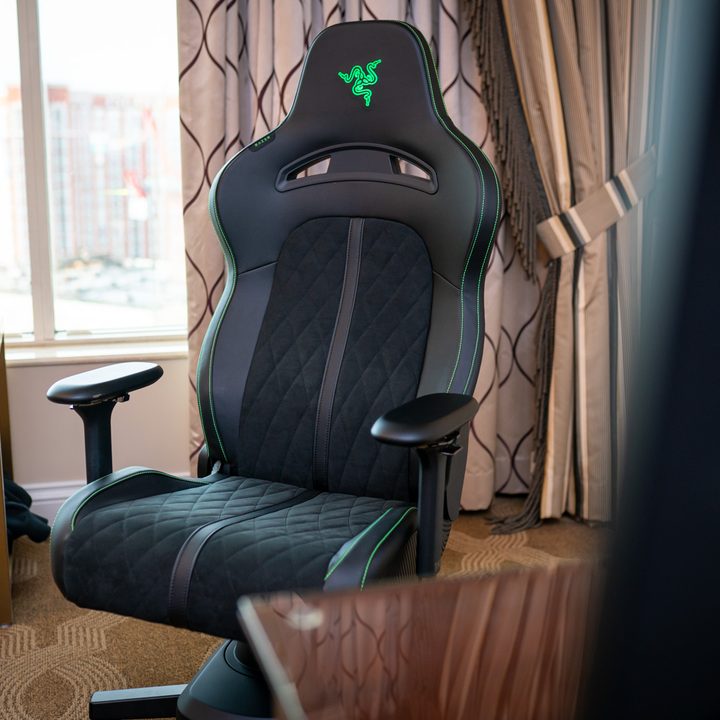
Razer wants to not only bring that experience into your home, but the company wants to do so with all form of media. Announced at CES 2022, Enki Pro HyperSense is a chair with haptic feedback, and it has more connections to the 4D theater experience than you may think.
Razer worked with D-Box — a company known for making feedback systems in racing simulator rigs, movie theaters, and everything in between — to bring HyperSense haptics to the Enki Pro chair design. After spending some time with it, I’m confident that it’s more than marketing hype.
More than haptics
I tried out Razer’s Kraken V3 HyperSense headphones a few months ago, and I wasn’t too impressed. Sure, the immediate feeling of headphones vibrating is novel, but the experience quickly turns into low-pitched voices vibrating the earcups and sonic booms not registering at all.
That’s because the headphones use a threshold where audio triggers the haptics. The Enki Pro HyperSense uses something different. It doesn’t just vibrate; it presents over 65,000 haptic feedback variations and direct integration with games and movies.
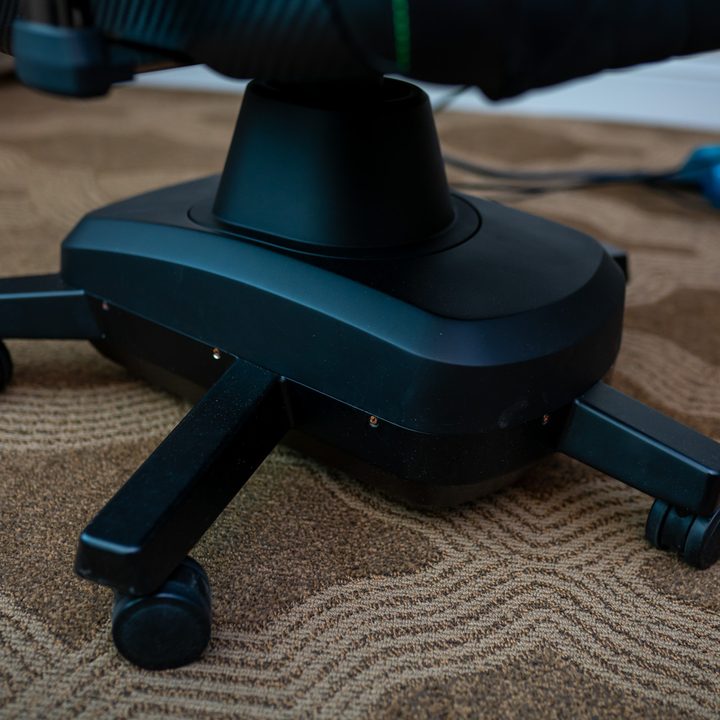
The haptics come through a motor on the bottom of the chair, designed by D-Box. It vibrates, but that’s selling what D-Box can do vastly short. Each vibration feels unique, and Richard Laberge, Vice President of Gaming and Technology Partnerships at D-Box, tells me that audio designers can stack 30, 40, or even more unique vibration tracks on top of each other.
My demo consisted of two movie trailers, two gameplay demos, a relaxing starry night, and some free time in Forza Horizon 5. The two movie trailers were nothing exciting. Car or building goes boom, chair juts forward, and it’s done. There’s more going on with movies, but trailers for Black Widow and Fast 9 don’t lend themselves to dynamic range.
The starry night demo changed everything. For this, I watched a starry night with some relaxing music in the background. There was never a distinct vibration. The chair just slowly rocked back and forth with the smallest tingle here and there. Honestly, I would’ve thought my mind was making up the movement if I didn’t know what I was in for.
I wanted to fall asleep, to meditate, to do something. It was calming in a way that I never anticipated out of an RGB-ridden gaming chair that can vibrate on explosion queues in video games. D-Box understands haptics, but more importantly, it understands how they can make you feel.
I’m not above some butt-shaking explosions, though. Assassin’s Creed Valhalla was an interesting game to see in action. Each hit produced a different sensation — not just between weapons, but between which type of attack was being performed.
I wasn’t too impressed at first, but then the main character jumped into the water. The vibrations got tighter and less intense, mimicking the feeling of swimming. And when the camera panned up to Raven, I could feel the resistance of the wind as they pierced the bird’s feathers.
Nothing compares to the feeling of movement in the Enki Pro HyperSense.
D-Box has made a name for itself in the racing simulator scene for a good reason. Forza Horizon 5 was the most enjoyable part of the demo. Each piece of terrain produced a different feeling. Sand, for example, came with a tugging sensation, water produced what felt like waves in the chair, and rocks almost jiggled my body out of the seat.
None of that compares to the feeling of movement. When I jumped off a tall cliff, the chair moved forward on my descent, inflicting a minor amount of g-force to make me feel like I was falling. The chair is capable of one g-force, either positive or negative. That’s too much force, but subtle movements still have an impact.
I entered my Enki Pro HyperSense demo with the gimmick of the Kraken V3 HyperSense in the back of my mind — neat, but not revolutionary or necessary. The Enki Pro HyperSense still isn’t revolutionary or necessary — it’s a vibrating gaming chair, after all — but it goes far beyond being neat. It has a massive range that can make bombastic action blast off of the screen and slowly soothe your body in the same breath, and that’s impressive.
The chair itself
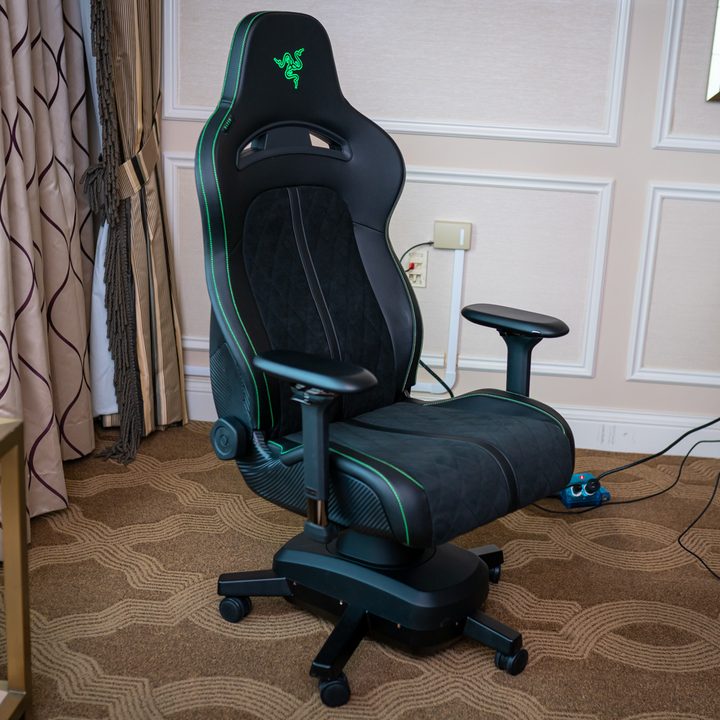
The D-Box module is worth nothing if it’s strapped onto a bad gaming chair. Thankfully, the Enki Pro HyperSense is a great gaming chair. It’s wider than normal, with a flat seat on the bottom and a slight curve toward the shoulders.
It feels great to sit in, with built-in lumbar support propping up your back. It’s more comfortable than the standard gaming chair you’d find on Amazon, but it’s far from ergonomic. The armrests are stiff and uncomfortable — par for the course with gaming chairs — and there isn’t a headrest.
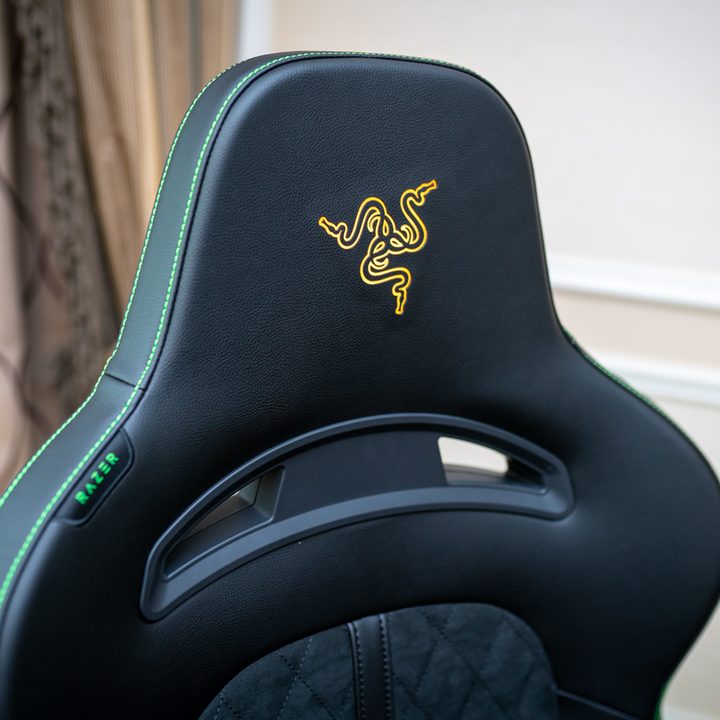
The Enki Pro HyperSense makes up for that in looks. At the top, there’s a Chroma-enabled Razer logo. It’s remarkable, seeing an RGB color wave floating in the middle of fabric. It’s not warm or uncomfortable, either — it just feels like a chair.
There’s an issue with this design, though, despite how great the HyperSense experience is. The lighting and haptics require power, so you need to keep the chair plugged in for it to work. Not only does that mean a long cable, but it also likely means rolling over the cable as you move.
The price of immersion

The Enki Pro HyperSense is great. It’s far and above anything Razer has ever done with HyperSense before, and the chair is comfortable to sit in (even if it falls into the same traps as similar gaming chairs).
There’s a trade-off for those positives, though. The chair is heavy as can be thanks to the D-Box module, and it requires separate power, adding yet another cord in a setup that’s likely filled with them.
For gamers and movie lovers that want as much immersion as possible, the Enki Pro HyperSense is the answer. That’s me, and I love the chair. I also love the thrill of a 4D theater, inconveniences and all, and that’s what the Enki Pro HyperSense offers.