EVGA had a truckload’s worth of GPUs stolen in October 2021, and no, the stolen goods have shown up on the market. But they didn’t surface through sketchy eBay listings or Facebook Marketplace offers — they came from a well-known Vietnamese retailer.
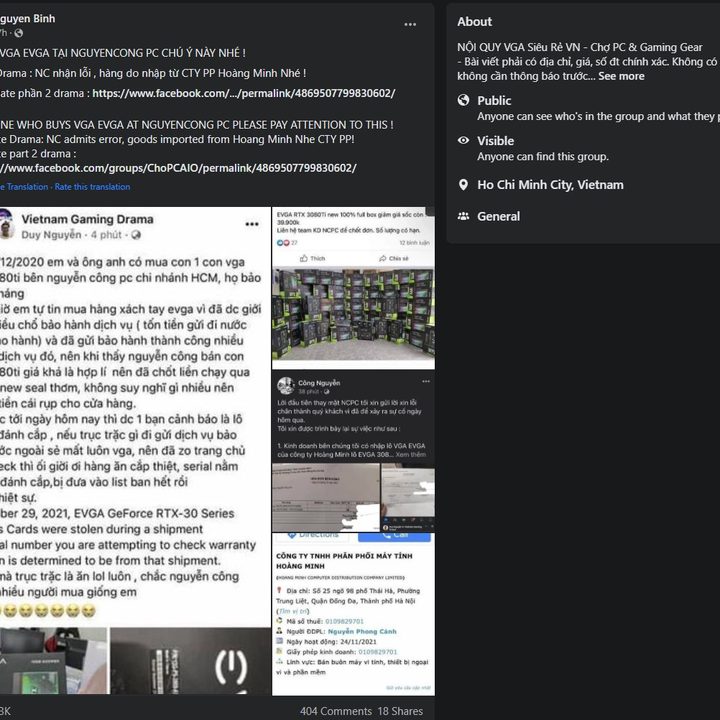
Someone named Duy Nguyen purchased an EVGA RTX 3080 Ti from Nguyn Cong Computer in January, shortly after the retailer advertised a large sale of EVGA graphics cards. They came with one strange condition, though: Only a one-month warranty. Nguyen purchased a card anyway, and when registering it with EVGA, he was met with this message:
“On October 29, 2021, EVGA GeForce RTX 30-series Graphics Cards were stolen during a shipment. The serial number you are attempting to check warranty status on is determined to be from that shipment.”
Following the heist in October, EVGA product manager Jacob Freeman shared on the EVGA forums that the company wouldn’t honor warranty or support claims on the stolen cards. The company set up a dedicated email address for any information related to the heist. We don’t know how many cards were stolen, but EVGA confirms that they list for anywhere from $330 to $1,960.
The sale wasn’t in bad faith, according to Nguyn Cong Computer. On Monday, the company apologized and explained the situation, saying that the one-month warranty was a stipulation of purchase and that the cards came from a supplier known as “Hoang Minh.” The company said it had no prior knowledge of the stolen GPUs and said it would recall the sold units.
The rabbit hole may go deeper, though. Nguyn Cong Computer contacted its supplier, who said it would take full responsibility for the incident, suggesting that the stolen batch of cards were sold further up the supply chain. Given the fallout from the GPU shortage, it was been difficult to for retailers to keep GPUs in stock, leading to a long chain of suppliers before cards reach their final destination.
It’s still not clear who stole the graphics cards or how they made their way to Vietnam. In all likelihood, a chain of suppliers created a telephone game situation where the origin of the cards was obfuscated, leading to a well-known retailer — with tens of thousands of followers on Facebook and YouTube — selling stolen goods.
EVGA hinted that it would pursue legal action in its original forum post, listing California state and federal laws that banned the sale or possession of stolen items. Given where the cards ended up, however, a lawsuit seems unlikely, especially considering how many suppliers were involved in getting the cards to Vietnam.
Unfortunately, this isn’t the first case of stolen graphics cards we’ve heard about. About $8,000 worth of graphics cards were stolen from an internet café in June 2021, and in April, Hong Kong police intercepted about 300 graphics cards being smuggled into the U.S. from China.