Rumors have been swirling lately that Apple is planning to ditch the physical SIM card on upcoming iPhone models — a transition that could happen as soon as this fall, when we’re expecting to see the iPhone 14 released.
However, while many analysts believe that such a move is inevitable, most agree that it’s probably not going to happen all at once. There are simply too many moving parts in the mobile industry for Apple to make a unilateral decision and move its entire series to eSIM.
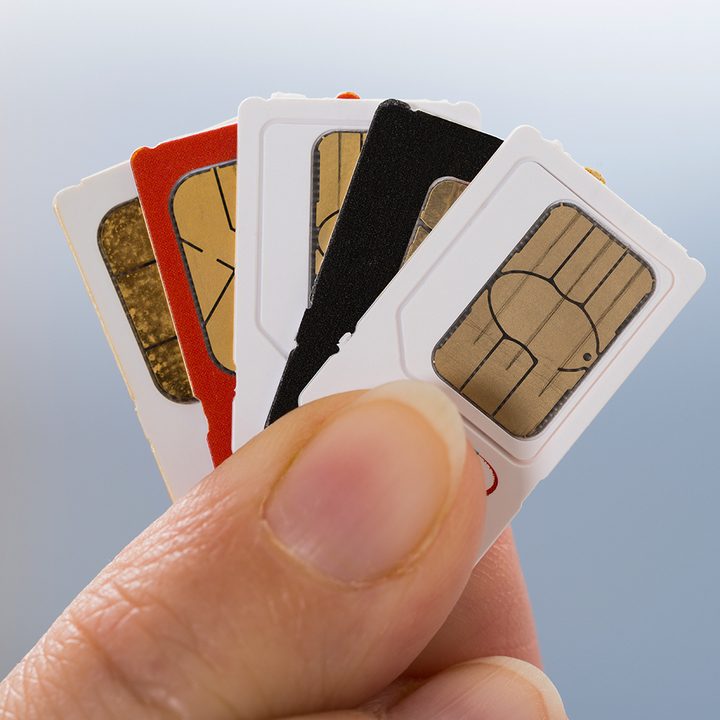
According to one analyst, Emma Mohr-McClune of GlobalData, Apple can’t afford to “take the ‘big-bang’ approach,” and try to force all users over to eSIM technology. Mohr-McClune believes that Apple may very well have an eSIM-only iPhone model available this year, but cellular carriers will be given the choice as to which version they want to sell and support.
Apple and eSIM
Apple is clearly inching closer to an eSIM-only iPhone, but the company is also taking its typically pragmatic and cautious approach, so Mohr-McClune’s analysis isn’t particularly surprising. When it comes to eSIM technology, Apple has effectively been leading from behind for a few years now. It quietly introduced eSIM on the iPad in 2016, and it’s also behind the cellular-capable Apple Watch models that were introduced the following year.
Of course, eSIM became a much bigger deal when the iPhone XS and iPhone XR came along in 2018, since the technology also powered a new Dual SIM feature. This allowed the use of two phone lines on an iPhone for the first time by combining a physical SIM card and an eSIM.
Last year, Apple took that a small step further, adding the ability to use two eSIM cards in the iPhone 13 lineup. This allows iPhone owners to use Dual SIM capabilities without the need for a physical SIM card at all. The use of eSIM has gradually been increasing in popularity since the iPhone XS/XR models first embraced it in 2018, and today all the major North American carriers fully support it. Apple even offers a way to transfer your physical SIM card over to an eSIM.
Trouble in the Chinese market
Despite this, there’s still one important market in which eSIM hasn’t really taken off. Even today, Apple makes iPhone 13 models with two physical SIM cards for sale in China mainland, Hong Kong, and Macao. Interestingly, the iPhone 13 Mini — and iPhone 12 Mini before it — are a special case here, with the normal eSIM versions of those sold in Hong Kong and Macao, but not in mainland China.
Apple has a long history of producing different iPhone models for different markets, even aside from the dual-SIM situation in China. Different cellular frequencies and carrier requirements have created a situation where there are already at least four different versions of each iPhone 13 model, each sold in different countries. With that in mind, it’s reasonable to assume that if an eSIM-only iPhone 14 is in the works, it will almost certainly be released alongside more traditional versions that still use at least one physical SIM card.
But no doubt about it, eSIM is coming, and Mohr-McClune says that carriers need to be ready for it: “Telcos need to prepare carefully for such an eventuality, boosting their own internal eSIM support tools and general marketing and support readiness, as well as improving their own eSIM onboarding and anticipating aggressor eSIM-support ‘test pilot’ promotion, such as the ones we’ve seen recently in the U.S. from T-Mobile and Verizon’s Visible.”