Windows 11 has been around for nearly a year, but the debate on how it stands up against Windows 10 is still going strong. That’s why custom computer builder Puget Systems revisited that very topic, with the results finding that Windows 11 might pull ahead of Windows 10 in one key area.
This one key area involves content creation, and Puget Systems detailed that in several tests, Windows 11 made gains over Windows 10 in the last year. Those gains are mainly due to monthly Windows 11 patches, and the launch of new CPUs. Yet Windows 10 also performed faster in some tests, too, where the hardware running the tests were the same.
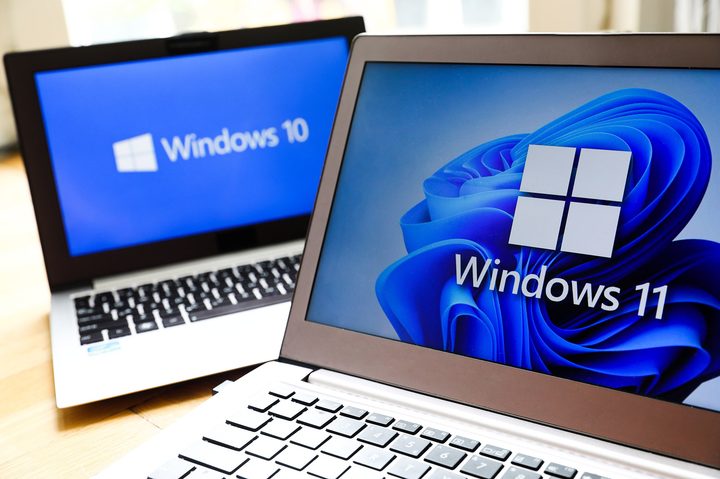
At the end of the results, it was discovered that Windows 11 doesn’t have as many performance issues in terms of content creation as it did when it first launched. It also wasn’t a clear winner over Windows 10 in most cases. That is because Windows 11 performed better in some tests but Windows 10 was also doing the same in other tests. It’s more of a draw between the two, according to Puget Systems.
“If you are a content creator and are looking for a completely generic answer about which OS to use, it would have to be ‘it doesn’t matter.’ The nuance of it is much more complicated, however,” said Matt Bach, a senior lab technician at Puget Systems.
So, what is the nuance of those sample tests? Well, Puget System tested both Windows 10 and Windows 11 on systems with AMD and Intel CPUs. For video-editing tests, tit also used programs like Premiere Pro, After Effects, and DaVinci Resolve Studio. Photo editing involved using Photoshop and Lightroom Classic. CPU rendering used Cinema 4D, V-Ray, and Blender. GPU rendering used Octane, V-Ray, and Blender, and game development used Unreal Engine.
In those tests, there were only three major outliers. The first is Premiere Pro, where Windows 10 had a small advantage over Windows 11. With the second, V-Ray CUDA mode, Windows 11 was 20% faster than Windows 10. Third was with Unreal Engine, and Windows 11 had a massive performance gain over Windows 10 with the Intel Core i9 processor, though this could be due to a bug.
As we detailed in our comparison, it looks as though the difference between Windows 10 and Windows 11 might just come down to look and feel. Everyone has their own taste, and based on Puget Systems test results, Windows 11 doesn’t have as huge a performance advantage over Windows 10 as Microsoft wants you to think.