In what is the first significant expansion since pausing new construction in late 2016, Google recently detailed future plans to bring its Fiber internet services to more regions. The company now says it is planning to deliver high-speed internet through Google Fiber to five new states, specifically Arizona, Colorado, Nebraska, Nevada, and Idaho.
According to Google Fiber’s Dinni Jain, Google has been busy the past several years behind the scenes. In a blog post, Jain mentioned the teams have been focusing on the Google Fiber vision and have been looking at refinements to service delivery and products. Jain also said the Google Fiber team traveled across the United States and had conversations with elected officials to bring internet to businesses and residents “as quickly as possible.”
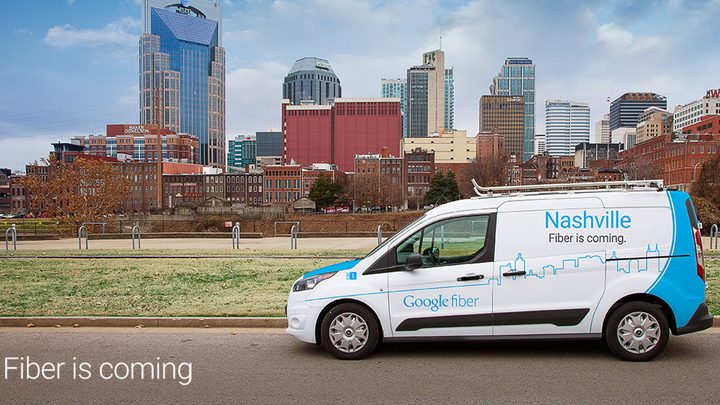
Though there’s no specific date for when services will come online, the focus of expansion in the next several years will be Arizona, Colorado, Nebraska, Nevada, and Idaho. In addition, Google Fiber will expand in current metropolitan areas, too. At the same time, Google is considering working with officials so that communities can build their own fiber networks, as already seen in the cities of Huntsville, Alabama, and West Des Moines, Iowa.
“At no time in Google Fiber’s history has that ever been more important than today. We’re living in a world that has finally caught up to the idea that high-speed, reliable internet — at gigabit speeds — is no longer a bold idea or a ‘nice to have,'” said Jain.
It has been a rough decade for Google Fiber since it launched back in 2012. As noted by Ars Technica, initial rollouts of Google Fiber were limited, prices were a bit high in some cities without competition, and the service was fully cut in Louisville, Kentucky at one point.
Dinni Jain told Reuters that Google Fiber that the team is prepared to “add a little bit more build velocity,” so there seems to be plenty of new promise in this promised new rollout. It should be clear though, that Google Fiber isn’t planning to come to the entire United States. Jain told Reuters “‘No, we are not trying to build the entire country.”
According to a map on the Google Fiber website, the service is available in 19 different cities across 13 different states. The service is a mix of Webpass and Fiber, Webpass being a wireless method of providing internet without putting down fiber optic cables.