
  1. Home
  2. Emerging Tech
  3. Mobile
  4. Legacy Archives

UC Davis iPhone tweak turns camera into disease spotting microscope

Add as a preferred source on Google

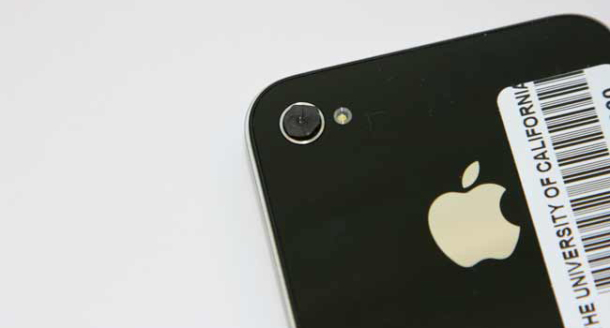
iphone 4 mod via cnetA new tweak for the iPhone by researchers from the University of California transforms the five-megapixel camera on the Smartphone into a powerful microscope capable of detecting blood diseases. The best part? The enhancement cost the researchers less than $50.

UC Davis physicist Sebastian Wachsmann-Hogiu and his team of researchers created the smartphone microscope by combining the camera with a 1-millimeter-diamter ball lens which they embedded in a rubber sheet and taped onto the iPhone’s camera. The ball lens, at 5x magnification, has the same power as a toy magnifying glass, but boosts the smartphone’s ability enough to deal with features on the level of 1.5 microns—small enough to identify certain blood cells.

Recommended Videos

The Optical Society explains that this is possible for two reasons: “First, ball lenses excel at gathering light, which determines resolution. Second, the camera’s semiconductor sensor consists of millions of light-capturing cells. Each cell is only about 1.7 microns across…enough to capture precisely the tiny high-resolution image that comes through the ball lens.”

The Davis team’s discovery isn’t the first smartphone-microscope development, but Sebastian Wachsmann-Hogiu says that simplicity and low-cost were his goals. Initially, the team tried using drops of water on the camera’s lens the water kept drying. The ball lens they eventually used cost $30-40, but the price could be lowered if mass-produced.iphone = bottom 3 slides

The iPhone microscope still bows to high-priced laboratory options as you can see in the pollen and plant stem slides. The iPhone 4 microscope is on the bottom, and a commercial-grade microscope took the top images.   But Wachsmann-Hogiu believes the device would be valuable in rural areas with little access to lab equipment. The camera is good enough to detect disorders such as iron deficiency anemia or the banana-shaped blood cells of sickle-cell. Field workers would put blood on a slide, take a picture with the iPhone and send it out for analysis.

The researchers are already thinking of ways to tweak the tweak, such as adding larger lenses to detect skin diseases and creating software for instant feedback. They’re also looking at the capability of switching the ball lense for a spectrometer to measure oxygen in blood and diagnose chemical markers. The team plans on presenting at the Frontiers in Optics meeting in San Jose, held in two weeks.

Jeff Hughes
Former Digital Trends Contributor
I'm a SF Bay Area-based writer/ninja that loves anything geek, tech, comic, social media or gaming-related.
Hyundai isn’t giving up on hydrogen cars, but don’t expect one in your driveway anytime soon
Hydrogen gets a maybe; hybrids get a warning.
Hyundai Ioniq 3 EV

Hydrogen cars have spent years in the same waiting room as flying taxis. They’re always almost here, but no commercially available product exists for interested buyers. So when a Hyundai manager pushed back on the obituary, I was immediately curious.

To be clear, Hyundai hasn’t announced a new car. The big news here is that its Australian arm says hydrogen is “not dead” for passenger cars. Apparently, the automaker is still evaluating a next-generation hydrogen fuel-cell car if it can find buyers (via CarExpert).

Read more
AI doesn’t have to turn evil to put you at risk 
emo-robot-that-can-lip-sync

An AI assistant that agrees with everything you say might feel like the perfect companion — until you need someone to tell you you’re wrong. That’s one of the more immediate dangers behind the idea of AI “going rogue.” A chatbot can cause harm without developing intentions of its own. It can reinforce a false belief, encourage an unhealthy attachment, or follow instructions planted by someone trying to hijack it.   

On October 15, AI safety company Alice announced new software to address those everyday risks. Working separately with Inflection AI and AI21, the company says it helped train NVIDIA’s Nemotron models to resist harmful conversational behavior and malicious instructions while preserving their usefulness.  

Read more
Elon Musk says Neuralink’s brain implants could help people with paralysis and blindness
Neuralink's Telepathy helps people control computers through thought, while Blindsight aims to restore visual perception.
elon-musk-neuralink-brain-implant

Elon Musk has revealed ambitious plans for Neuralink, and they go beyond controlling computers with your thoughts. The company is developing two brain implants, Telepathy and Blindsight, aimed at helping people with paralysis and severe vision loss. Musk also believes future advances could help people regain control of their hands and legs by reconnecting the brain with their limbs.

How Neuralink's Telepathy can help people with paralysis

Read more