1. Home
  2. Space
  3. News

NASA declares Mars InSight lander mission officially over

Add as a preferred source on Google

Just over four years after reaching Mars, NASA has officially announced the end of its InSight lander mission.

The declaration came on Wednesday, December 21, after NASA failed to make contact with the lander across two consecutive attempts, leading the mission team at the Jet Propulsion Laboratory (JPL) to conclude that InSight’s solar-powered batteries had run out of energy, a state referred to as “dead bus.”

Recommended Videos

InSight — short for Interior Exploration using Seismic Investigations, Geodesy, and Heat Transport — had been gradually losing power due to a build-up of dust on its solar panels.

Earlier this week, NASA posted the final image (below) beamed back to Earth by InSight. It shows the lander’s wind and thermal shield that protected some of the robot’s science instruments.

A view from NASA's InSight lander showing its wind and thermal shield covering some of its science instruments.
The final image from NASA’s InSight lander, showing the wind and thermal shield covering some of its science instruments. NASA

And on Wednesday JPL tweeted a final message:

Rest easy, little lander ❤ @NASAInSight's mission has ended after more than four years of detecting marsquakes, meteoroid impacts, and unique science on Mars. Congratulations – and thank you – to the team that made these pioneering discoveries possible. https://t.co/MCRzWYFSMd pic.twitter.com/GJkVI88CWi

— NASA JPL (@NASAJPL) December 21, 2022

During its time on the Martian surface, the lander uncovered details about Mars’ interior layers, its liquid core, the variable remnants under its mostly extinct magnetic field, and the weather on Mars. It also achieved the first detection of seismic activity on another planet and even recorded a marsquake caused by a meteor strike. You can dive into the details of the mission’s achievements on NASA’s website.

Sharing thoughts on what has been deemed a very successful operation, Thomas Zurbuchen, associate administrator of NASA’s Science Mission Directorate, said: “I watched the launch and landing of this mission, and while saying goodbye to a spacecraft is always sad, the fascinating science InSight conducted is cause for celebration. The seismic data alone from this Discovery Program mission offers tremendous insights not just into Mars but other rocky bodies, including Earth.”

Bruce Banerdt, the mission’s principal investigator, commented: “We’ve thought of InSight as our friend and colleague on Mars for the past four years, so it’s hard to say goodbye. But it has earned its richly deserved retirement.”

Trevor Mogg
Contributing Editor
Not so many moons ago, Trevor moved from one tea-loving island nation that drives on the left (Britain) to another (Japan)…
Space is becoming Bezos and Musk’s next data center site, and we have every reason to worry
The AI boom is coming for the night sky
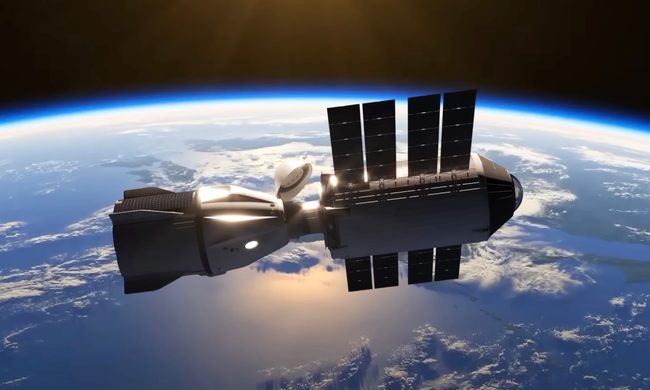
How Vast's space station will look in orbit.

AI data centers already consume vast amounts of electricity and water on Earth, so Silicon Valley has begun looking somewhere considerably more spacious... literally.

Elon Musk's SpaceX and Jeff Bezos' Blue Origin, along with several other companies, have proposed enormous constellations of satellites designed to operate as orbital data centers. However, environmental groups and former space officials are now warning that putting them into orbit at the proposed scale could have severe consequences for Earth's atmosphere and the night sky.

Read more
The first possible exomoon is here, and it makes our Moon look hilariously tiny
Scientists may have found the first exomoon, except this one is the size of Jupiter
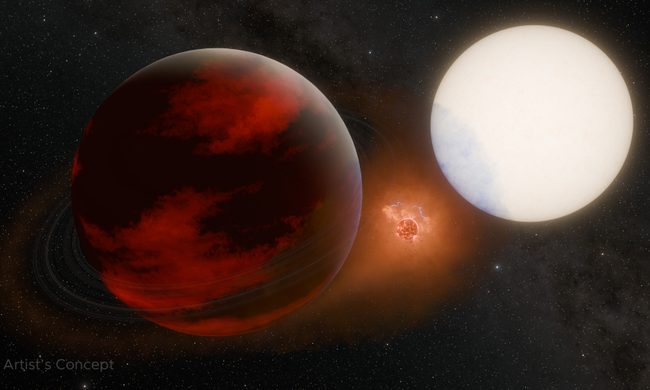
This artist’s concept depicts a potential volcanic moon between the exoplanet WASP-49 b, left, and its parent star. New evidence indicating that a massive sodium cloud observed near WASP-49 b is produced by neither the planet nor the star has prompted researchers to ask if its origin could be an exomoon.

We have already discovered more than 6,000 planets outside of our immediate neighborhood. Yet, finding a moon orbiting one of those distant worlds has proved considerably harder. Astronomers may finally have something close to the real deal, but this particular object stretches the word “moon” almost beyond recognition.

Using the European Southern Observatory’s Very Large Telescope in Chile, researchers detected strong evidence for a moon-like object in the CD-35 2722 system. Further observations are still necessary to confirm the discovery, but it could become the first confidently detected natural satellite outside our solar system. There is still one tiny complication though. This moon is apparently massive.

Read more
China’s answer to SpaceX’s reusable rockets literally catches boosters in a net
SpaceX catches boosters on legs. China just used a net.
Ammunition, Missile, Weapon

SpaceX's playbook for recovering a rocket booster generally involves legs, a precisely controlled vertical landing, and either a concrete pad or a drone ship. 

China just managed to pull off something similar, but in a slightly different way, and on July 10, it tested the method as well.

Read more