  1. Home
  2. Space
  3. News

SpaceX reaches agreement with astronomers to limit Starlink interference

Add as a preferred source on Google

This week, National Science Foundation announced it has reached an agreement with SpaceX to limit the effects of Starlink satellites on astronomy.

Astronomers have been raising concerns about the effects that Starlink satellites could have on scientific study for several years now, as part of a wider consideration of the cultural and environmental importance of dark and quiet skies. The International Astronomical Union has even set up a special center for addressing the issue of satellite megaconstellations like Starlink on both optical and radio astronomy.
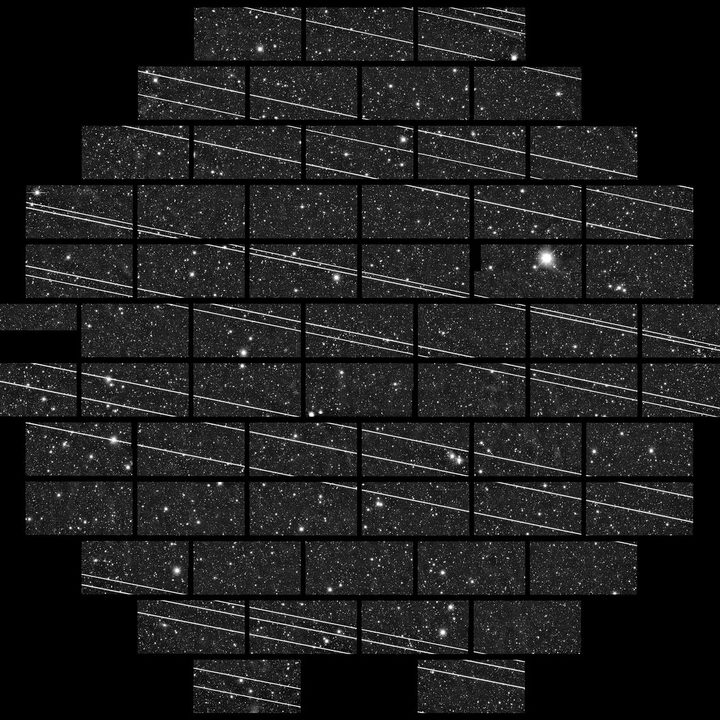
Image showing the disruption of astronomical observations caused by a previous Starlink launch
Around 19 Starlink satellites were imaged shortly after launch in November 2019 by DECam on the Blanco 4-meter telescope at the Cerro Tololo Inter-American Observatory (CTIO) by astronomers Clara Martínez-Vázquez and Cliff Johnson. The gaps in the satellite tracks are due to the gaps between the DECam CCD chips. NSF’s National Optical-Infrared Astronomy Research Laboratory/CTIO/AURA/DELVE

There are two main concerns about the impact of Starlink on astronomy. Firstly, that satellites are reflective so they reflect light from the sun, leading to bright streaks in optical astronomical observations of the night sky. This is a particular problem for Starlink compared to other types of satellites as the Starlink satellites sit in very low Earth orbit, meaning they are more prominent in the sky, and there are thousands of them.

Recommended Videos

SpaceX has been working with astronomers to reduce this issue through methods like painting the satellites a darker color to make them less reflective, adding sunshades, and changing their orientation so they reflect less sunlight.

The second problem is with radio astronomy. Satellites are designed to operate at a particular radio frequency, however, they can give off radiation outside that band in a phenomenon called frequency bleed. Radio astronomers already have to deal with a lot of background radio noise from Earth to pick out the faint signals from the distant objects they are observing, and having many satellites in the sky makes that harder.

The agreement focuses on the 10.6 – 10.7 GHz radio astronomy band, and SpaceX has agreed to take steps such as not transmitting from the satellites when they are passing over major radio astronomy stations.

The agreement is not legally binding, but it does show that both groups are trying to work together to both enable global satellite internet and allow astronomical observations. “We are setting the stage for a successful partnership between commercial and public endeavors that allows important scientific research to flourish alongside satellite communication,” said NSF Director Sethuraman Panchanathan in a statement.

However, not all astronomy groups are so positive. As SpaceNews reports, the International Dark-Sky Association is currently involved in a court case attempting to block the deployment of more Starlink satellites on the basis that they are harmful to both professional and amateur astronomy.

Georgina Torbet
Georgina has been the space writer at Digital Trends space writer for six years, covering human space exploration, planetary…
Dimming the sun sounds unhinged, but this new study on El Niño makes a surprisingly good case for it
A natural test case, Australia's worst-ever wildfire season, suggests the idea deserves serious consideration.
Nature, Outdoors, Sky

When I first saw "scientists propose dimming the sun," I rolled my eyes. It sounds like a science fiction movie cooked up after watching many climate documentaries. But a new study, published on July 8, 2026, in the journal Science Advances, seems to have a genuinely compelling argument.

A Super El Niño is currently forming in the Pacific, feared to be the most intense in decades. It could escalate floods, wildfires, and extreme heat events worldwide. However, Researchers at UC San Diego's Scripps Institution of Oceanography, led by climate scientists Kate Ricke and Jessica Wan, are now proposing one of the most interesting solutions I’ve come across.

Read more
You can now walk through space and gaze into a black hole at this VR exhibit
Smithsonian Starstruck lets you drift past dying stars and see the origin point of the universe for as little as $18 a person.
Smithsonian Starstruck featured

Most planetarium shows ask you to sit still and look up. The Smithsonian's new VR exhibit takes a different approach, letting visitors walk through the vast expanse of the universe, drifting past stars, planets, and a black hole to get a physical sense of its true scale.

A $29 ticket to the edge of the galaxy

Read more
Scientists warn Elon Musk’s orbital data centers could blind Earth’s biggest telescopes
A new ESO study suggests millions of satellites could make parts of the night sky effectively unusable for astronomy.
One hour of satellites over the northern Atacama Desert in Chile (October 2025)

The race to blanket Earth with satellite internet has unlocked faster connectivity for millions. But according to the European Southern Observatory (ESO), it could also make one of humanity's oldest hobbies, and one of its most important sciences, a whole lot harder. The organization warns that the rapid growth of satellite mega-constellations could severely disrupt observations made by some of the world's most powerful telescopes.

Astronomers say the night sky is reaching its limit

Read more