1. Home
  2. Computing
  3. News

Apple’s $600 M2 Mac mini obliterates the $6,000 Mac Pro

Add as a preferred source on Google

We just got even more proof that it’s high time Apple released a new version of the Mac Pro. Why? Because it just got smoked in a benchmark — and by a device that costs a tenth of its price.

The M2 Mac mini was tested in single-core and multi-core operations and then compared to the Intel-based Mac Pro. Unsurprisingly, the news is all bad for the expensive 2019 workstation.
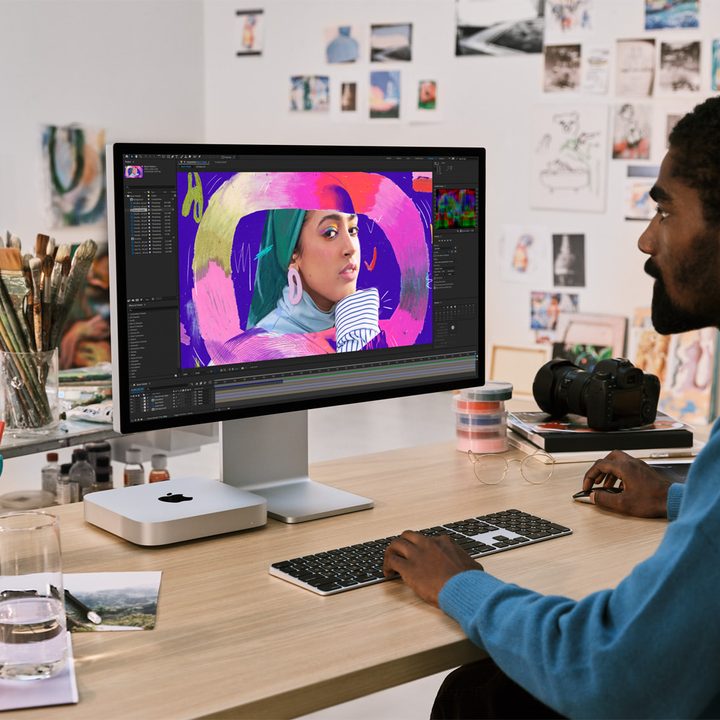
Someone editing photos on the M2 Mac Mini.
Apple

GregsGadgets on Twitter posted two very telling sets of benchmark results: one for the M2 Mac mini and one for the Intel-based Mac Pro. The Mac mini outperformed the workstation in both single-core and multi-core tests.

Recommended Videos

Unfortunately, we only know the results of one example, so it’s possible that the Mac mini would still lose against the Mac Pro in different tests. However, in the Geekbench 5 test, the Mac mini scored 1,944 in single-core and 8,790 in multi-core versus the Intel Mac Pro, which only managed to hit 1,019 and 8,037, respectively. This is a huge blow to the 2019 Mac Pro.

This isn’t the first time we’ve seen the M2 chip completely destroy the Mac Pro. Similar benchmark results popped up last summer, starring the 13-inch MacBook Pro. The laptop was able to outperform the Mac Pro despite being around $5,000 cheaper. When you compare the Mac mini to the Mac Pro, the price difference is even more jarring, because the base configuration of the Mac mini costs just $600 — a tenth of the price of the Mac Pro.

Apple’s beastly workstation from 2019 runs on Intel hardware and still sells for $6,000. That’s a scary price, but back then, it definitely made sense to professionals — it was one powerful computer, all set to support resource-heavy tasks such as video editing and rendering. These days, over three years later, it’s safe to say that it no longer makes sense to buy a Mac Pro.

What can you do if you want a new workstation PC? Buy the Mac mini instead or wait for Apple to release the long-awaited Mac Pro that will run on its own M2 silicon. Assuming it comes equipped with an M2 Ultra chip, it will once again be the king of Apple’s entire lineup, as it should be.

Monica J. White
Monica is a computing writer at Digital Trends, focusing on PC hardware. Since joining the team in 2021, Monica has written…
ASUS Zenbook Duo UX8407AA review: Two screens finally earned their place in my bag
Two machines are definitely better than one, but on the same laptop? Asus nailed it, but you must be willing to pay for the convenience.
ASUS Zenbook Duo has two displays

See at Amazon

Two displays on a laptop once sounded like an elaborate solution waiting for the right problem. ASUS has spent the past few generations steadily proving otherwise. After using the latest Zenbook Duo (2026) UX8407AA for over two weeks, I started arranging my daily routine around that second display. 

Read more
How Claude helped my 65-year-old dad finally ditch his handwritten ledgers
AI has a lot to answer for, but this one small win is hard to argue with, at least for me.
Claude app on iPhone

My dad has owned a small business for as long as I can remember, and for just as long, he's kept his books the old-fashioned way. Every sale gets written down by hand so he can file his taxes later. The problem is that his accountant needs this data in Excel, and my dad, who didn’t grow up around computers, has never learned how to use it.

For years, his workaround was paying someone to manually type his handwritten entries into a spreadsheet. It worked, but it was adding additional cost to his business, which he wanted to avoid, but couldn't.

Read more
AI’s energy tax was already concerning. Research says AI agents are over hundred times worse
AI agents could consume 136 times more energy than today's AI, study finds
AI agents

The AI industry's soaring electricity demand has already become a growing concern for governments, utilities, and technology companies. But a new study suggests the next generation of artificial intelligence could make that problem significantly worse.

Researchers from the Korea Advanced Institute of Science and Technology (KAIST) have published what they describe as the first comprehensive analysis of the energy cost of AI agents - AI systems capable of reasoning, planning, and completing tasks autonomously. Their findings show that these systems can consume up to 136.5 times as much energy per query as conventional generative AI models, raising fresh questions about whether the infrastructure supporting tomorrow's AI is ready for what's coming.

Read more