  1. Home
  2. Space
  3. News

India aims to join exclusive club with Friday’s moon mission

Add as a preferred source on Google

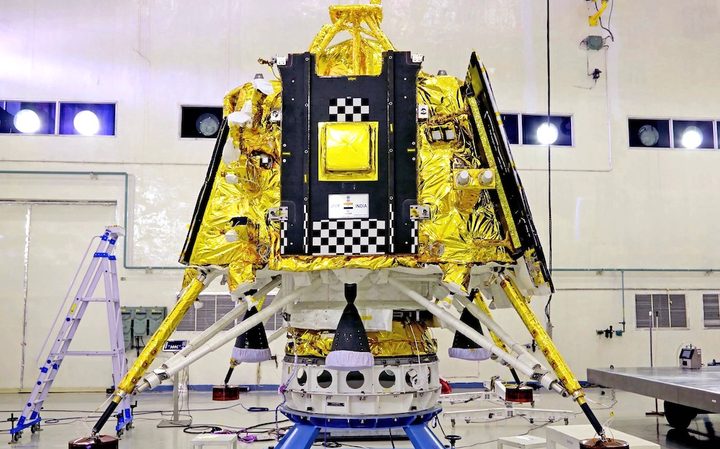
The Indian Space Research Organization's lunar lander for the Chanrayaan-3 mission.
The Indian Space Research Organization’s lunar lander for the Chandrayaan-3 mission. Indian Space Research Organization (ISRO) / Indian Space Research Organization (ISRO)

India is just days away from launching what it hopes will be a historic lunar mission.

Recommended Videos

If it manages to safely set down its uncrewed lunar lander, it will become only the fourth nation to achieve a soft moon landing, following in the footsteps of the U.S., China, and the Soviet Union.

The Chandrayaan-3 mission will launch at 2:35 pm local time (5:05 a.m. ET) on Friday, July 14, from the Satish Dhawan Space Centre about 1,000 miles (1,650 kilometers) south of New Delhi. The moon landing is scheduled to take place around August 23.

NASA’s Indian equivalent, ISRO (Indian Space Research Organisation), is aiming to land the spacecraft near the moon’s South Pole, an area of scientific interest that has yet to be explored in great detail. If it can demonstrate a safe landing system, the mission will set about investigating lunar seismicity and other elements of the nearby environment.

India’s first two moon missions offered mixed results. The Chandrayaan-2 mission in 2019 failed to set down a lander in a controlled manner, though the mission’s orbiter continues to circle the celestial body.

In an earlier flight in 2008, the Chandrayaan-1 mission delivered a probe to the lunar surface in a rapid but controlled descent. Data from the probe confirmed the presence of frozen water deposits in the lunar soil.

Other countries have tried and failed to perform a controlled landing on the lunar surface. Israel was unable to achieve the feat in 2019 — the same year as India’s last attempt — while more recently a privately funded mission by Japanese startup ispace faced issues in the final moments, causing the vehicle to crash land on the lunar surface.

In another example of India’s growing interest in space exploration, the nation is planning to launch its maiden crewed flight in 2025, sending several astronauts to low-Earth orbit for about a week.

For now, though, all eyes are on Friday’s flight. India will be hoping it’s learned all the lessons from its last mission so that it can finally achieve its first controlled, soft landing on the moon next month.

Trevor Mogg
Contributing Editor
Not so many moons ago, Trevor moved from one tea-loving island nation that drives on the left (Britain) to another (Japan)…
Amazon’s Starlink rival just crossed a major milestone, but don’t expect perfect internet just yet
Amazon finally showed up to the space internet party
Amazon Leo satellite layout across all launch vehicles

Amazon has taken a significant step toward launching its long-awaited satellite internet service. Following its latest rocket launch, the company now has 396 Project Kuiper satellites in low-Earth orbit, enough to begin offering continuous service across select regions. The milestone keeps Amazon on track for its previously announced goal of launching commercial service by mid-2026.

https://twitter.com/Weber44Chris/status/2072575499461963938?ref_src=twsrc%5Etfw%7Ctwcamp%5Etweetembed%7Ctwterm%5E2072575499461963938%7Ctwgr%5Ed727a1b853cbf519585e7bf2655943afb2f91bb8%7Ctwcon%5Es1_&ref_url=https%3A%2F%2Fwww.theverge.com%2Fscience%2F960563%2Famazon-leo-service-tipping-point

Read more
Amazon’s Starlink rival is set to launch satellite internet later this year
After launching nearly 400 satellites, Amazon says its Leo broadband service will go live later this year.
Atlas V launches 29 Amazon Leo satellites from Cape Canaveral, Florida

Amazon's long-awaited answer to SpaceX's Starlink is finally nearing liftoff. According to an exclusive report from Reuters, the company plans to begin offering its Leo satellite internet service later this year, after its latest rocket launch pushed the constellation to 394 satellites in orbit.

The pieces are finally falling into place for Project Kuiper

Read more
NASA is investing $590 million in private contractors to build humanity’s first Moon outpost
NASA is counting on private companies to land its Moon Base dream.
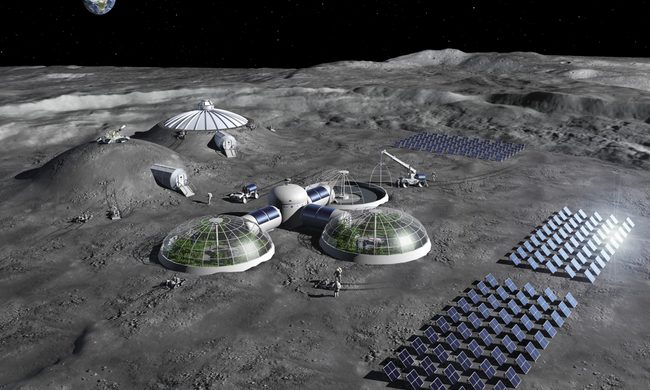
Artist impression of a Moon Base concept, with solar arrays for energy generation, greenhouses for food production, and habitats shielded with regolith.

Building a permanent base on the Moon sounds like science fiction, but NASA is making it feel a lot more real. The agency just handed $590 million in contracts to three private companies for four uncrewed lunar lander missions launching in late 2028.

These missions are part of Phase 1 of NASA's broader $30 billion Moon Base program, which needs to deliver landers, rovers, and scientific cargo up there before astronauts eventually move in. These efforts are closely tied NASA's Artemis program, which sent humans on a lunar flyby in April for the first time since the Apollo era.

Read more