Qualcomm wants to “revolutionize” PCs … again. At its annual Snapdragon Summit, the company announced the first processor under its Snapdragon X branding for PC. The Snapdragon X Elite is a system-on-a-chip (SoC) designed around Qualcomm’s Oryon CPU and Adrendo GPU that comes with a dedicated neural processing unit (NPU).
The CPU includes 12 high-performance cores nestled into three clusters. These cores run at 3.8GHz, according to Qualcomm, but two of them can boost up to 4.25GHz at a time. In addition to the CPU and GPU, the X Elite SoC sports LPDDR5x memory on a memory interface that can deliver 136GB/s of bandwidth.
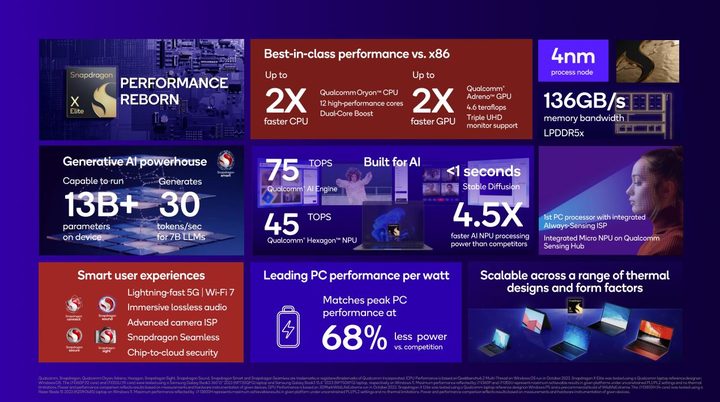
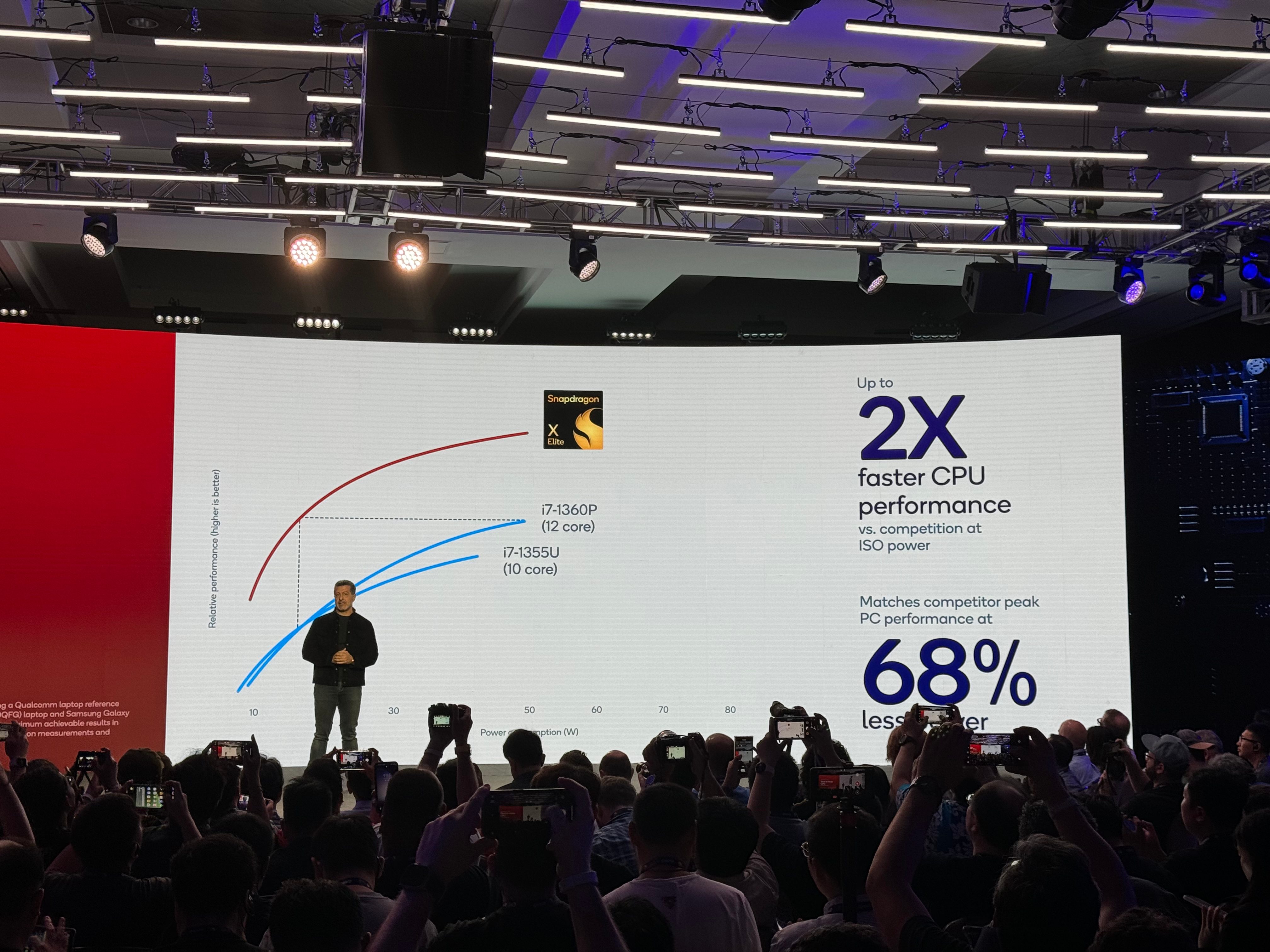
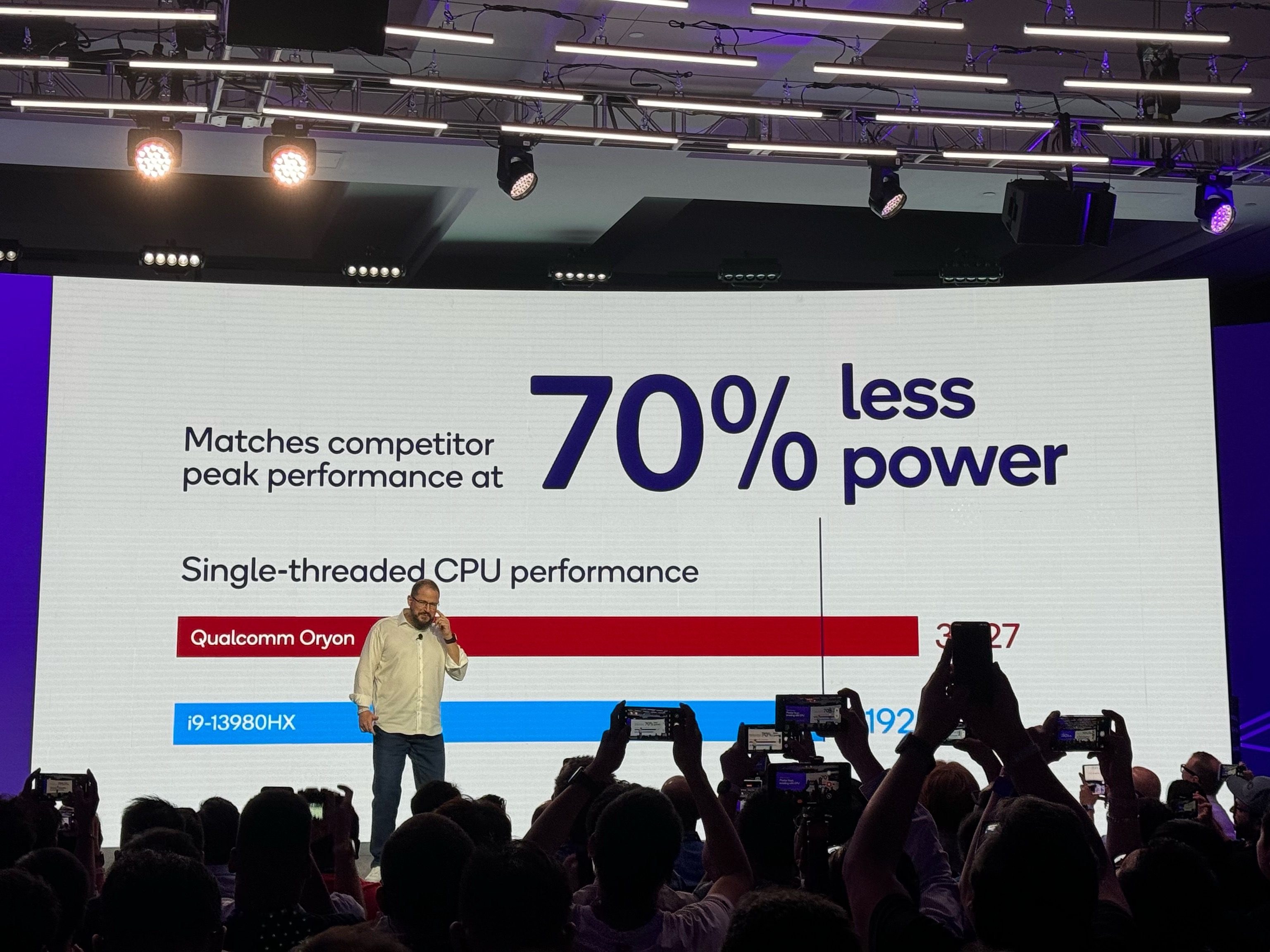
The chip is built on a 4nm process node, and Qualcomm says it provides twice the CPU performance of the 12-core Intel Core i7-1360P at peak power, and the same performance while using 68% less power. Compared to the more powerful Core i7-13800H, Qualcomm says the Snapdragon X Elite delivers 60% higher performance at peak power and 65% less power at the same performance level.
Comparisons to Windows machines are interesting, but it’s the Apple comparison that matters. Qualcomm says the Snapdragon X Elite achieves 50% higher multi-threaded performance than Apple’s M2 inside the MacBook Pro 13 in Geekbench 6. It’s worth pointing out that Geekbench 6.2, which Qualcomm tested, has both a Mac version and a native Windows on ARM version.
That has been the biggest hurdle for widespread adoption of ARM chips, like the ones Qualcomm produces, in PCs. The chips themselves haven’t traditionally been showstoppers in terms of performance. The previous Snapdragon 8cx Gen 3 showed significant performance gaps between Intel’s U-series processors and Apple’s M2. With the Snapdragon X Elite, it seems Qualcomm is finally tackling that issue, but app support is another problem entirely.
Over the past few years, there has been a rising tide of apps with native Windows on ARM versions, helping the chips keep pace with their x86 counterparts. One of the biggest holdouts has been Google Chrome, which, like other apps without native ARM versions, are run through emulation with much lower performance.
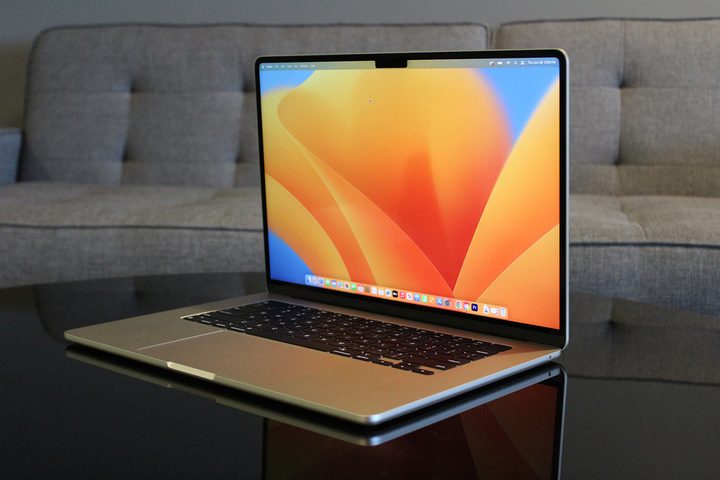
Qualcomm chips inside PCs provide some significant advantages, though. For the Snapdragon X Elite, Qualcomm says the chipset can provide multiple days of battery life. Apple’s M-series chips, which are also based on ARM designs, demonstrate the efficiency advantages of this instruction set. Even Windows laptops with stellar battery life are in a clear league below Apple’s M-series MacBooks.
In addition, the X Elite sports 5G connectivity and support for Wi-Fi 7, along with a dedicated NPU that Qualcomm says is capable of running Large Language Models (LLM) up to 13 billion parameters on device. This NPU has four-and-a-half times the AI processing power of competitors, according to Qualcomm.
With growing app support, a more powerful chipset, and some clear advantages in battery life and connectivity, it may finally be time for Windows on ARM to shine with the Snapdragon X Elite. It’s been more than a decade of trying to get Windows on ARM to hit the mainstream, though, and it doesn’t seem like that battle is quite over yet.
Holdout apps make the switch tough for consumers, and although there are some advantages in battery life and connectivity, you’ll find a much greater abundance of Intel- and AMD-based laptops than those built with a Qualcomm chip. At the very least, it seems Qualcomm has an SoC that can compete in terms of raw performance now. We just have to wait, once again, to see if it finally catches on. Qualcomm says the first PCs with the Snapdragon X Elite will be available starting in mid-2024.