  1. Home
  2. Space
  3. News

Digital Trends may earn a commission when you buy through links on our site. Why trust us?

Spot the space station with this new NASA app

Add as a preferred source on Google
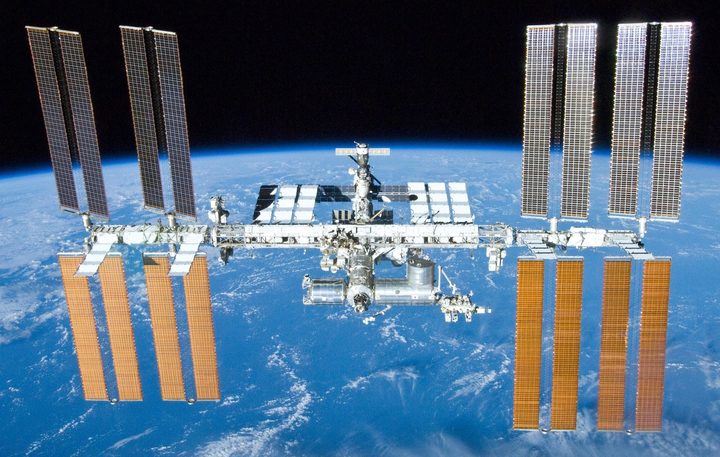
The International Space Station.
NASA

The International Space Station (ISS) orbits Earth 16 times a day, which means that at some point it’s likely to pass over your neighborhood.

Despite being 250 miles above our heads, it’s actually easy to spot the ISS thanks to the reflection that occurs when the sun’s rays bounce off its solar arrays. You just need to know when to look up.

Recommended Videos

NASA already has a website to help you find out when the orbital outpost is passing overhead, and it’ll also notify you via emails if you input your address.

But on Thursday it made the process a whole lot easier with the launch of a brand new Spot the Station app for iOS and Android.

The app provides additional capabilities and information to make the station sighting experience even more engaging. For example, you can configure it to send a notification as it passes over, and an augmented reality interface makes it easier for users to find the station. You can also use it to capture and share imagery of the station.

The date at the top of the app’s display shows the next time the ISS is viewable from your area. Select the date and you’ll be taken to the Upcoming Sightings page listing all of the approaching dates and times showing when the station is heading your way. You’ll notice that most of the sighting opportunities occur in the early evening or early morning. If you’d prefer not to get the early morning notifications (these sightings will be at around 5 a.m.), then you can block them via a setting on the Upcoming Sightings page.

Back on the main page, you’ll see a 3D representation of Earth showing the current location of the station, together with a line showing where it’s been and where it’s heading. A 2D map below it offers similar information but also shows the regions of day and night.

“Even after 23 years of continuous human presence aboard the International Space Station, it’s incredibly exciting to see the station when you look up at just the right moment,” Robyn Gatens, ISS director, said in a message announcing the new app. “The orbiting laboratory that continues to provide so many unique, tangible benefits for humanity really isn’t that far out of reach.”

Trevor Mogg
Contributing Editor
Not so many moons ago, Trevor moved from one tea-loving island nation that drives on the left (Britain) to another (Japan)…
China’s answer to SpaceX’s reusable rockets literally catches boosters in a net
SpaceX catches boosters on legs. China just used a net.
Ammunition, Missile, Weapon

SpaceX's playbook for recovering a rocket booster generally involves legs, a precisely controlled vertical landing, and either a concrete pad or a drone ship. 

China just managed to pull off something similar, but in a slightly different way, and on July 10, it tested the method as well.

Read more
Dimming the sun sounds unhinged, but this new study on El Niño makes a surprisingly good case for it
A natural test case, Australia's worst-ever wildfire season, suggests the idea deserves serious consideration.
Nature, Outdoors, Sky

When I first saw "scientists propose dimming the sun," I rolled my eyes. It sounds like a science fiction movie cooked up after watching many climate documentaries. But a new study, published on July 8, 2026, in the journal Science Advances, seems to have a genuinely compelling argument.

A Super El Niño is currently forming in the Pacific, feared to be the most intense in decades. It could escalate floods, wildfires, and extreme heat events worldwide. However, Researchers at UC San Diego's Scripps Institution of Oceanography, led by climate scientists Kate Ricke and Jessica Wan, are now proposing one of the most interesting solutions I’ve come across.

Read more
You can now walk through space and gaze into a black hole at this VR exhibit
Smithsonian Starstruck lets you drift past dying stars and see the origin point of the universe for as little as $18 a person.
Smithsonian Starstruck featured

Most planetarium shows ask you to sit still and look up. The Smithsonian's new VR exhibit takes a different approach, letting visitors walk through the vast expanse of the universe, drifting past stars, planets, and a black hole to get a physical sense of its true scale.

A $29 ticket to the edge of the galaxy

Read more