I’ve always rooted for the Surface. What started exclusively as a way to push the concept of the Windows 2-in-1 has grown into a full-fledged premium laptop brand, with options at nearly every price point.
But after a year like 2023, it’s hard not to feel like we may be reaching a turning point for the brand.
Lack of momentum
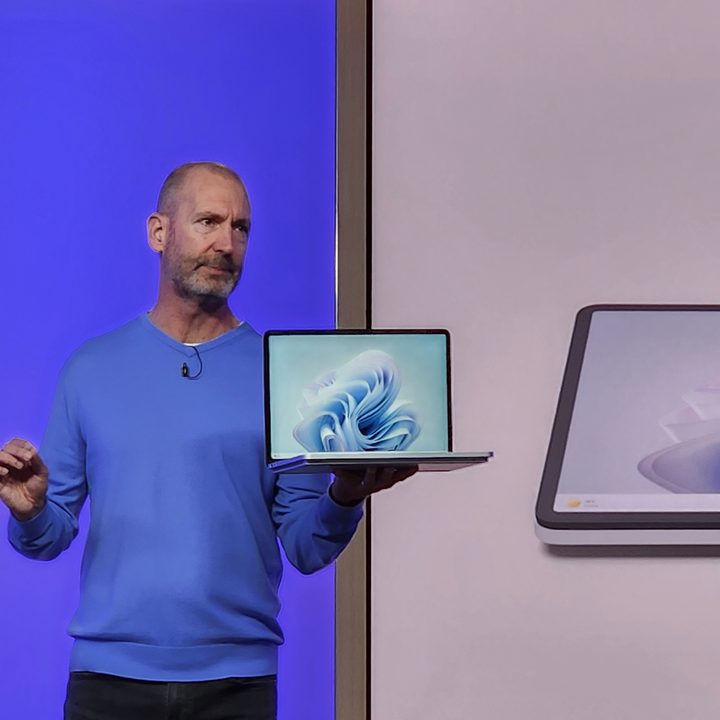
This year was a very slow year for the Surface. Microsoft announced four new Surface devices in 2023: the Surface Go 4, Surface Laptop Go 3, Surface Hub 3, and the Surface Laptop Studio 2. That might sound like a lot, but when you break it down, the “Go” devices are both budget-focused, and the Surface Hub 3 is a purely commercial product. The Surface Laptop Studio 2 was really the only exciting new consumer device announced, and it was a fairly minor spec update. The Surface line has never been known for consistent updates or drastic design changes, but that’s still a very quiet set of updates to Microsoft’s flagship line of PCs.
Perhaps the most unnerving thing about what was supposed to be a Surface hardware event? Very little of the time was devoted to talking about the products themselves. Instead, it became yet another platform for Microsoft to evangelize about Copilot, its AI service that’s increasingly built into every application. That should tell you where Microsoft’s head is at right now — especially compared to Surface events of prior years.
What’s even more telling is what products weren’t announced this year. The Surface Pro and Surface Laptop are the line’s most important products and have most consistently received annual updates. Usually, it’s just a bump internally, but occasionally there will be new features or design changes. But in 2023, both products were completely absent. The latest versions of them were both launched in October 2022 — the Surface Laptop 5 and the Surface Pro 9, respectively.
I’m not saying these will never get updates, but it has made for a very quiet year for the Surface — that’s for sure. It’s made even worse by the fact that this is the 10-year anniversary of the Surface Pro.
The Panos of it all
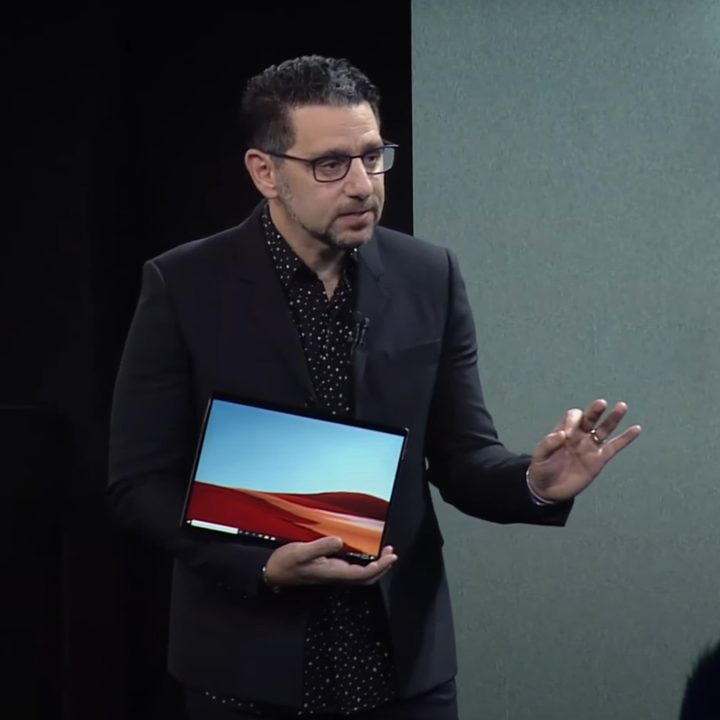
The biggest harbinger of doom for the Surface, however, isn’t a particular product. It’s a person — the singular (and sometimes iconic) leader of the Surface brand from the very beginning, Panos Panay. He’s responsible for the creation of Surface — and has been expanding its reach for well over a decade. This is a man that once got teary-eyed at a press conference describing the profound emotional impact one of his new devices had on him. It’s his baby.
That’s why his departure from Microsoft was such a surprise. It’s hard to think about what Surface is without him, and it’s hard to interpret his departure without knowing more about what happened behind the scenes. We don’t know if the company wanted to slow down on new Surface releases and that put Panay off — or perhaps he really did see a compelling future over at his new position at Amazon.
We know that according to one report from Business Insider, Panay wasn’t happy with some “significant cuts to simplify the Surface business” and “focus more on Microsoft’s hits rather than the more experimental devices.” That’s disappointing to hear, especially since Panay had recently received a pretty big promotion in 2022 that saw the unification of Windows and devices under his singular leadership. The hope was that there would be more support behind Surface and a more integrated approach to the hardware and the software. If the proposed cuts were true, they would undo a lot of the momentum behind this new internal structure.
There is, however, a reason for these cuts.
Surface was Panay’s baby.
The Surface brand has had a particularly hard time in 2023 on the financial side. Of course, PC sales have been in decline all year. But in its annual report, Microsoft indicated that Surface revenue decreased by $1.8 billion, falling even harder than its competitors. Surface PC sales are not just a normalization of pandemic trends — they have toppled to pre-2019 levels.
That comes after many years of growth for Surface devices, which had a hard start with the failure of Windows RT, but climbed back year after year. The Surface brand became a financial moneymaker for Microsoft while still playing an inspirational role for other Windows PC manufacturers and pushing designs in certain directions. It’s successfully served that role over the years many times, with daring 2-in-1 designs and alliances with broad ranges of chip partners — it even embraced ARM as an option ahead of its competition.
With the increased uncertainty in the industry, especially with the overall decline of PC sales in 2023, it certainly sounds like Microsoft was looking to scale back the efforts on investing further in Surface. After all, the massive investment in AI has been consuming much of the available attention and resources.
My point is not to speculate, but instead just to make the point that Panay’s departure from Microsoft means something for Surface. I have a hard time imagining a situation where Panay was leaving behind strong support for Surface internally.
Of course, one slow year for the Surface doesn’t mean it’s dead in the water. I can’t imagine that Microsoft will pull the plug entirely, as a company like Google might have. But the future of Surface is still uncertain, and for someone who’s always cheered on the brand’s burgeoning success, that’s a shame. One less premium player in the world of Windows devices is never a good thing for the health of the ecosystem — especially one that was willing to push boundaries and try new things.
Surface might still be around in five years, but it might not have the same brash and ambitious spirit that made it an important player in the Windows ecosystem.