The Hubble Space Telescope recently suffered a glitch that made it go into safe mode, so it has not been collecting new science data since November 23. But on Friday, December 8, NASA will attempt to get the telescope up and running again by tweaking the operation of one of its three gyros.
The gyros are responsible for keeping the telescope pointed in the right direction, and an error in one of them put the telescope into safe mode to prevent any damage occurring to its hardware. Although it is theoretically possible for the telescope to operate with just one gyro, this would be less efficient and observing time would be lost as it would take longer for the telescope to switch between targets. So ideally, all three gyros can be operational.
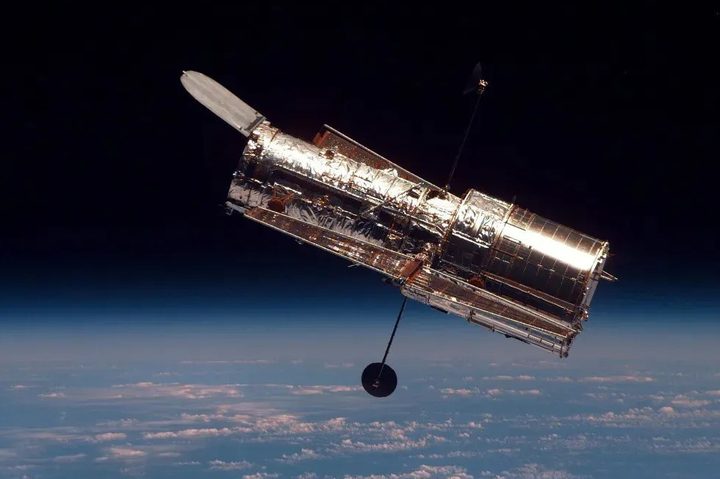
The problem with the telescope was first shared on November 29, when NASA announced it was performing tests to understand the issue. Now, the tests are complete and NASA plans to resume operations. “After analyzing the data, the team has determined science operations can resume under three-gyro control,” NASA wrote in a new update. “Based on the performance observed during the tests, the team has decided to operate the gyros in a higher-precision mode during science observations. Hubble’s instruments and the observatory itself remain stable and in good health. ”
The Hubble Space Telescope is more than 30 years old, and it still produces a huge amount of valuable science data and beautiful images of the cosmos. But its hardware is showing its age, and it has had problems in the past such as a computer error that occurred in October 2021 due to issues with synchronization between the computer and the telescope’s instruments. It was eventually fixed by December 2021.
That followed another computer problem in summer 2021 that required switching from Hubble’s primary computer to its backup. Space missions like Hubble are typically built with multiple layers of redundancy so that the failure of one part won’t take down the entire mission, which is why there was a backup available.
The gyros that are the source of the current problem are components that tend to have a limited life span. The telescope had six gyros after its last servicing mission but three of them failed within a few years, leaving just the three that are currently operational. Hubble engineers have also tested out using just two at a time to help extend the telescope’s life even further.