  1. Home
  2. Cars
  3. News

Some on Apple’s failed car project reportedly had a cruel name for it

Add as a preferred source on Google

Apple reportedly canceled its electric car project earlier this week, ending around a decade of research and development on the ambitious project.

While we knew the tech giant had spent billions on its efforts, a New York Times report on Wednesday put a precise figure on it: $10 billion. It’s an astonishing amount of money for a project that will never see the light of day, and even more so when you consider that many of those working on it apparently suspected that the endeavor would come to nothing.

Recommended Videos

Internally, the effort was known as “Project Titan,” but workers who harbored doubts about its ability to succeed reportedly referred to it as “the Titanic disaster,” according to former members of Apple’s car project who spoke to the Times.

Apple never officially acknowledged that it was trying to build a car, but numerous leaks and job postings revealed much of what was going on over the years. The project appeared to be hindered by numerous personnel changes as well as conflicts at the top over what exactly the so-called “Apple Car” should be.

According to the Times, Steve Zadesky, who steered the project early on, was keen to create an electric vehicle that would take on Tesla, while former Apple design guru Jony Ive pushed for a self-driving car with more autonomous capabilities.

It seemed that Apple gradually moved away from any plan to build a driverless vehicle and eventually settled on creating an electric car with a number of driver-assist features.

The Project Titan team team grew to more than 2,000 people and included expert engineers who had been previously employed by the likes of NASA and Porsche.

The Times’ report paints a picture of a troubled project that lacked leadership and direction and eventually became overwhelmed by multiple challenges that included how exactly to manufacture the vehicle.

But there are some positives, as some of those involved in the car effort have said that Apple is intent on taking what it’s learned from autonomous and AI technologies to its current and future devices. But whether that’ll be worth $10 billion is too early to say.

Trevor Mogg
Contributing Editor
Not so many moons ago, Trevor moved from one tea-loving island nation that drives on the left (Britain) to another (Japan)…
Volvo is rolling out Apple Music to over 2 million cars with a simple OTA update
Your Volvo may soon get Apple Music without needing CarPlay
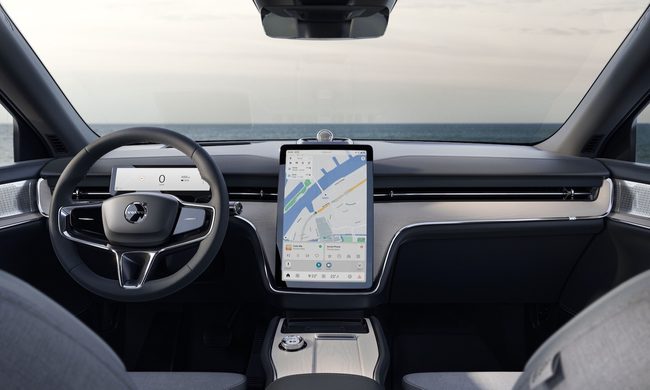
Interior view of the 2024 Volvo EX90.

The line between your smartphone and your car continues to blur. Volvo has announced that it is rolling out an over-the-air software update that brings Apple Music directly to the infotainment systems of more than 2 million vehicles worldwide. Instead of relying on Apple CarPlay or plugging in an iPhone, eligible drivers will be able to stream music natively from their car's built-in system, making Apple Music another integrated feature of Volvo's software experience.

The update is arriving for a wide range of Volvo models, including the EX90, ES90, XC90, S90, V90, XC60, S60, V60, XC40, EX40 and EC40, covering model year 2020 onwards. Availability, however, may vary depending on the vehicle.

Read more
Chery’s latest EV packs flagship tech for the price of a base Tesla, but you can’t buy it
Here's everything packed into Exeed's 2027 Exlantix ES, from its 27-sensor autonomous driving suite to its 860 km range, all starting under $31,000.
Car, Transportation, Vehicle

Chery's premium arm just dropped a sedan that makes you wonder why American EVs cost twice as much for half the tech.

Exeed's 2027 Exlantix ES ships with a driver-assist system called Falcon 700. It is built around an Nvidia Orin-Y chip and a genuinely stacked sensor suite.

Read more
A new AI model wants self-driving cars to think before they swerve
Forget guessing games, this self-driving AI actually shows its work.
Self driving car

Self-driving cars have gotten pretty good at driving. The harder problem is teaching them to drive safely in situations nobody planned for. We have heard horror stories of self-driving cars, behaving erratically in emergency situations, often times delaying first responders from reaching the scene.

A team at Seoul National University, led by professor Jun Won Choi from the Department of Electrical and Computer Engineering, thinks they have cracked part of that puzzle with a new AI model called SafeDrive. The research was recently selected as a highlight paper at CVPR 2026, a distinction that goes only to roughly 3% of all submissions.

Read more