  1. Home
  2. Computing
  3. News

Meet Blackwell, Nvidia’s next-generation GPU architecture

Add as a preferred source on Google
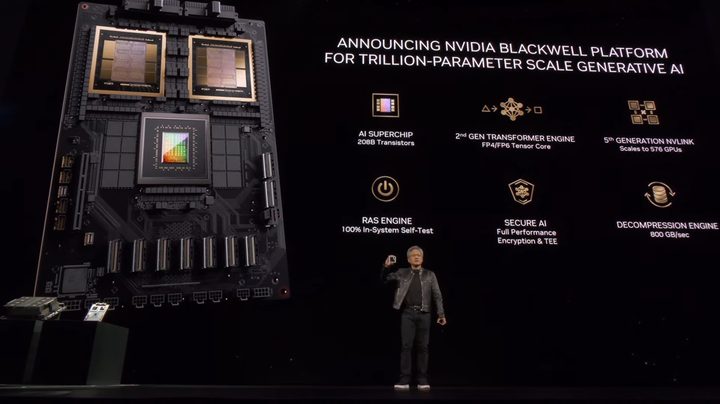
Nvidia introducing its Blackwell GPU architecture at GTC 2024.
Nvidia

We finally have our first taste of Nvidia’s next generation of GPUs, named Blackwell. Sure, they’re built for enterprises, and no, they won’t run Cyberpunk 2077 (at least not officially). But this is the first look we’ve have at what Nvidia is cooking up for its RTX 50-series GPUs, which are rumored to launched sometime in the next year.

The GPU we have today is the B200 — Blackwell 200, if you can spot it — that comes packed with 208 billion transistors. The architecture is built on TSMC’s 4NP node, which is an enhanced version of the 5nm node. It’s a little surprising given that Nvidia’s Ada Lovelace GPUs are built with TSMC’s 4N node — one refinement step away from 4NP. Nvidia notes that it’s using a custom version of this process, however.
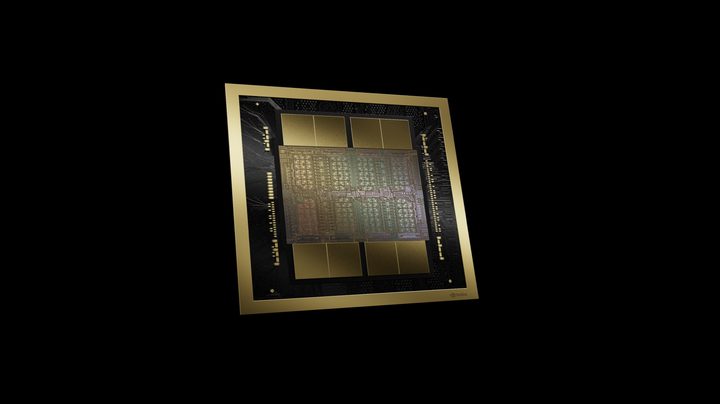
The die for Nvidia's Blackwell GPU.
Nvidia

Nvidia laid out six parameters that set Blackwell apart. The first is that custom 4NP process, which Nvidia is using to connect two GPU dies across a 10TB-per-second interconnect. Second is an updated Transformer Engine. Nvidia says the architecture can handle double the model size of last-gen Ada Lovelace, and it supports a new 4-bit floating point instruction set.

Recommended Videos

There’s also fifth-generation NVLink, allowing enterprises to hook up Blackwell GPUs in sizes of 576 GPUs in a single fleet. Nvidia is throwing in a couple of AI security features as well, including confidential computing capabilities and a RAS (reliability, availability, and serviceability) engine to ensure maximum uptime for its data center GPU.
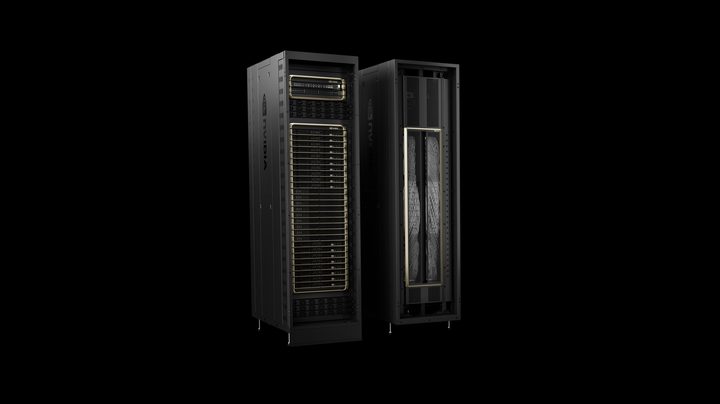
Nvidia's GB200 NVL72 server rack.
Nvidia

That’s great if you’re running a data center, but it’s the sixth and final pillar that gets me excited. Nvidia says the B200 has a dedicated decompression engine. This is focused on enterprise right now, but we’ve seen how big of a difference dedicated decompression hardware can make in gaming as well. If Nvidia carries this engine over to its gaming GPUs, and supports the proper formats, it could make a massive difference once you’re able to throw a Blackwell graphics card in your gaming PC.

All eyes are on the end of the year, or potentially early next year, for Nvidia’ Blackwell gaming GPUs to show up. For now, enterprise customers have access to the B200 through the HGX B200 — a server board that combines eight B200 GPUs — and the GB200, which brings together the B200 GPU with Nvidia’s Grace CPU. Nvidia is offering that part through the GB200 NVL72, which brings together a dizzying 72 B200 GPUs and 36 Grace CPUs.


Jacob Roach
Former Lead Reporter, PC Hardware
Jacob Roach is the lead reporter for PC hardware at Digital Trends. In addition to covering the latest PC components, from…
macOS clipboard app Maccy has a fake out there stealing passwords
PamStealer malware is disguising itself as Maccy to target Mac users
Depicting of the Maccy clipboard app for macOS on a laptop with letters inb the background.

A fake version of Maccy, a popular clipboard manager for macOS, is being used to deliver a newly discovered Mac malware strain called PamStealer. Researchers at Jamf say the malware impersonates the real open-source app, but its actual purpose is to steal data and capture a victim’s login password.

PamStealer arrives as a disk image containing an AppleScript file that impersonates Maccy. Once the user opens that file, macOS launches it in Script Editor, where the on-screen instructions tell them to press Command-R. To someone expecting a normal app installer, that may look like an odd setup step. In reality, that action runs hidden malware code and starts the attack.

Read more
A new technology teaching drones to feel pain could stop your self-driving car from harming itself
Drones first, autonomous cars next. A pain-sensing system that detects failure before it happens has real stakes for self-driving vehicles.
Transportation, Vehicle, Car

When you sprain your ankle in the middle of a run, your body sends a pain signal to your brain, forcing you to stop. Essentially, the ability to sense pain stops you from pushing through the injury and causing further self-harm.

Researchers at Delft University of Technology and Wageningen University have applied this exact concept to drones, giving them a digital equivalent of a nervous system that recognizes a faulty part and triggers a pain-like warning signal. What's even more interesting is that the technology could find use in self-driving cars.

Read more
Claude Fable 5 is leaving subscriptions, but maybe not for good
High demand is pushing Claude Fable 5 out of subscriptions for now
Claude Fable 5 and Claude Mythos 5 Official Render

Anthropic’s most advanced publicly available Claude model is still leaving standard subscription access after July 7, but the company is now trying to calm fears that the move is permanent.

Fable 5 recently returned to Claude after drawing scrutiny from the U.S. government. Anthropic said it would be included on Pro, Max, Team, and select Enterprise plans for up to 50% of weekly usage limits through July 7. After that date, the model is set to move to usage-credit billing, meaning users will pay for access outside their regular plan limits.

Read more