Next month will see a rare and exciting astronomical event: a total solar eclipse that will be viewable across much of North America. On Monday, April 8, the moon will pass directly between the Earth and the sun, blocking out the sun’s rays and temporarily causing dusk, then darkness in the middle of the day.
In 15 U.S. states, darkness will descend for several minutes across the course of an hour, enabling a unique experience for those within the viewing radius. But though this is a wonderous event to behold, you’ll need to be careful if you wish to view the eclipse, as doing so without the right equipment can damage your eyes. NASA has shared tips on how to safely view the eclipse, and the agency will also provide a live stream of views of the eclipse for those who can’t see it in person.
How to view the solar eclipse safely
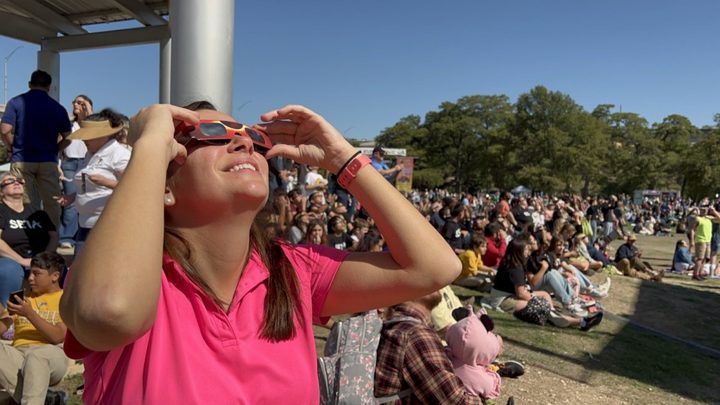
It’s important to never look directly at the sun, and this includes before, during, and after a total solar eclipse. Viewing the sun with the naked eye or through binoculars, telescopes, or a camera lens can cause severe eye damage (if you’re interested in photographing the eclipse, check out this advice from Nikon). You should wear eclipse glasses to be safe — but remember that eclipse glasses aren’t the same as regular sunglasses. Eclipse glasses are much, much darker than sunglasses in order to protect your eyes.
The American Astronomical Society has put out a warning that some products sold as eclipse glasses may not be up to safety standards, so it has compiled a list of safe solar viewers, and it’s recommended to use one of these. NASA also provides more information about solar eclipse safety on its dedicated website.
An alternative to using eclipse glasses is to view the event indirectly, such as by using a pinhole projector. This is a fun project to make with kids and will allow them to view the eclipse safely using materials that are readily available at home.
How to view the solar eclipse online
If you live outside the path of the total solar eclipse, you can still enjoy the experience thanks to a NASA livestream. The event begins at 1 p.m. ET on April 8, and NASA will track the eclipse from Mexico, across the U.S., and up to Canada, while also providing views from across the eclipse’s path and information about the eclipse from experts. You can watch via the video above or by heading to NASA’s YouTube page for the live stream, which is also available in Spanish.
However you view the eclipse, it should be a special event. “It’s a moment when millions of people across America will look to the heavens, as the moon passes in between the Earth and the sun. It’s a rare sight that we haven’t seen in seven years,” NASA Administrator Bill Nelson said in a press conference. “Eclipses have a special power. They move people to feel a kind of reverence for the beauty of our universe. Their power is not only to unify us on Earth, but to further science and discovery.”