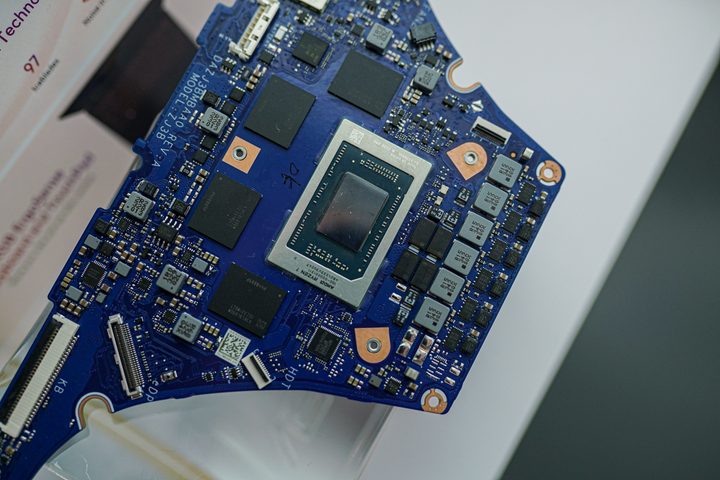
AMD is following Intel’s lead. The company is rebranding its Ryzen CPUs to closely align with what Intel is doing, shifting away from a long product string toward a three-digit part number that includes the phrase everyone is talking about: AI.
Starting with the new Strix Point CPUs, which sport the Zen 5 architecture, AMD is using “Ryzen AI” to differentiate its processors. In addition, instead of a string of four digits noting everything from the year released to the architecture the chip uses, AMD is using a three-digit part number, matching what Intel kicked off with its Meteor Lake CPUs.
AMD is calling it a “reset” on its naming convention. The company is starting with the 300 series for its Strix Point CPUs, and although they’ll carry the Ryzen AI branding, they’ll still be separated into different performance tiers. You can see how the new naming scheme breaks down below.
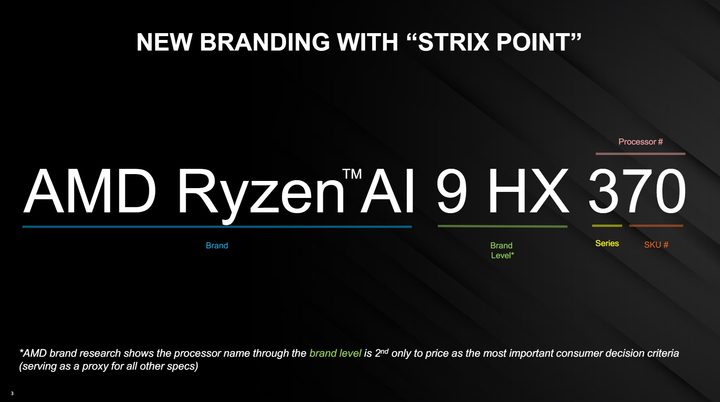
In addition to the performance tier, AMD is using suffixes that should be familiar for mobile parts. HX parts draw the most power, for example, while HS parts are slightly more efficient.
Although this is a reset on AMD’s naming convention, AMD is still starting with the 300 series. The company says the reason behind that decision is that Strix Point represents the third generation of Ryzen AI, with both Ryzen 7000 and 8000 parts having the dedicated Neural Processing Unit (NPU) built in. It makes the comparison with Intel a bit awkward, however.
With Meteor Lake, Intel started at the 100 series. AMD says it’s not applying the new naming scheme to existing Ryzen 7000 and 8000 parts with Ryzen AI, but going forward, AMD will look slightly ahead on future generations compared to Intel.
Although it’s a big shift for AMD, it only applies to its mobile product stack. Desktop chips, even if they use a Ryzen AI NPU, will continue on with the same naming convention we’ve seen up to this point.
Ryzen isn’t going away, but AMD is entering the AI PC era with its new naming update. Ultimately, it’s a good decision for its mobile product stack. Even after just a couple of generations, AMD’s previous mobile naming convention was a nightmare. Hopefully this new update clears the air a bit.