Two astronauts will soon be embarking on NASA’s first spacewalk of 2024 at the International Space Station (ISS).
Today, Americans Tracy C. Dyson and Matt Dominick will conduct some maintenance work and also swab exterior surfaces on the station’s Destiny and Quest modules for analysis that should determine whether microorganisms released through station vents can survive the external, and very hostile, microgravity environment.
The findings will help scientists evaluate the possibility of life being found in other off-Earth locations, and help confirm whether any life found on somewhere like Mars is really from there or was actually brought on a mission from Earth.
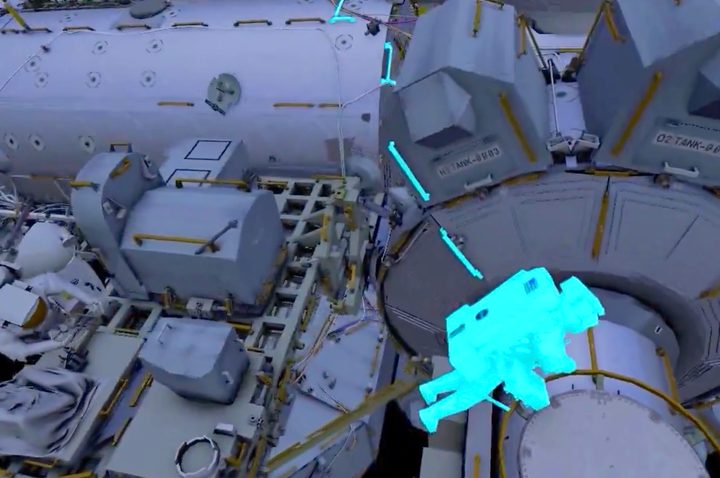
NASA released an animation (below) on Wednesday showing how Dyson will carry out the task of collecting the samples.
Astronauts will swab outer surfaces of @Space_Station to learn if station releases microbes and, if so, how far they travel. Samples could inform what microorganisms can survive the harsh space environment and potentially contaminate planetary bodies visited on future missions. pic.twitter.com/ZUloPuWdot
— ISS Research (@ISS_Research) June 11, 2024
As the video shows, the process will begin with Dyson — identifiable by the red stripes on her suit — placing the microorganism handle in the caddy on her portable workstation. She’ll then make her way to a vacuum exhaust systems vent to collect the first sample.
Dyson will then make her way to the station’s carbon dioxide vent to collect the second sample. Finally, additional samples will be taken from around the airlock where the astronauts exited the orbital facility for their spacewalk.
The pair will also retrieve a piece of faulty communications equipment during the spacewalk.
This is the fourth spacewalk for Dyson and the first for Dominick. Both astronauts arrived at the space station in March for a six-month stay.
NASA will broadcast a livestream of the entire spacewalk, which is expected to last around six-and-a-half hours. Coverage will start at 6:30 a.m. ET on Thursday, though the spacewalk itself won’t begin until about 8 a.m. ET.
The content will include video from multiple cameras, including one attached to the astronauts’ helmets. You’ll also be able to hear live communications between Dyson, Dominick, and Mission Control, as well as commentary from a NASA official explaining what’s happening at any given moment.
Digital Trends has all the information you need to watch the live stream.