Update: The launch has been postponed again until Wednesday, July 3 at 9:04 p.m. PT.
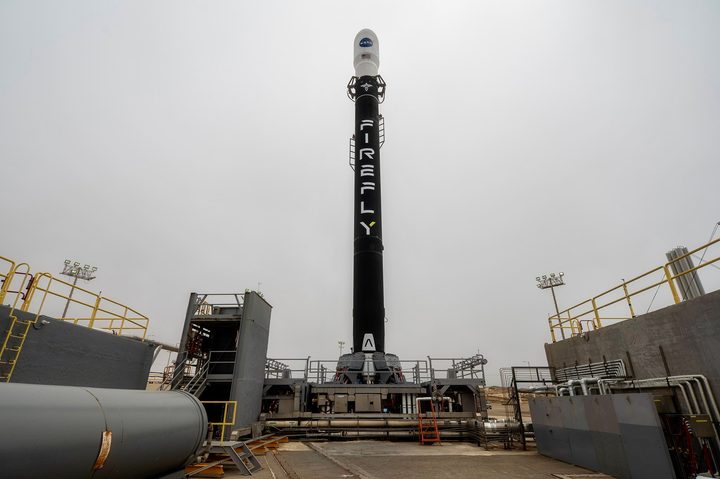
Firefly Aerospace is aiming to launch its Firefly rocket on its fifth mission tonight, carrying a selection of NASA payloads into orbit. The Firefly has had a challenging development, with a dramatic explosion on its first flight and partial failures on its second and fourth flights. The third flight last year did go off successfully though, so Firefly will be looking to replicate that success again tonight.
The mission was originally scheduled for launch Monday, July 1, but the launch was scrubbed because of an issue with ground systems. The company says that it is now ready to go ahead with the launch tonight, Tuesday, July 2, and that the rocket and payloads remain healthy after the scrub. It occurred “due to a faulty ground support equipment connection that has been fixed,” Firefly wrote on X (formerly Twitter).
The launch tonight takes place from the Firefly SLC-2 launch site at Vandenberg Space Force Base in California. Named Noise of Summer, the mission aims to deliver eight small satellites called CubeSats into orbit as part of a contract with NASA. The satellites have been built by organizations include NASA’s Johnson Space Center, the University of Washington, and the University of Arizona. They include a test of an inflatable antenna, a cosmic ray detector, and a trio of missions designed by high school students to study Earth’s climate.
The payloads also include a new experimental kind of spacecraft called an R5, designed to be lean and streamlined. “In the near term, R5 hopes to demonstrate new processes that allows for faster and cheaper development of high-performance CubeSats,” said Sam Pedrotty, R5 project manager at NASA’s Johnson Space Center. “The cost and schedule improvements will allow R5 to provide higher-risk ride options to low-Technology Readiness Levels payloads so more can be demonstrated on-orbit.”
The eight CubeSats are stored in a CuberSat dispenser, which will be deployed once the rocket reaches a sun-synchronous orbit.
How to watch the live stream
The launch is scheduled for 9:03 p.m. PT tonight, July 2, with a launch window that is open for 30 minutes. The live stream will begin at 8:30 p.m. PT (11:30 p.m. ET), and will show events like the final checks of the rocket, the terminal count, then the liftoff and progress through the Earth’s atmosphere and into orbit to deliver the payloads.
The live stream will be available on YouTube, which you can watch at Firefly Aerospace’s YouTube page or by using the video embedded above.