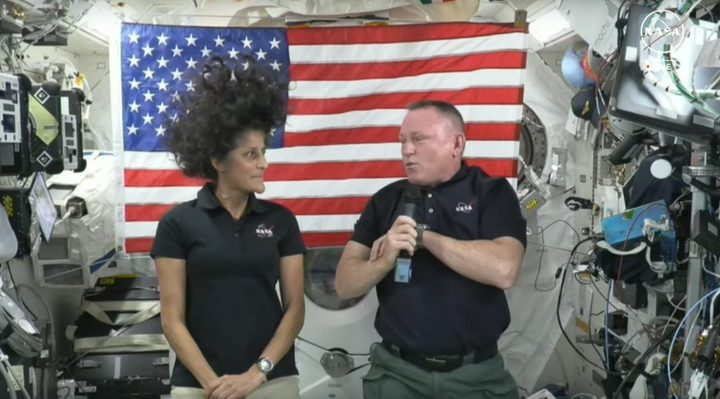
Two NASA astronauts will remain on the International Space Station (ISS) for at least several more weeks, as testing continues on the troubled Boeing Starliner that carried them to the station on its first crewed test flight. Butch Wilmore and Suni Williams are safe on the station and, NASA insists, not stranded, but they will not yet be returning home due to thruster issues with their spacecraft.
In a press conference today from the station, Wilmore was particularly enthusiastic about the handling of the spacecraft following launch. “The spacecraft performed unbelievably well,” he said.
As part of the astronauts’ evaluation of the spacecraft, they give a grade from one to 10 on a scale called the Cooper–Harper rating scale, with one being the best possible. “I’ve never given a one in all my flight test years on a Cooper-Harper rating scale for handling qualities, but I was tempted,” he said.
After the first day, though, there were problems with the Starliner’s thrusters, which caused handling issues. Even with these issues, though, Wilmore said that the docking of the spacecraft with the ISS was still extremely precise.
Williams gave details about what the pair have been up to during their time on the ISS, including checking over the Starliner and testing that it would hold four people comfortably. They have also been working with other members of the current ISS crew on maintenance tasks on the station, like replacing pumps and working on science research.
Regarding the issues with Starliner, Williams was relaxed, saying, “This is a test flight, so we were expecting to find some things, and so we are finding stuff and we are correcting it.”
In a later press update, NASA and Boeing representatives discussed the issues further. “We’re taking our time on the ground to go through all the data that we have before we decide on the return opportunity. We’re taking time to build confidence in the spacecraft, to understand the thruster performance,” said Steve Stich, manager of NASA’s Commercial Crew Program, who detailed some of the testing being done regarding the thruster issues. “What we’re doing is not unusual for a new spacecraft.” He also emphasized that in an emergency, William and Wilmore could use the Starliner to return to Earth.
NASA still has not given a date for the planned return of the Starliner to Earth, though the departure of the current ISS Crew-8 and the arrival of Crew-9, both scheduled for mid-August, will be a scheduling concern. There is a possibility that the Starliner may return to Earth at the end of July, but this isn’t yet known for sure.
The most pressing issue for the Starliner in terms of time spent in orbit is its batteries, which were originally supposed to be used for 45 days only. Currently the Starliner is at 35 days in space, but Stich said that the batteries are healthy and not showing any performance issues, so that time could potentially be extended.
In the meantime, the astronauts will remain on the station and are sanguine about the situation. “This is the world of test,” Wilmore said. “There have been multiple issues with every spacecraft that has ever been designed, and that’s the nature of what we do.”