1. Home
  2. Space
  3. News

Check out NASA’s top skywatching tips for August

Add as a preferred source on Google
What's Up: August 2024 Skywatching Tips from NASA

NASA’s top skywatching tips for August include a meetup of Jupiter and Mars, a look at the Perseid meteors, and a view of the Lagoon Nebula.

Recommended Videos

The space agency shared its suggestions on what to look out for in the night sky over the coming weeks in a video that we’ve embedded at the top of this page.

Mars

In August, Mars can be seen zipping by Jupiter, the largest planet in our solar system. You’ll be able to spot them appearing at their closest during the morning on August 14, when they’ll look to be a mere third of a degree apart, which is less than the width of the full moon.

After that, Mars will quickly move away from Jupiter, though on August 27, the crescent moon joins the two planets to form a trio in the morning sky.

Perseids

The Perseid meteor shower is back again this month. This year’s peak night for Perseid viewing is on August 11 and into morning twilight of the following day. Viewing conditions are expected to be favorable this year, as the moon will be setting by around 11:30 p.m. local time, ensuring a reduction of disruptive light from our nearest neighbor. Just keep your fingers crossed for clear skies.

Meteor activity will gather pace from late in the evening until dawn, according to NASA, and those in a dark viewing location can expect to see as many as 75 meteors per hour.

“The Perseids appear to originate from a place in the sky that rises in the northeast, so lie back and face roughly in that direction, but try to take in as much of the sky as you can in your view, as meteors can appear all over,” NASA said.

Lagoon Nebula

August is a good month for observing the Lagoon Nebula, which, like all nebulae, comprises a giant cloud of dust and gas with many young, bright stars.

Estimated to be between 4,000 and 6,000 light-years away from the Earth, the Lagoon Neubula is located in the constellation Sagittarius.

“Its oblong structure is about 100 light-years long by about 50 light-years wide,” NASA said. “It’s a cauldron of intense star-forming activity, with many young stars blazing brightly, causing the surrounding gas to glow. That glow is faint and colorless when peering at the Lagoon Nebula through binoculars, but long-exposure photos reveal its colorful nature.”

The Lagoon Nebula appears high overhead in August for folks viewing the skies from the Southern Hemisphere, and quite low for those at higher northern latitudes, but it’s visible throughout the lower 49 U.S. states.

The video offers some tips on how to spot the Lagoon Nebula, but a decent astronomy app will also be able to help.

Trevor Mogg
Contributing Editor
Not so many moons ago, Trevor moved from one tea-loving island nation that drives on the left (Britain) to another (Japan)…
Space is becoming Bezos and Musk’s next data center site, and we have every reason to worry
The AI boom is coming for the night sky
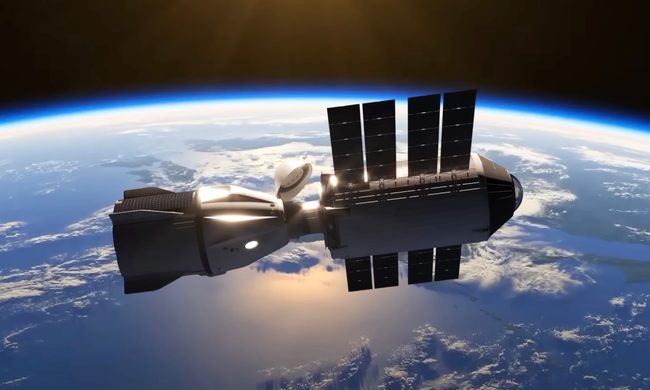
How Vast's space station will look in orbit.

AI data centers already consume vast amounts of electricity and water on Earth, so Silicon Valley has begun looking somewhere considerably more spacious... literally.

Elon Musk's SpaceX and Jeff Bezos' Blue Origin, along with several other companies, have proposed enormous constellations of satellites designed to operate as orbital data centers. However, environmental groups and former space officials are now warning that putting them into orbit at the proposed scale could have severe consequences for Earth's atmosphere and the night sky.

Read more
The first possible exomoon is here, and it makes our Moon look hilariously tiny
Scientists may have found the first exomoon, except this one is the size of Jupiter
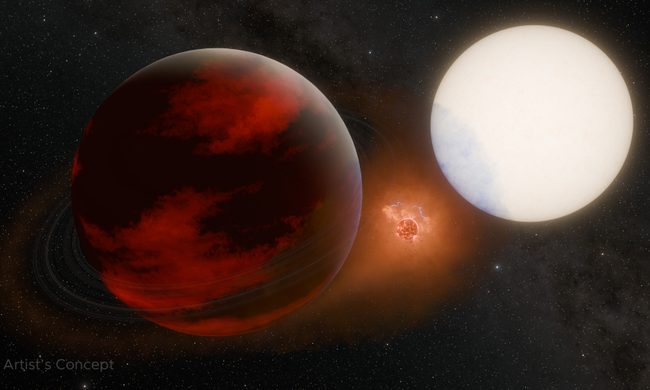
This artist’s concept depicts a potential volcanic moon between the exoplanet WASP-49 b, left, and its parent star. New evidence indicating that a massive sodium cloud observed near WASP-49 b is produced by neither the planet nor the star has prompted researchers to ask if its origin could be an exomoon.

We have already discovered more than 6,000 planets outside of our immediate neighborhood. Yet, finding a moon orbiting one of those distant worlds has proved considerably harder. Astronomers may finally have something close to the real deal, but this particular object stretches the word “moon” almost beyond recognition.

Using the European Southern Observatory’s Very Large Telescope in Chile, researchers detected strong evidence for a moon-like object in the CD-35 2722 system. Further observations are still necessary to confirm the discovery, but it could become the first confidently detected natural satellite outside our solar system. There is still one tiny complication though. This moon is apparently massive.

Read more
China’s answer to SpaceX’s reusable rockets literally catches boosters in a net
SpaceX catches boosters on legs. China just used a net.
Ammunition, Missile, Weapon

SpaceX's playbook for recovering a rocket booster generally involves legs, a precisely controlled vertical landing, and either a concrete pad or a drone ship. 

China just managed to pull off something similar, but in a slightly different way, and on July 10, it tested the method as well.

Read more