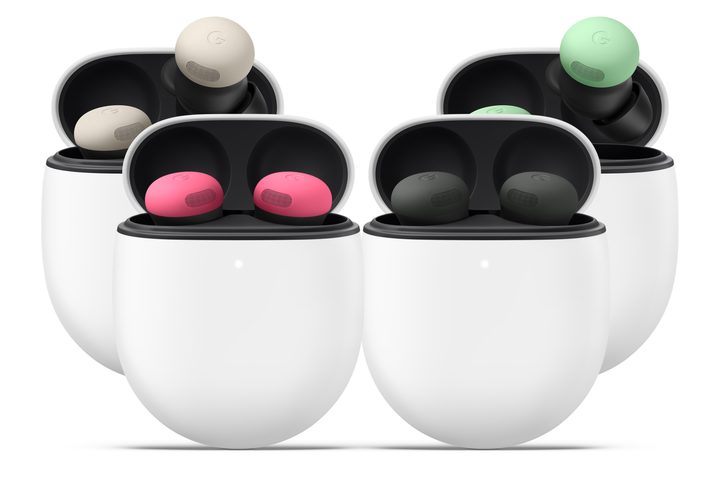
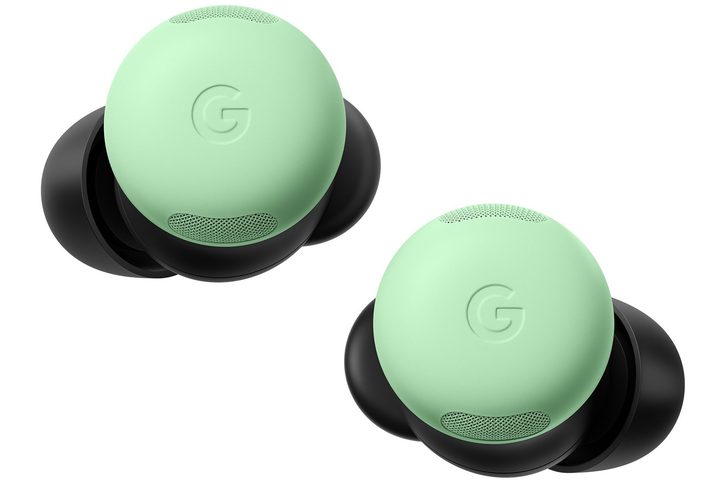
Google’s newest wireless earbuds are now (after copious leaks) finally official: The Google Pixel Buds Pro 2 will come in off-white, dark gray, mint, and pink colors when they go on sale in September for $229, an almost $30 increase from the price the company set for the first-gen Pixel Buds Pro.
Google says it has made many improvements both internally and externally, though many of their capabilities have already been added to the first-gen Buds Pro via firmware updates.
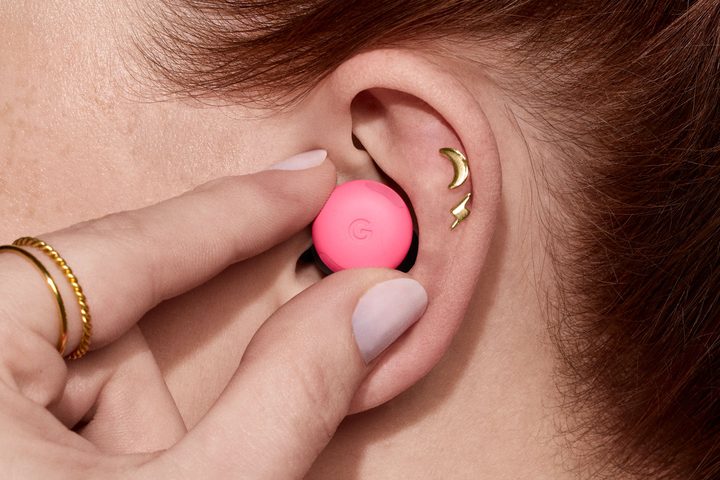
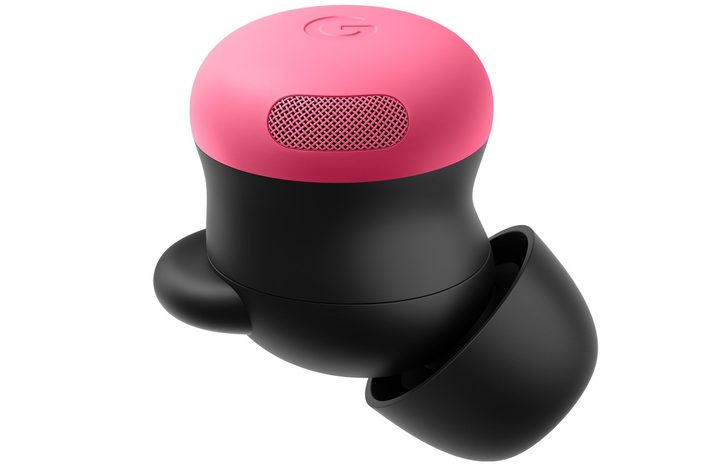
The biggest change is the size and shape. Both smaller and lighter, the company claims it has achieved a 27% reduction in size and a 24% decrease in weight. The mics are tucked behind new wind-blocking mesh covers, which are now color-matched to the earbuds.
With a new stabilizer that increases contact with the ear as you twist the buds into place, Google says it has designed the Buds Pro 2 using 45 million data points from ear scans — to be “the most comfortable and secure-fitting earbuds.” To help with fit, there are now four sizes of included eartips instead of three.
Both the earbuds and the case are now more rugged: the earbuds add dust protection for an IP54 rating, while the case’s resistance to water has been improved from IPX2 to IPX4. Though physically nearly identical to the Buds Pro case (which was itself very close to the Pixel Buds A-Series case), it now includes a ringtone speaker for better Find My locating, something that Apple added to the second-gen AirPod Pro.
Inside the Pixel Buds Pro 2 lives a new audio system that Google says it designed entirely in-house. Sound is provided by 11mm dynamic drivers, which are supported by a new “high-frequency chamber” for smoother treble. But the most intriguing element is the inclusion of Google’s Tensor A1 chip.
The A1 appears to be playing many roles in the Pixel Buds Pro 2. It performs Silent Seal 2.0 ANC calculations at a rate of 3 million times per second, which delivers twice as much noise canceling, according to the company. Apparently the chip can process ANC separately from music, which results in “unaltered, pure sound,” though it’s not entirely clear how that helps given that both ANC and music are ultimately combined and performed by the same drivers.
Conversation detection returns on the Buds Pro 2, which lets them switch to transparency mode while also pausing your tunes, whenever they sense you’re speaking.
The chip also helps with the Pixel Buds Pro 2’s onboard Gemini capability (which still needs a compatible Google Pixel phone) and also with call quality. In addition to Bluetooth Super Wideband, which delivers more bandwidth for voice when using a compatible phone, Google says the Pixel Buds Pro 2 can clean up the audio of the person on the other end of the line if they’re in a noisy or challenging environment — regardless of which phone or earbuds they’re using.
Personally, I’m more interested in whether the Buds Pro 2 improve on noise management on their side of the call — this was one notable weak spot on the first-gen.
Battery life is another area where Google claims some improvements. While single-charge playtime has only increased by an hour (from seven to eight hours with ANC on), total time has jumped from 20 to 30 hours when you include the case. These numbers will go up with ANC off, but Google hasn’t said by how much. Also new is fast charging: With ANC off, a five-minute charge will get you an extra 1.5 hours of playtime.

Google is using Bluetooth 5.4 with support for LE Audio. Usually when other earbud makers have included LE Audio, they also promise support for Bluetooth Auracast, but so far, Auracast compatibility hasn’t been mentioned.
Once again, Google doesn’t appear to have much interest in hi-res codecs like LDAC or aptX HD/Adaptive, but with LE Audio onboard, it’s possible we’ll see LC3 Plus added in the future, which would offer some of the benefits of hi-res audio. Spatial audio mode can be turned on, along with head tracking.
Digital Trends’ mobile editor, Joe Maring, got some very quick hands-on time with the new earbuds at a recent Google event. While the demo didn’t include any listening time, Joe was able to get a feel for the fit, which he describes as “very easy and comfortable to wear.” He also noted that the stabilizers appear to be well-executed and made the earbuds feel nicely secure.