1. Home
  2. Space
  3. News

Starliner astronauts to return to Earth in SpaceX Dragon next year

Add as a preferred source on Google
Boeing's Starliner spacecraft docked at the space station.
Boeing's Starliner spacecraft docked at the space station. NASA

Two NASA astronauts who have been stuck in orbit for over two months after the Boeing Starliner spacecraft they traveled in developed a fault on the outward journey will return to Earth in a SpaceX Dragon craft next year. Butch Wilmore and Suni Williams were aboard the Starliner for what was supposed to be a one-week test flight, but issues with the craft’s thrusters have forced it to remain docked at the International Space Station for testing. Now, the Starliner will return home uncrewed, and the astronauts will stay on the station to complete a six-month stint there.

This is a major setback for both NASA and Boeing, as NASA has repeatedly stressed its desire for multiple commercial options for travel to the space station in addition to the SpaceX Dragon. But engineers have struggled to replicate and solve the issues with the Starliner from the ground, and the agency says it is prioritizing the safety of Wilmore and Williams by keeping them aboard the station.

Recommended Videos

“Spaceflight is risky, even at its safest and most routine. A test flight, by nature, is neither safe, nor routine,” said NASA Administrator Bill Nelson. “The decision to keep Butch and Suni aboard the International Space Station and bring Boeing’s Starliner home uncrewed is the result of our commitment to safety: our core value and our North Star. I’m grateful to both the NASA and Boeing teams for all their incredible and detailed work.”
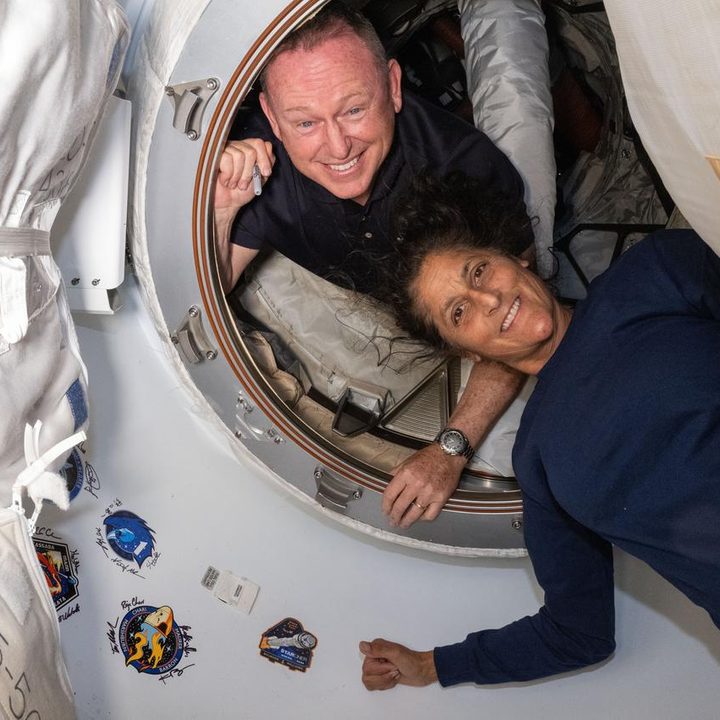
NASA’s Boeing Crew Flight Test astronauts (from top) Butch Wilmore and Suni Williams pose on June 13, 2024 for a portrait inside the vestibule between the forward port on the International Space Station’s Harmony module and Boeing’s Starliner spacecraft.
NASA’s Boeing Crew Flight Test astronauts (from top) Butch Wilmore and Suni Williams pose on June 13, 2024 for a portrait inside the vestibule between the forward port on the International Space Station’s Harmony module and Boeing’s Starliner spacecraft. NASA

The two astronauts will join Crew-9, a SpaceX mission that will launch with two astronauts instead of the usual four next month. Wilmore and Williams will become a part of this crew, then travel home along with them in the Dragon in February 2025.

But before Crew-9 can launch, the Starliner needs to return to Earth for more testing and fixing, so it can free up a docking port on the station for the Dragon. NASA has not yet announced a date for this departure, but it will need to be in the next few weeks to make room for the Crew-9 arrival.

Once Starliner has returned to Earth, NASA says it will conduct a review to see what needs to be fixed on the spacecraft before it can be used to transport crew again. However, the agency has continued to express confidence the the Starliner can work eventually.

“Starliner is a very capable spacecraft and, ultimately, this comes down to needing a higher level of certainty to perform a crewed return,” said Steve Stich, manager of NASA’s Commercial Crew Program. “The NASA and Boeing teams have completed a tremendous amount of testing and analysis, and this flight test is providing critical information on Starliner’s performance in space. Our efforts will help prepare for the uncrewed return and will greatly benefit future corrective actions for the spacecraft.”

Georgina Torbet
Georgina has been the space writer at Digital Trends space writer for six years, covering human space exploration, planetary…
China’s answer to SpaceX’s reusable rockets literally catches boosters in a net
SpaceX catches boosters on legs. China just used a net.
Ammunition, Missile, Weapon

SpaceX's playbook for recovering a rocket booster generally involves legs, a precisely controlled vertical landing, and either a concrete pad or a drone ship. 

China just managed to pull off something similar, but in a slightly different way, and on July 10, it tested the method as well.

Read more
Dimming the sun sounds unhinged, but this new study on El Niño makes a surprisingly good case for it
A natural test case, Australia's worst-ever wildfire season, suggests the idea deserves serious consideration.
Nature, Outdoors, Sky

When I first saw "scientists propose dimming the sun," I rolled my eyes. It sounds like a science fiction movie cooked up after watching many climate documentaries. But a new study, published on July 8, 2026, in the journal Science Advances, seems to have a genuinely compelling argument.

A Super El Niño is currently forming in the Pacific, feared to be the most intense in decades. It could escalate floods, wildfires, and extreme heat events worldwide. However, Researchers at UC San Diego's Scripps Institution of Oceanography, led by climate scientists Kate Ricke and Jessica Wan, are now proposing one of the most interesting solutions I’ve come across.

Read more
You can now walk through space and gaze into a black hole at this VR exhibit
Smithsonian Starstruck lets you drift past dying stars and see the origin point of the universe for as little as $18 a person.
Smithsonian Starstruck featured

Most planetarium shows ask you to sit still and look up. The Smithsonian's new VR exhibit takes a different approach, letting visitors walk through the vast expanse of the universe, drifting past stars, planets, and a black hole to get a physical sense of its true scale.

A $29 ticket to the edge of the galaxy

Read more