  1. Home
  2. Cars
  3. Emerging Tech
  4. News

Digital Trends may earn a commission when you buy through links on our site. Why trust us?

Waymo, Nexar present AI-based study to protect ‘vulnerable’ road users

Add as a preferred source on Google
waymo data vulnerable road users ml still  1
Image used with permission by copyright holder

Robotaxi operator Waymo says its partnership with Nexar, a machine-learning tech firm dedicated to improving road safety, has yielded the largest dataset of its kind in the U.S., which will help inform the driving of its own automated vehicles.

As part of its latest research with Nexar, Waymo has reconstructed hundreds of crashes involving what it calls ‘vulnerable road users’ (VRUs), such as pedestrians walking through crosswalks, biyclists in city streets, or high-speed motorcycle riders on highways.

Recommended Videos

“By leveraging over 500 million miles of Nexar’s driving data, we’ve been able to capture a wide range of driving events and environments, providing a more comprehensive picture of VRU safety than ever before,” Waymo says in a blog on its website.

The National Highway Traffic Safety Administration estimates that in 2022 alone, 7,522 pedestrians were killed and more than 67,000 were injured in the U.S.

Yet, Waymo says data on collisions with VRUs remains scarce compared to vehicle-to-vehicle collisions, as many incidents do not get reported to the police or insurance companies.

Besides its own driving fleet, Waymo says other autonomous driving companies can use the collected dataset to evaluate an automated system’s performance in simulations ahead of deployment.

So far, Alphabet-owned Waymo operates the only functioning robotaxi service in the U.S., with a fleet of about 700 self-driving vehicles already on the road in Phoenix, Los Angeles and San Francisco.

Rival services still under development include General Motors’ Cruise, Amazon’s Zoox, and Tesla’s Robotaxi.

Cruise had to stop operations last year after one of its vehicles struck a pedestrian. And in October, regulators opened an investigation into 2.4 million Tesla vehicles equipped with its full-self driving (FSD) software following three reported collisions and a fatal crash.

Tesla’s self-driving technology relies on multiple onboard cameras to feed machine-learning models that, in turn, help the car make decisions.

Meanwhile, Waymo’s technology relies on premapped roads, sensors, cameras, radar, and lidar (a laser-light radar).

Nick Godt
Former Freelance reporter
Nick Godt has covered global business news on three continents for over 25 years.
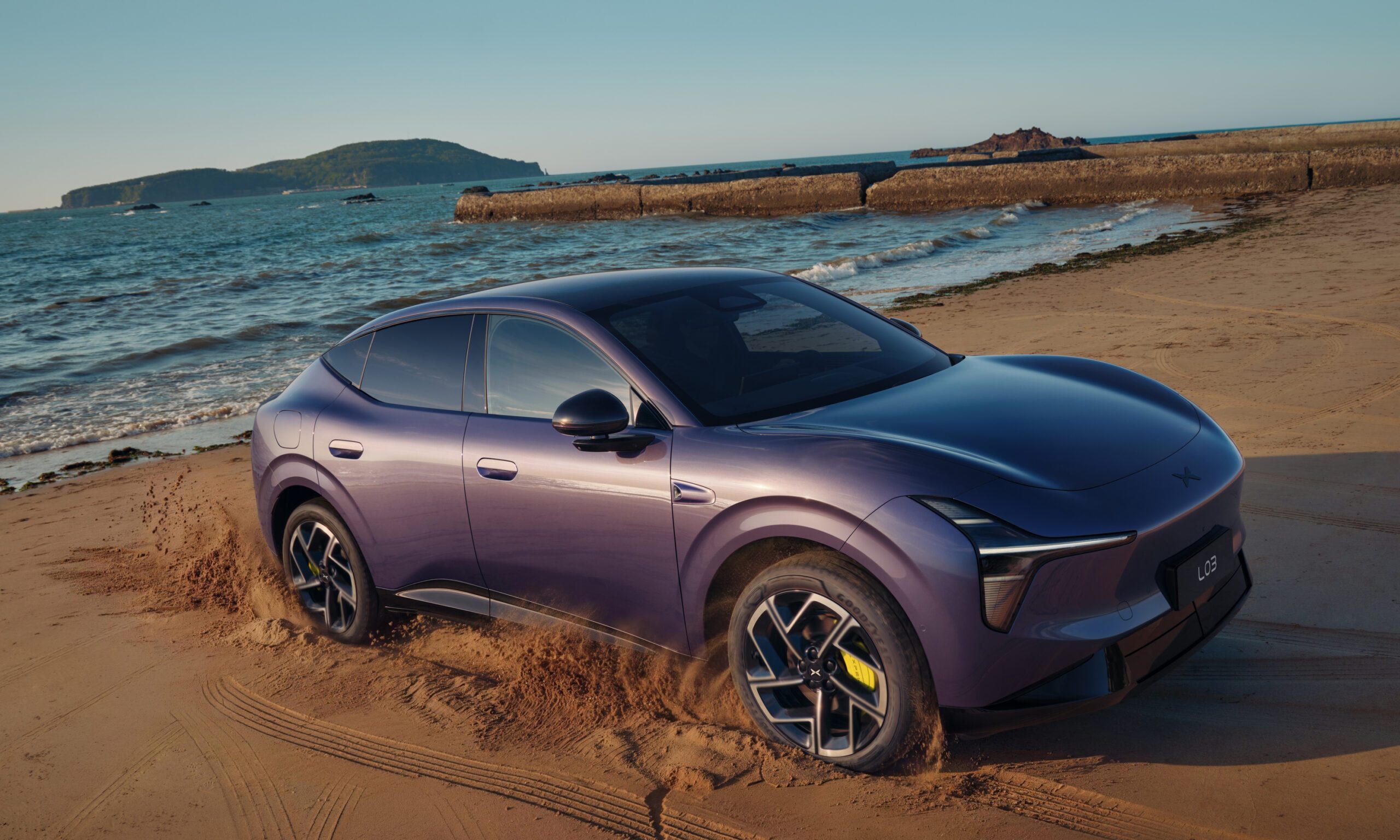
This sleek Chinese EV pairs supercar styling with three AI brains
The Xpeng L03 is an AI supercomputer disguised as a stylish family SUV
Xpeng L03

Xpeng’s latest electric vehicle carries enough processing power to make the term "smart car" actually sound more realistic than it actually is. The new Xpeng L03 debuted simultaneously in Europe and China on July 16, with the company presenting it across 65 markets. Available as a fully electric vehicle and an L03 Power X range-extender, the coupe-SUV is Xpeng’s most internationally focused model so far. Market-specific prices and sales dates remain unannounced.

Three AI chips and Google Maps built right in

Read more
A new sodium battery posts wild four-minute charging numbers, but don’t expect it in an EV yet
The breakthrough could improve fast charging and battery life, but the study hasn’t demonstrated those results in a production-sized pack
EV Charger

A new sodium-metal battery has posted a charging number that makes today’s EVs look painfully slow. In laboratory testing, the cell operated at a 15C rate, equivalent to completing a charge or discharge in roughly four minutes.

That doesn’t mean researchers plugged in an electric car and watched it fill up before the driver finished buying coffee. The result came from a small experimental cell using a new quasi-solid electrolyte, while the larger pouch-cell prototype delivered far less dramatic performance.

Read more
The Apple Car may be dead, but it became the foundation of Apple Intelligence
A decade of work on a canceled car project reportedly laid the groundwork for Apple Intelligence.
Apple Intelligence in Apple Car

The Apple Car may have never left the garage, but it apparently gave birth to Apple's AI ambitions. According to Bloomberg's Mark Gurman, Apple's canceled autonomous vehicle project, one that consumed more than a decade of work and over $10 billion before being scrapped in 2024, ended up laying the technological foundation for Apple Intelligence. In a rather ironic twist, one of Apple's most expensive failures may also become one of its most important long-term investments.

The Apple Car forced Apple to think like an AI company

Read more