1. Home
  2. Space
  3. News

Don’t miss the Beaver Moon, the last supermoon of 2024

Add as a preferred source on Google
A supermoon rises over Huntsville, Alabama, home to NASA’s Marshall Space Flight Center, Aug. 19, 2024. Supermoons are the biggest and brightest full Moons of the year because the Moon is within 90% of its closest point to Earth.
A supermoon rises over Huntsville, Alabama, home to NASA’s Marshall Space Flight Center, Aug. 19, 2024. Supermoons are the biggest and brightest full Moons of the year because the Moon is within 90% of its closest point to Earth. NASA/Michael DeMocker

It’s an exciting time for skywatchers right now, as not only is there the Leonid meter shower to look forward to, but there’s also the last supermoon of the year appearing tomorrow, November 15. Known as the Beaver Moon, the moon will appear bigger and brighter than usual, so it’s worth heading out and looking up for a chance to marvel at the beauty of the night sky.

A supermoon occurs when the moon is at its closest point to Earth. Although we tend to think of the moon’s orbit as a perfect circle, it is in fact slightly elliptical, so sometimes the moon is further away and sometimes, like tomorrow, it is much closer. There is a difference of 27,000 miles from the moon’s most distant point (called its apogee, with an average of 253,000 miles from Earth) to its nearest point (called the perigee, with an average of 226,00 miles from Earth), and this difference is enough to make the moon appear significantly larger or smaller than usual.

Recommended Videos

As well as being at its closest point to Earth, a moon must also be full to be a supermoon, and that will occur starting Friday. The combination of being a full moon and being at its perigee means the moon will appear 14% bigger and 30% brighter than when its at its smallest and dimmest during an apogee. And if you’re wondering what this point is called, the opposite of a supermoon, it’s the charmingly named micromoon.

Though supermoons are a regular feature of the moon’s orbit, this will be the last one for 2024. “The moon’s orbit takes it around the Earth about once every 27-and-one-third days,” said NASA research scientist Dennis Gallagher in a statement. “That time of closest approach to Earth, or perigee, happens three or four times each year due to the motions of Earth and the moon around the sun.”

The November full moon is known as the Beaver Moon, and this name is thought to come from Native American folklore as this is the time of year when beavers are busy building up their dams and storing food for the winter. You’ll also see it referred to as a Frost Moon or Snow Moon, as this is the time of year that winter weather arrives in full force in North America.

The Beaver Moon officially becomes full at 4:28 p.m. ET on November 15, but if you’d like to observe it, then your best bet is to wait for twilight and the look to the east, where the moon rises, as it will look most impressive when over the horizon.

Georgina Torbet
Georgina has been the space writer at Digital Trends space writer for six years, covering human space exploration, planetary…
Space is becoming Bezos and Musk’s next data center site, and we have every reason to worry
The AI boom is coming for the night sky
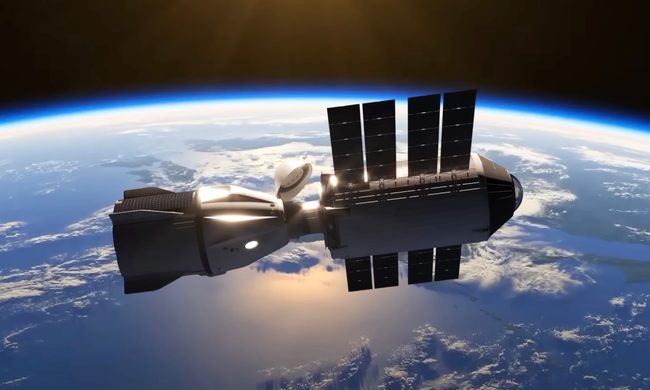
How Vast's space station will look in orbit.

AI data centers already consume vast amounts of electricity and water on Earth, so Silicon Valley has begun looking somewhere considerably more spacious... literally.

Elon Musk's SpaceX and Jeff Bezos' Blue Origin, along with several other companies, have proposed enormous constellations of satellites designed to operate as orbital data centers. However, environmental groups and former space officials are now warning that putting them into orbit at the proposed scale could have severe consequences for Earth's atmosphere and the night sky.

Read more
The first possible exomoon is here, and it makes our Moon look hilariously tiny
Scientists may have found the first exomoon, except this one is the size of Jupiter
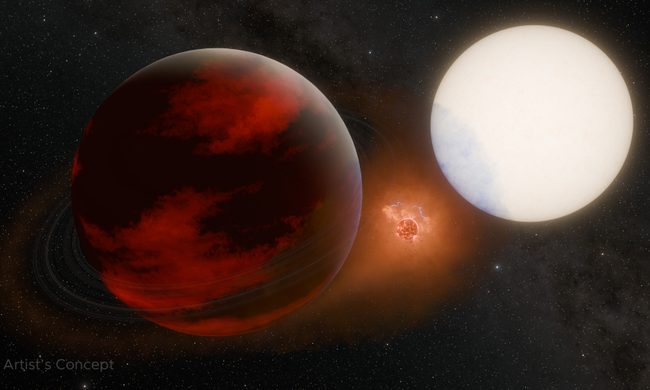
This artist’s concept depicts a potential volcanic moon between the exoplanet WASP-49 b, left, and its parent star. New evidence indicating that a massive sodium cloud observed near WASP-49 b is produced by neither the planet nor the star has prompted researchers to ask if its origin could be an exomoon.

We have already discovered more than 6,000 planets outside of our immediate neighborhood. Yet, finding a moon orbiting one of those distant worlds has proved considerably harder. Astronomers may finally have something close to the real deal, but this particular object stretches the word “moon” almost beyond recognition.

Using the European Southern Observatory’s Very Large Telescope in Chile, researchers detected strong evidence for a moon-like object in the CD-35 2722 system. Further observations are still necessary to confirm the discovery, but it could become the first confidently detected natural satellite outside our solar system. There is still one tiny complication though. This moon is apparently massive.

Read more
China’s answer to SpaceX’s reusable rockets literally catches boosters in a net
SpaceX catches boosters on legs. China just used a net.
Ammunition, Missile, Weapon

SpaceX's playbook for recovering a rocket booster generally involves legs, a precisely controlled vertical landing, and either a concrete pad or a drone ship. 

China just managed to pull off something similar, but in a slightly different way, and on July 10, it tested the method as well.

Read more