1. Home
  2. Wearables
  3. Computing
  4. Emerging Tech
  5. Mobile
  6. News

These unique smart glasses skirt hype and solve a real medical problem

Add as a preferred source on Google
Front view of the SolidddVision smartglasses.
Soliddd
CES 2026
Read and watch our complete CES coverage here

Smart glasses are increasingly being pushed as the future of personal computing. But so far, an overwhelming majority have focused on aspects like social media sharing, pulling up AI agents, or media consumption. Soliddd wants to push smart glasses into a challenging niche of medical science.

At CES 2025, the New York City-based company introduced SolidddVision smart glasses. Soliddd claims these are “the first true vision correction for people living with vision loss due to macular degeneration.” Notably, these glasses won’t require any FDA clearance and will enter the market later this year.

Recommended Videos

Macular degeneration is an age-related condition that prevents people from seeing what’s directly in their line of sight, blocking their central vision due to degeneration of the macular region of the retina.
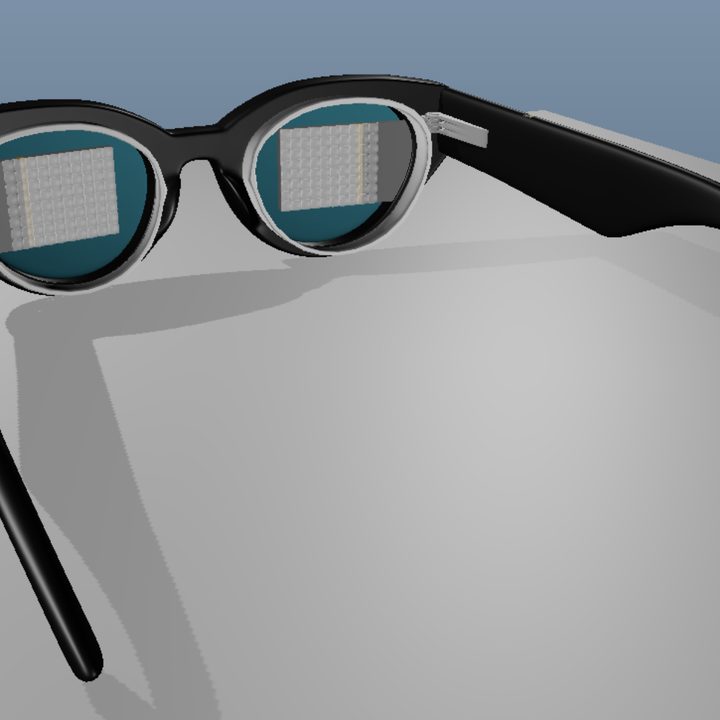
Interior view of the SolidddVision smartglasses.
Soliddd

Millions of people across the world suffer from dry and wet macular degeneration. Unfortunately, there’s no cure for it, though, there are some drugs that can sometimes improve the vision, or simply arrest the damage.

“We can provide sight in areas of the visual field where patients otherwise see nothing,” Neal Weinstock, founding chief of Soliddd, said in the announcement. Results from a clinical study involving the SolidddVision glasses have also yielded a positive outlook.
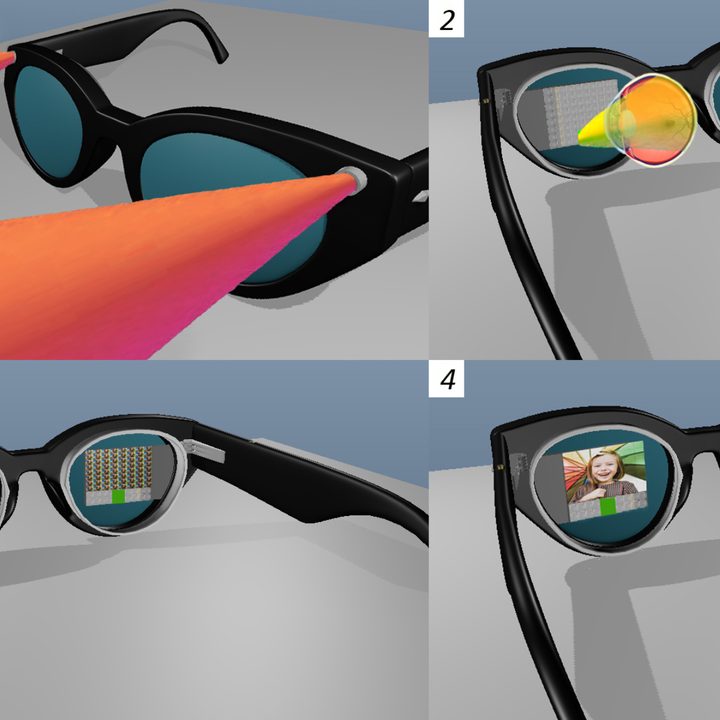
Working design of the SolidddVision smartglasses.
Soliddd

The SolidddVision smart glasses take a leaf out of the VR playbook to allow sight restoration for people living with macular degeneration. Inspired by a fly’s eye, these smart glasses employ a proprietary lens array that pushes multiple images to the retinal zone that is still healthy.

The trick here is to let the brain construct “a single full-field image with good acuity that feels like normal, in-focus sight.” The whole system is a combined effort of patented optical design and software, beaming in-focus views courtesy of a parallel-ray light field.
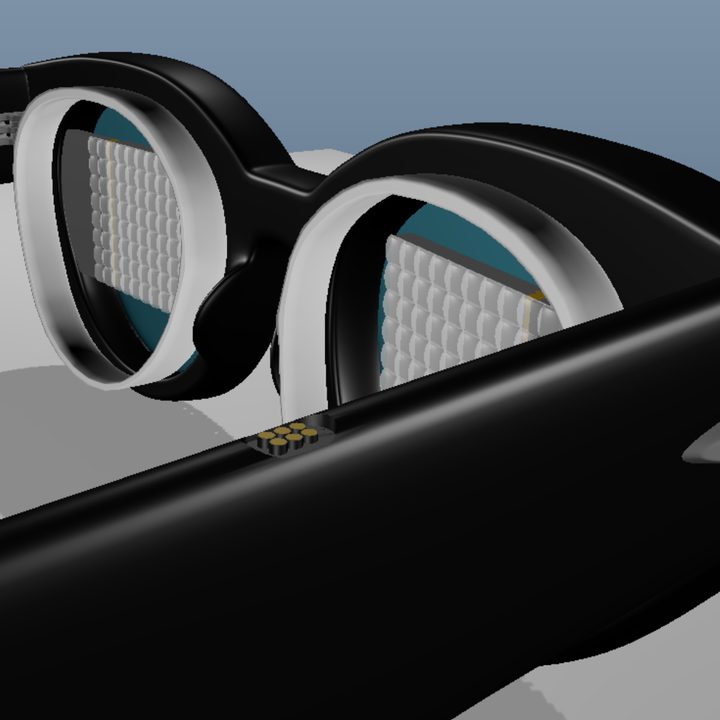
Interior display unit of the SolidddVision smartglasses.
Soliddd

There are two front-facing cameras to capture the world outside, and an equal number of inward-facing cameras for mapping the eyes and gaze tracking. The software combines the input video with eye mapping data, performs spatial adjustments, employs the necessary color correction, and beams the final view to the internal display units.

The SolidddVision glasses are currently in the beta-testing phase, but the company is eying a market launch in 2025. So far, the SolidddVision glasses appear to be the most practically rewarding implementation of this wearable form factor, and it would be interesting to see where the technology leads.

Nadeem Sarwar
Nadeem is the Managing Editor at Digital Trends.
Nothing’s first proper smartwatch could be the wrist candy Android needs
Nothing wants to put some personality back on your wrist
Wristwatch, Arm, Body Part

Just like how smartphones have settled into a familiar routine, smartwatches have also become quite predictable. But Nothing might be planning on shaking things up for wearables. A tipster claims the company is preparing its first smartwatch under the main Nothing brand. The unnamed wearable will reportedly launch in September, cost less than $300 in the US, and initially reach a limited number of markets.

Its design is also said to carry the “typical Nothing DNA” that has helped the company’s phones and audio gear stand apart. Right after this, Nothing co-founder Akis Evangelidis joined the conversation with a separate, cryptic post. It adds some company-side smoke to the leak, although Nothing has yet to announce the watch or reveal any hardware details formally.

Read more
Google could soon let you unlock your Pixel Watch with your phone
An in-development feature could flip the current Watch Unlock feature, letting an authenticated phone unlock the watch automatically.
Google Pixel Watch 4 in black in the hand

If you've set up a PIN on your Pixel Watch, you already know the prompt that shows up every time you slip it back on your wrist. It's a useful security measure, but entering a PIN on that small screen multiple times a day gets old fast. A new report suggests Google may be working on a way to let you skip it.

Watch Unlock in reverse

Read more
A new iPhone app can sniff out Meta smart glasses lurking nearby
Your iPhone can now keep an eye on the glasses keeping an eye on you
The Ray-Ban Meta smartglasses and case.

Android users got an unusual privacy tool earlier this year that could alert them when smart glasses were nearby. Five months later, iPhone owners finally have something similar, and its name makes its feelings about Meta pretty obvious.

AntiZuck is a $2.99 iPhone app that scans for Bluetooth signals associated with smart glasses and alerts you when it thinks one is close. It supports devices including Meta Ray-Bans, Snap Spectacles, Amazon Echo Frames, and RayNeo glasses, while the developer says additional hardware is being added.

Read more