1. Home
  2. Computing
  3. Deals

Sick of spam calls? Us too – which is why we got Incogni (and saved 55%!)

Add as a preferred source on Google
Good Deal Incogni remove personal information from identity thieves
Incogni

By now, you may be absolutely sick of spam calls. I have the Pixel 8 Pro, which does a pretty nice job of telling me when a spam call might be incoming, but I still waste time and get distracted parsing it every time that happens. To make the situation better, improve my overall data privacy, and save some money on a limited time offer, I might consider signing up for Incogni. Incogni removes personal info from the web and other data brokers to help you regain privacy and reduce annoying calls. And, right now, it is 55% off for the year if you use code DIGITALDEAL upon checkout. That means you can get a 2025 with reduced spam calls (and better overall privacy) for just $81. That’s a savings of $99 over the usual $180, which is a pretty good deal if you ask us. Tap the button below to check it out for yourself, or keep reading to see why Incogni is a good choice for spam reduction.

GET INCOGNI

Why you should get Incogni

Incogni is a very well-rounded personal data removal service. That means that it targets the people search sites that anyone can stumble upon via a simple Google or Bing search, as well as more complex data brokerages that contain detailed information about your financial records, medical history, and more. Of course, in addition to this sort of information, these databases also have access to your phone number, which can generate further calls. Incogni uses its large knowledgebase in the sector to target these data brokerages on your behalf, reducing both the amount of knowledge available about you and spam calls along the way. There’s no simpler way to reduce your personal data than to have a team do it for you, and Incogni remains one of the best teams to do that job.

To reiterate, a year of Incogni is 55% off right now if you use code DIGITALDEAL when you checkout. That makes it just $81, not $180, for you right now. Just tap the button below and you’ll find the offer.

GET INCOGNI

John Alexander
Former Digital Trends Contributor
John Alexander is a former ESL teacher, current writer and internet addict, and lacks the wisdom to know what the future…
Amazon wants to design in-house chips for Kindles, Fire TV, and Echo speakers
Apple did it first. Amazon is doing it now, starting with 40 million chips a year and a partner most people have never heard of.
Amazon Kindle Scribe dark mode featured image.

Apple's decision to design its own chips reshaped the consumer electronics industry. Amazon may be about to make the same call, just about two decades later.

Supply chain analyst Ming-Chi Kuo reports that Amazon is preparing to shift away from externally sourced processors for its consumer electronics lineup, marking what he describes as the company's first major processor procurement change in 20 years. The transition is expected to begin in 2027.

Read more
AI wants to summarize it all. TripAdvisor’s misleading reviews show AI will also ruin your travel plans
Spotless, friendly, and totally wrong. AI summaries are hiding the reviews that actually matter.
Tripadvisor logo on MacBook

Planning a trip is stressful enough without wondering if the glowing hotel summary you just read was written by an AI that skipped the scary parts. As it turns out, that might be exactly what's happening on TripAdvisor.

According to an investigation by consumer group Which?, reported by the Guardian, TripAdvisor's AI-generated review summaries are smoothing over serious guest complaints, and in some cases, downright dangerous ones.

Read more
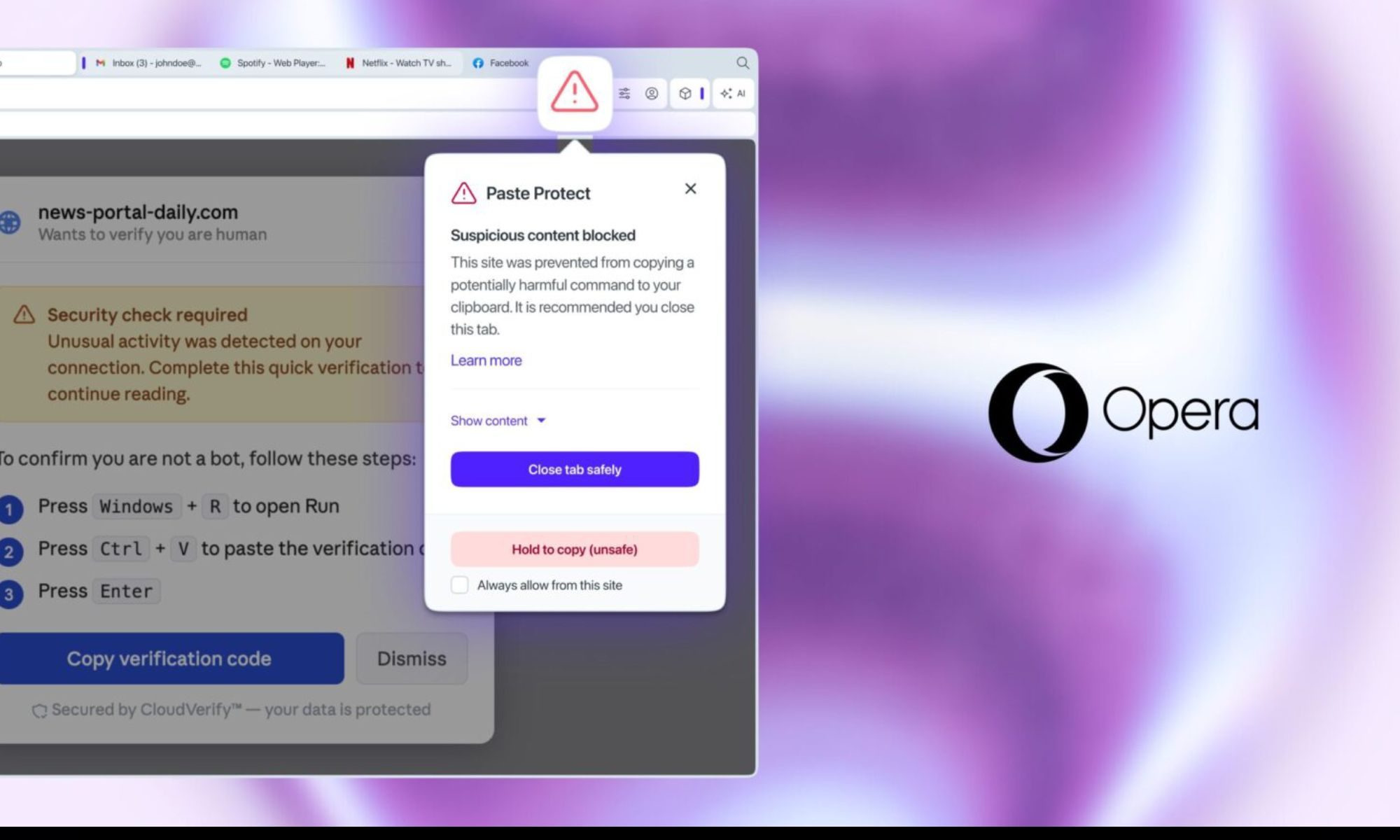
Opera’s new Paste Protect feature stops the clipboard attack your antivirus can’t catch
ClickFix attacks trick you into compromising your own device, and no major browser had a native defense against them until now.
Opera Paste Protect featured

Most online scams are easy enough to spot once you know what to look for. Fake login pages, suspicious attachments, or urgent wire transfer requests are dead giveaways. But ClickFix doesn't look like any of them. It presents itself as a solution, and it asks you to do something so routine that few people think twice about it.

The technique was behind more than 53 percent of malware loader incidents last year, according to cybersecurity firm Huntress, and no major browser had a native defense against it until now. Opera is fixing that with a new feature called Paste Protect.

Read more