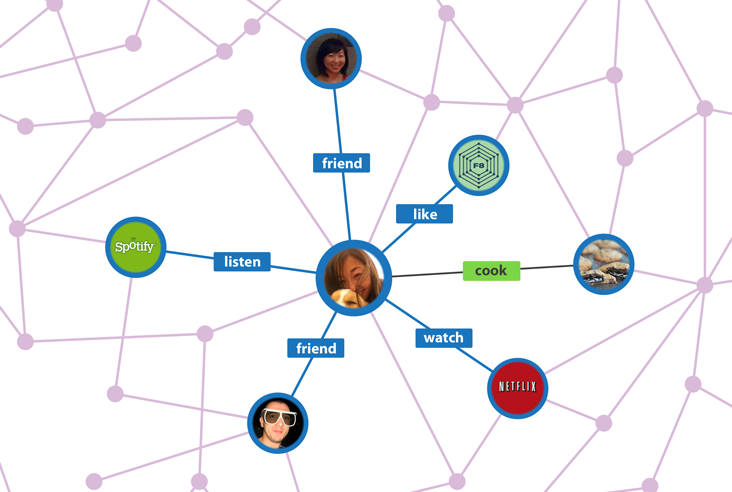
 Facebook has been doing its part to build its ecosystem thanks to the efforts of third-party developers and its Open Graph. While it’s certainly evolving the way we use and interact with the social network, there have been some noticeable missteps along the way — namely the fact that seamless sharing has turned News Feeds into a flood of your friends’ terrible taste in music and political articles you have no interest in.
In order to curb some of the Open Graphs over-share problem, Facebook is implementing a few new rules for developers who want to display content.
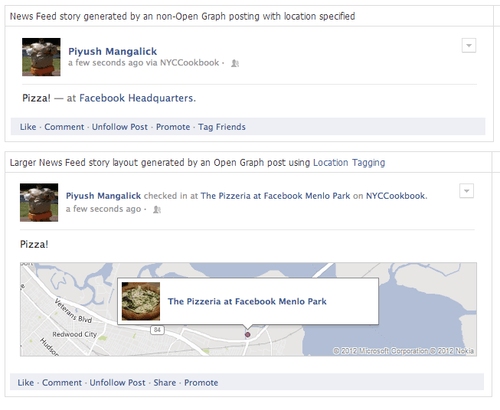
Facebook is increasing the size of its image and location-led stories and adding relevant imagery for developers using the Open Graph. So you may begin to notice that stories published to your Facebook News Feed are larger and more prominently featured, but Facebook claims that based on tests, these changes have boosted engagement rates. “Image-led stories have shown 70 percent more clicks for apps that produce high-quality, relevant imagery with low spam rates,” Facebook says. This will affect two types of Open Graph stories: Location-led and image-led content.
Location-led stories will include a visual map, courtesy of Bing, of your location. Non-Open Graph stories will simply display the city and state or country of your location.
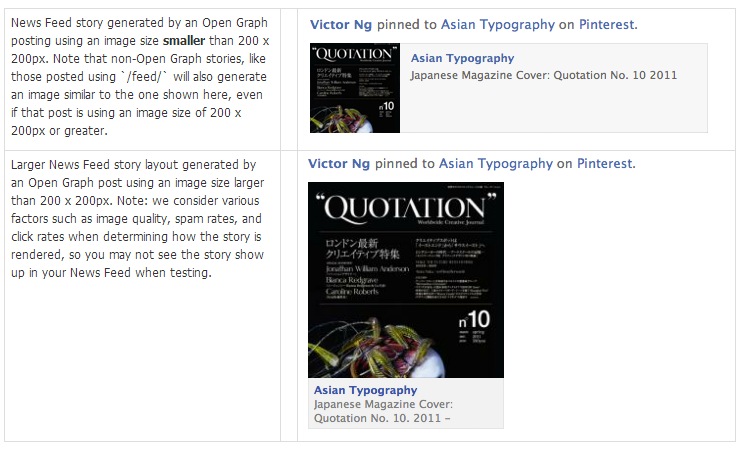
 Developers can now choose to publish 200 x 200 images for image-led stories in lieu of the 50 x 50 images they were previously limited to.
Users will also begin to see fewer automatically published stories (which is sort of a nice word for News Feed spam and smut) that can results from authenticating third-party Facebook apps. “When apps automatically publish stories on a person’s behalf in a way that is unexpected, such as when they browse an online store, it can surprise and confuse people,” Facebook Product Engineer Henry Zhang wrote in Facebook’s blog post.
Realizing this, Facebook is retiring “unexpected” automatic publishing and replacing it with Facebook approved custom actions based on its “Built-in Action Types.” What this means is that while stories can still be published automatically, you’ll have to opt-into Facebook’s preset actions that include “Like,” “Follow,” “Listen,” “Read” and “Watch.” If a developer’s app prompts you to watch a video for example, and you play the video, you’ll have to have watched that content for at least 10 seconds before a “watched an episode of [TV-episode]” appears on your Timeline.
Another change that Facebook is making includes the removal of a feature that allowed developers to force users to request permission for showing content like an article. If you’ve ever tried to read a Washington Times article that was published to your newsfeed, you wouldn’t be taken straight to the article. Instead you were blocked by an “authentication referral” pop-up that then requested permission from you to republish the fact that you’ve read that article. Instead, users will have to log-into that publisher’s Facebook app.
Finally, you can no longer publish content to your friend’s wall using its API as Facebook found that this feature was, to be blunt, generally hated by users. However Facebook will continue to allow users to publish to friend’s walls using the“feed dialog,” where you can share content with a friend using a third-party app — the difference being that the app is commenting on your behalf.
If the Open Graph is going to transform the network and engage users the way Facebook wants it to, the platform has to ride a line between keeping brands and developers happy without spamming and annoying users. Among its efforts to do this include the new Promoted Posts feature, which gives users — all users, not just marketers — a way to surface their content (though it is first and foremost a new revenue source).
Still, quality is the focus over at Facebook right now, which is reflecting in an update to its Platform Policy (section III.A.6.) for developers, which states:
“Quality of content: you are responsible for providing users with a quality experience and must not confuse, defraud, mislead, spam or surprise users. For example, you must monitor your app’s negative feedback in Application Insights to ensure it stays below our thresholds, avoid excessive advertisements or bugs, and ensure the description of your app is consistent with your app’s content.”
The result should be a better controlled News Feed with less third-party posted content.