1. Home
  2. Space
  3. Photography
  4. News

This is what happens ‘when you get two uber-geeks in space at the same time’

Add as a preferred source on Google

During NASA’s first-ever Twitch livestream from the International Space Station (ISS) on Wednesday, current station inhabitant Don Pettit and recent returnee Matthew Dominick talked about what it’s like to live and work in a satellite 250 miles up.

Recommended Videos

It’s worth noting that both Pettit and Dominick have solid reputations as ace space photographers, their imagery of our planet and beyond conveying a real sense of awe and wonder. The pair briefly crossed paths on the station last fall, giving them a chance to nerd out in one another’s presence before Dominick took a ride back to Earth on a SpaceX Crew Dragon spacecraft.

Indeed, during Wednesday’s livestream, Pettit, who at 69 is NASA’s oldest serving astronaut, performed a little skit (top) where he impersonated Dominick to show what happens “when you get two uber-geeks in space at the same time.”

The chat between Pettit and Dominick (both performed by Pettit) centers on the best ISO setting to use for space photography.

Watching the skit, some folks back may wonder if the microgravity conditions are starting to get to Pettit, but anyone who knows him, or has followed his social media posts, knows that he has a keen sense of humor. So we think he’s OK.

In the rest of the stream, Pettit and the real Matthew Dominick offer insights about daily life aboard the space station and the research work they and the other astronauts carry out. And of course, there was plenty of photography-focused chat, too.

For example, the pair discussed Pettit’s efforts to photograph so-called “red sprites,” which are large-scale, transient luminous events that take place in Earth’s upper atmosphere at altitudes ranging from 31 to 56 miles (50 to 90 kilometers). They’re triggered by powerful lightning discharges in thunderstorms, but unlike typical lightning that moves downward toward the ground, red sprites can also move upward into the atmosphere, resembling reverse lightning.

Camera enthusiasts will also want to check out the 1:02:40 mark of the stream where Pettit takes the webcam off its mount to offer a look at some of the cameras set up in the Cupola, the seven-window module that offers the station’s best views of Earth and beyond.

Whether you’re into space, photography, or simply curious what it’s like to live off Earth, there’s plenty to enjoy in NASA’s first Twitch livestream.

Trevor Mogg
Contributing Editor
Not so many moons ago, Trevor moved from one tea-loving island nation that drives on the left (Britain) to another (Japan)…
NASA is investing $590 million in private contractors to build humanity’s first Moon outpost
NASA is counting on private companies to land its Moon Base dream.
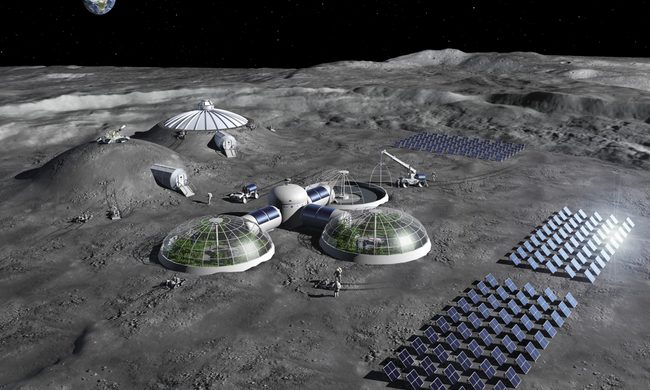
Artist impression of a Moon Base concept, with solar arrays for energy generation, greenhouses for food production, and habitats shielded with regolith.

Building a permanent base on the Moon sounds like science fiction, but NASA is making it feel a lot more real. The agency just handed $590 million in contracts to three private companies for four uncrewed lunar lander missions launching in late 2028.

These missions are part of Phase 1 of NASA's broader $30 billion Moon Base program, which needs to deliver landers, rovers, and scientific cargo up there before astronauts eventually move in. These efforts are closely tied NASA's Artemis program, which sent humans on a lunar flyby in April for the first time since the Apollo era.

Read more
Getting to Mars may require a pit stop in orbit, and NASA just tested the nozzle to make that happen
A gas pump nozzle for spacecraft sounds simple. It is not, and that's what makes this test worth paying attention to.
Architecture, Building, Factory

Getting a spacecraft to Mars or beyond requires an enormous amount of fuel, most of which has to be hauled from Earth, adding to the overall cost and weight of the spacecraft. NASA has been working on a different approach, one that could be more efficient and effective.

It wants to refuel a spacecraft in orbit before heading out for the mission. What’s even more interesting is that the space agency just finished testing a component that could make that possible: a cryocoupler.

Read more
Elon Musk’ Starlink could soon offer mobile services as a US carrier
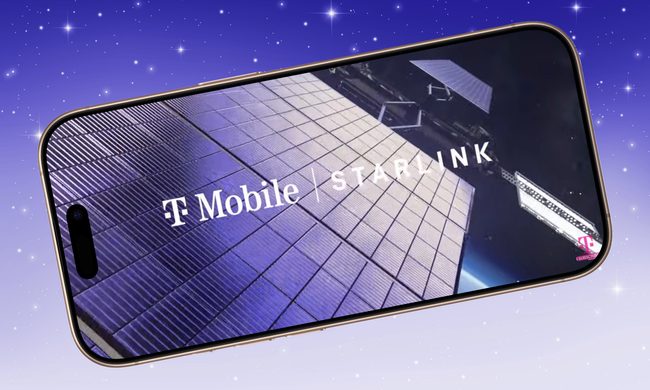
Showcase of T-Mobile Starlink service on an iPhone.

Elon Musk’s Starlink has already changed how millions of people access the internet, especially in places where traditional broadband struggles to reach. Now, the satellite internet service could be preparing for an even bigger leap — becoming your mobile carrier.

According to a Financial Times report, SpaceX has told investors it’s considering launching a retail Starlink mobile service in the US. Instead of simply partnering with wireless carriers, the company could begin selling mobile plans directly to consumers, putting it in direct competition with Verizon, AT&T, and T-Mobile.

Read more