Grado Labs, the Brooklyn-based audio company known for its wired, open-back audiophile headphones, has just released the Signature S950 — the second model in its Signature series — crafted from Brazilian walnut. You can buy the S950 for $2,195 from gradolabs.com.
The S950 share much in common with the Grado Signature HP100 SE, the first Signature model, launched in 2024. Both use detachable cables, which can be swapped for other types — the first Grado models to do so. They also share the same driver design: a 52mm paper composite cone unit with a high-flux magnetic circuit made from rare earth alloys and a lightweight copper-plated aluminum voice coil.
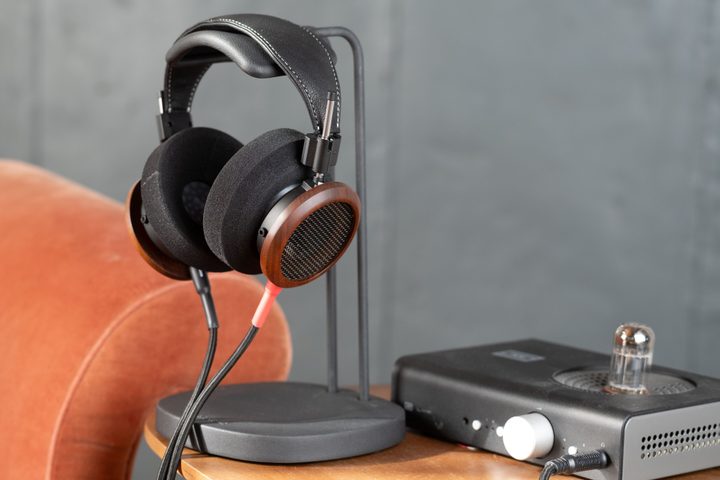
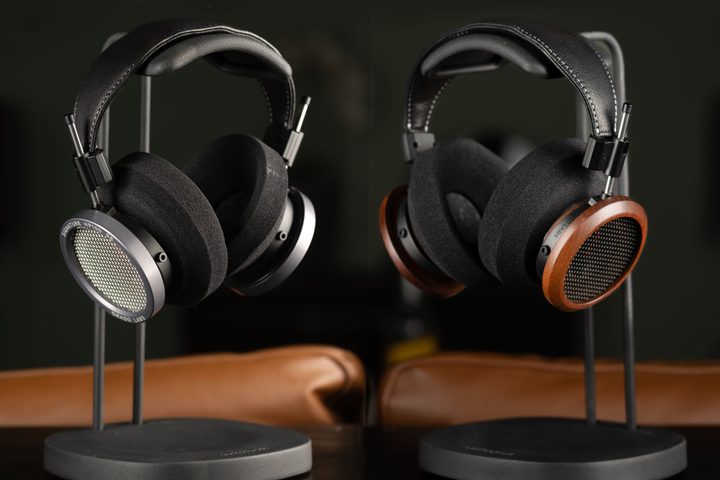
However, the S950 are their own beast. They hew closer to Grado’s long history of using natural woods. Instead of the specially treated aluminum selected for the HP100 SE’s housings, the S950 use Brazilian walnut, the first time this family of woods has appeared in a Grado product. Grado believes that different woods offer distinct sonic characteristics and claims that when paired with specific tweaks to the drivers, the walnut helps to give the S950 a sound signature that’s distinct from the HP100 SE.
In its press release, Grado describes the S950 as possessing a “more neutral and balanced” sound than the HP100 SE. When I pressed a spokesperson on what exactly that means, I was told that the HP100 SE offer additional detail, speed and accuracy, and lean toward the treble, while the S950 are balanced, more relaxed, and lean toward the low-end.
“The audience for both will be someone who wants an insightful, premium pair of headphones for home listening but now has the choice of two sound signatures. They can choose which sound performance suits their tastes.”
On the specs side of things, the two models are nearly identical: Both exhibit a frequency response of 3.5Hz-51.5kHz, a total harmonic distortion of less than 0.1% at 100dB, and 38 ohms of impedance. The one small deviation is in sound pressure level (SPL), with the HP100 SE registering 117dB at 1 milliwatt, while the S950 come in at 115dB.
The S950 weigh just shy of 14 ounces, about 4 ounces lighter than the HP100 SE, revealing yet another benefit to the wood construction. The new cans use the same headband design as their siblings: stainless steel, wrapped in leather, and with 50% more padding than earlier Grado models. It also features stainless-steel adjustable height rods, for a customized fit that allows for 105 degrees of rotation. The cans come with both G and F ear cushions.
The factory ships the S950 with 4pin Mini XLR cables that have a 1/4-inch source connector, but Grado says you’ll be able to buy additional cable types from the company in the near future.