1. Home
  2. Space
  3. News

Watch incredible video of the Blue Ghost spacecraft landing on the moon

Add as a preferred source on Google
Still from the video of Blue Ghost's lunar landing.
Still from the video of Blue Ghost's lunar landing. Firefly Aerospace

This weekend Firefly Aerospace made history with the first fully successful moon landing by a private company, and now you can watch the moment the Blue Ghost lander touched down on the moon in stunning video footage.

Moon Landing - Firefly Blue Ghost Makes History

The footage shows the lander’s final descent to the lunar surface, with views from both downward-facing and outward-facing cameras. As well as the craters covering the moon, you can also see the glare from the sun and the Earth visible in the sky.

Recommended Videos

The mission also captured this gorgeous image of sunrise on the moon, showing the sun peeking over the lunar horizon. A day on the moon lasts around fourteen Earth days, and during this time the Blue Ghost spacecraft will use solar energy collected by its solar panels for power. After two weeks of operations, on March 16, the mission will observe the lunar sunset and then operate for a final few hours into the lunar night before shutting down.
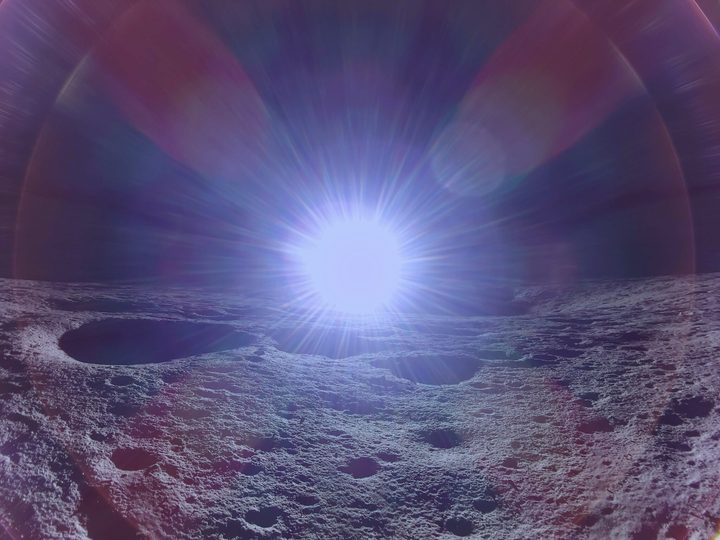
Rise and shine! Firefly’s Blue Ghost lander captured its first sunrise on the Moon, marking the beginning of the lunar day and the start of surface operations in its new home. Our Ghost Riders have already begun operating many of the 10NASA payloads aboard the lander and will continue operations over the next two weeks and into the lunar night.
Rise and shine! Firefly’s Blue Ghost lander captured its first sunrise on the Moon, marking the beginning of the lunar day and the start of surface operations in its new home. Our Ghost Riders have already begun operating many of the 10 NASA payloads aboard the lander and will continue operations over the next two weeks and into the lunar night. Firefly Aerospace

“Up next, Blue Ghost will continue NASA payload operations through March 16. Just in the last two days, our downlinked data increased from 27 GB to 57 GB, including critical science data,” Firefly announced in an update. “Surface operations performed so far include deploying Lunar PlanetVac and sampling lunar regolith, deploying the Electrodynamic Dust Shield and demonstrating dust mitigation, capturing images from SCALPSS, and continuing operations for the other payloads.”

You can see the Lunar PlanetVac instrument deployed onto the surface in this image:
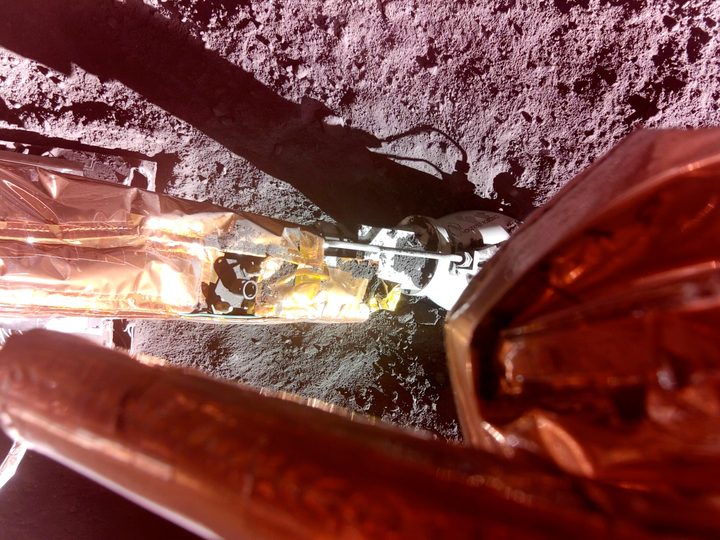
The Lunar PlanetVac instrument, developed by Honeybee Robotics, was deployed to the lunar surface and is shown at the end of Blue Ghost’s surface access arm.
The Lunar PlanetVac instrument, developed by Honeybee Robotics, was deployed to the lunar surface and is shown at the end of Blue Ghost’s surface access arm. Firefly Aerospace

The instrument will test out a method of sample collection using pneumatics, which works by firing a blast of gas at the surface. This lifts up dust and small particles, which are then collected into a chamber for imaging and sieving. If it works, this system will be a cheaper and faster way to collect samples from the moon’s surface than using complex robotic arms for the job.

Georgina Torbet
Georgina has been the space writer at Digital Trends space writer for six years, covering human space exploration, planetary…
China’s answer to SpaceX’s reusable rockets literally catches boosters in a net
SpaceX catches boosters on legs. China just used a net.
Ammunition, Missile, Weapon

SpaceX's playbook for recovering a rocket booster generally involves legs, a precisely controlled vertical landing, and either a concrete pad or a drone ship. 

China just managed to pull off something similar, but in a slightly different way, and on July 10, it tested the method as well.

Read more
Dimming the sun sounds unhinged, but this new study on El Niño makes a surprisingly good case for it
A natural test case, Australia's worst-ever wildfire season, suggests the idea deserves serious consideration.
Nature, Outdoors, Sky

When I first saw "scientists propose dimming the sun," I rolled my eyes. It sounds like a science fiction movie cooked up after watching many climate documentaries. But a new study, published on July 8, 2026, in the journal Science Advances, seems to have a genuinely compelling argument.

A Super El Niño is currently forming in the Pacific, feared to be the most intense in decades. It could escalate floods, wildfires, and extreme heat events worldwide. However, Researchers at UC San Diego's Scripps Institution of Oceanography, led by climate scientists Kate Ricke and Jessica Wan, are now proposing one of the most interesting solutions I’ve come across.

Read more
You can now walk through space and gaze into a black hole at this VR exhibit
Smithsonian Starstruck lets you drift past dying stars and see the origin point of the universe for as little as $18 a person.
Smithsonian Starstruck featured

Most planetarium shows ask you to sit still and look up. The Smithsonian's new VR exhibit takes a different approach, letting visitors walk through the vast expanse of the universe, drifting past stars, planets, and a black hole to get a physical sense of its true scale.

A $29 ticket to the edge of the galaxy

Read more