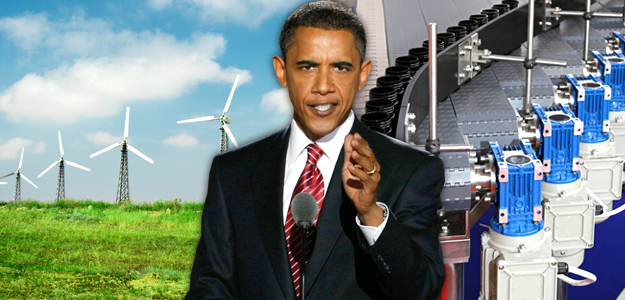
 A couple of years ago, President Obama was having dinner with Silicon Valley movers and shakers, including an ailing Steve Jobs. Although no recording of the dinner has been made available, legend has it that the President asked Jobs what it would take for Apple’s manufacturing jobs to come back to America.
“Those jobs aren’t coming back,” replied Jobs.
Whether that is true or not, during the campaign both President Obama and Governor Romney focused a lot of their energies on plans to bring that kind of manufacturing back to American shores. Now that the president has won a second term, what does that mean for American technology and manufacturing?
Mr. Obama’s plan was built on education and training, investing in clean energy, and giving tax incentives to companies that bring jobs back to America.
Jobs’ grim reply was based on the fact that American workers are no longer trained for the needs of high-tech manufacturing. Obama believes that making college more accessible, both at the university and community college level, is part of the solution for closing that skills gap.
A major focus during Obama’s first term was keeping tuition rates down, doubling funding for Pell Grants, and trying to get community colleges to work together with local employers to better train outgoing students for jobs that already exist locally. There’s every reason to believe that push will continue.
Another creative idea from the campaign trail was the creation of “manufacturing innovation institutes,” where businesses and research institutions work together to make sure that American research and development produces corresponding high-tech manufacturing jobs. How the federal government can spur that idea remains to be seen, but it could be a key step in reshaping the American manufacturing sector and making sure the next Apple keeps its assembly lines here at home.
During the campaign, Obama predictably hit Governor Romney on the Republican Party’s close ties with the oil industry. In his first term, the president advocated an “all of the above” energy policy. He’s willing to explore any source, including oil, which can help America reach a majority of energy independence by 2035. It is now expected that investment in alternative energy technologies will only continue in the next four years.
 During his first term, President Obama pushed ahead with plans to double fuel economy standards for cars and light trucks by 2025, which is spurring the auto industry’s investments in hybrid and electric vehicles and has led to an American manufacturing boom of sorts in battery technology. Since these rules are now under no threat of repeal, cars and light trucks are expected to sip less and less gas in the next four years. Horsepower may be a different story.
One of the places where we heard repeats of 2008’s campaign pledges was in the area of corporate tax structure. The president promised to end tax breaks for companies that participate in outsourcing during his first term and promised to do the same in his second term (which you can assume to mean that the first effort didn’t go so well).
He also wants to provide tax incentives for companies to bring jobs back to the US. Considering Apple currently enjoys a 1.9 percent tax rate on its foreign earnings, I’m not sure how much of an incentive the US government can provide. Perhaps they will mandate that all federal employees will have to buy an iPad Mini. At least all of our forest rangers will have something to do while they’re stuck in those fire towers.
Any conversation about tax policy centers on Congress. In the coming days, it will be interesting to see if our Republican House makes any overtures of bipartisanship to the president now that they know they are stuck with him for another four years. If history is any indication, don’t hold your breath. There’s probably better chance of an impeachment investigation than bipartisan tax reform.
Whatever the case, many pundits believe that the president will be bolder in his second term, enacting whatever policies he can without congressional approval if Congress proves to be as intransigent as they have been in the past. A lot of the policies mentioned above came to pass through that same kind of executive maneuvering. Because of that, the next four years of America’s technology and education policy might be just as much decided in courtrooms as in the Oval Office.