  1. Home
  2. Cars
  3. Emerging Tech
  4. News

Toyota shifts gears: 15 New EVs and a million cars by 2027

Add as a preferred source on Google
Front three quarter view of the 2023 Toyota bZ4X.
Stephen Edelstein / Digital Trends

After years of cautiously navigating the electric vehicle (EV) market, Toyota is finally ramping up its commitment to fully electric vehicles.

The Japanese automaker, which has long relied on hybrids, is now planning to develop about 15 fully electric models by 2027, up from five currently. These models will include vehicles under the Toyota and Lexus brands, with production expected to reach 1 million units annually by that year, according to a report from Nikkei.

Recommended Videos

This strategy marks a significant shift for Toyota, which has thus far remained conservative in its approach to electric cars. The company sold just 140,000 EVs globally in 2024—representing less than 2% of its total global sales. Despite this, Toyota is aiming for a much larger presence in the EV market, targeting approximately 35% of its global production to be electric by the end of the decade.

The Nikkei report suggests the company plans to diversify its production footprint beyond Japan and China and expanding into the U.S., Thailand, and Argentina. This would help mitigate the impact of President Donald Trump’s 25% tariffs on all car imports, as well as reduce delivery times. Toyota is also building a battery plant in North Carolina.

For now, Toyota has only two fully electric vehicles on the U.S. market: The bZ4X  and the Lexus RZ models. The Japanese automaker is expected to introduce new models like the bZ5X and a potential electric version of the popular Tacoma pickup.

Separately, Toyota and Honda, along with South Korea’s Hyundai, all announced on April 4 that they would not be raising prices, at least over the next couple of months, following the imposition of U.S. tariffs. According to a separate Nikkei report, Toyota’s North American division has told its suppliers that it will absorb the extra costs of parts imported from Mexico and Canada. Another 25% for automotive parts imported to the U.S. is slated to come into effect on May 3.

Nick Godt
Former Freelance reporter
Nick Godt has covered global business news on three continents for over 25 years.
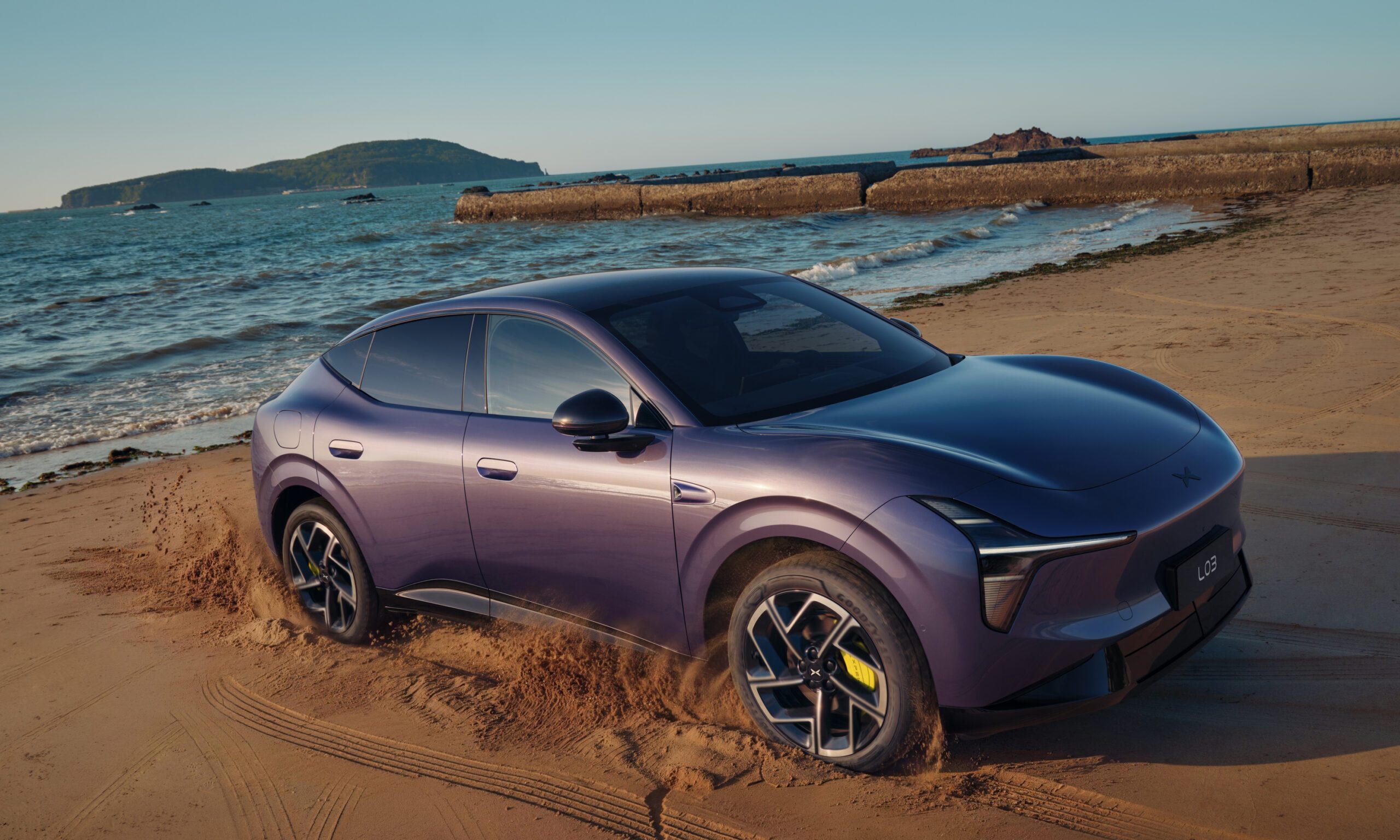
This sleek Chinese EV pairs supercar styling with three AI brains
The Xpeng L03 is an AI supercomputer disguised as a stylish family SUV
Xpeng L03

Xpeng’s latest electric vehicle carries enough processing power to make the term "smart car" actually sound more realistic than it actually is. The new Xpeng L03 debuted simultaneously in Europe and China on July 16, with the company presenting it across 65 markets. Available as a fully electric vehicle and an L03 Power X range-extender, the coupe-SUV is Xpeng’s most internationally focused model so far. Market-specific prices and sales dates remain unannounced.

Three AI chips and Google Maps built right in

Read more
A new sodium battery posts wild four-minute charging numbers, but don’t expect it in an EV yet
The breakthrough could improve fast charging and battery life, but the study hasn’t demonstrated those results in a production-sized pack
EV Charger

A new sodium-metal battery has posted a charging number that makes today’s EVs look painfully slow. In laboratory testing, the cell operated at a 15C rate, equivalent to completing a charge or discharge in roughly four minutes.

That doesn’t mean researchers plugged in an electric car and watched it fill up before the driver finished buying coffee. The result came from a small experimental cell using a new quasi-solid electrolyte, while the larger pouch-cell prototype delivered far less dramatic performance.

Read more
The Apple Car may be dead, but it became the foundation of Apple Intelligence
A decade of work on a canceled car project reportedly laid the groundwork for Apple Intelligence.
Apple Intelligence in Apple Car

The Apple Car may have never left the garage, but it apparently gave birth to Apple's AI ambitions. According to Bloomberg's Mark Gurman, Apple's canceled autonomous vehicle project, one that consumed more than a decade of work and over $10 billion before being scrapped in 2024, ended up laying the technological foundation for Apple Intelligence. In a rather ironic twist, one of Apple's most expensive failures may also become one of its most important long-term investments.

The Apple Car forced Apple to think like an AI company

Read more