1. Home
  2. Space
  3. News

How to watch Amazon launch its first Project Kuiper satellites

Add as a preferred source on Google
Amazon's Project Kuiper Satellite payload.
ULA

Amazon is going into competition with SpaceX, with its Project Kuiper broadband satellite-based internet service intended to rival Starlink. The first launch of Project Kuiper satellites is scheduled for Monday April 28, and if you’d like to watch along at home then the event will be livestreamed.

The launch will use a United Launch Alliance Atlas V rocket, and will take place at Cape Canaveral Space Force Station in Florida. The mission, named “KA-01”, will carry 27 satellites into an orbit 280 miles above the Earth’s surface.

You can watch using the video embedded above, or by heading to the United Launch Alliance’s YouTube page for the launch. Coverage begins at 6:35 p.m. ET, with the launch scheduled for 7 p.m. ET.

Recommended Videos

This is just the first of many planned Kuiper launches, as Amazon has said it intends to create a network of 3,200 satellites in low-Earth orbit. There are 80 planned launches to deploy the network, with an aggressive launch schedule that will mostly use ULA rockets. However, in order to fulfill the high demand for launches, Amazon will also use rockets from Arianespace, Blue Origin, and SpaceX.

“We’ve designed some of the most advanced communications satellites ever built, and every launch is an opportunity to add more capacity and coverage to our network,” said Rajeev Badyal, vice president of Project Kuiper. “We’ve done extensive testing on the ground to prepare for this first mission, but there are some things you can only learn in flight.”

The launch will involve a rocket lifting off from the pad in Cape Canaveral, then traveling to space and deploying the satellites. Once released from the rocket, the satellites need to move into their final orbit, which they do in an mostly autonomous process by firing their electric propulsion systems. Each satellite moves independently and also needs to achieve communications with the ground team.

The satellites will travel around the Earth at a speed of more than 17,000 miles per hour, making a complete orbit around every 90 minutes.

Georgina Torbet
Georgina has been the space writer at Digital Trends space writer for six years, covering human space exploration, planetary…
NASA is investing $590 million in private contractors to build humanity’s first Moon outpost
NASA is counting on private companies to land its Moon Base dream.
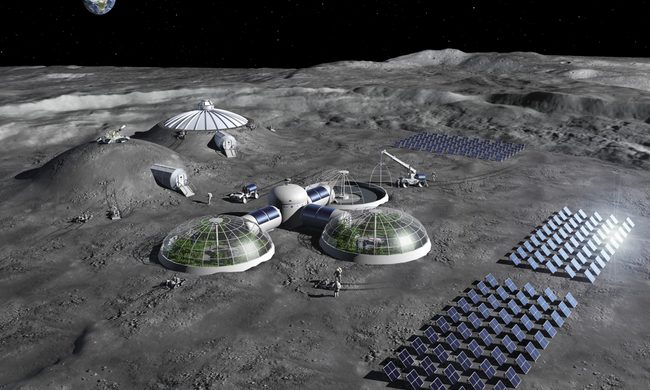
Artist impression of a Moon Base concept, with solar arrays for energy generation, greenhouses for food production, and habitats shielded with regolith.

Building a permanent base on the Moon sounds like science fiction, but NASA is making it feel a lot more real. The agency just handed $590 million in contracts to three private companies for four uncrewed lunar lander missions launching in late 2028.

These missions are part of Phase 1 of NASA's broader $30 billion Moon Base program, which needs to deliver landers, rovers, and scientific cargo up there before astronauts eventually move in. These efforts are closely tied NASA's Artemis program, which sent humans on a lunar flyby in April for the first time since the Apollo era.

Read more
Getting to Mars may require a pit stop in orbit, and NASA just tested the nozzle to make that happen
A gas pump nozzle for spacecraft sounds simple. It is not, and that's what makes this test worth paying attention to.
Architecture, Building, Factory

Getting a spacecraft to Mars or beyond requires an enormous amount of fuel, most of which has to be hauled from Earth, adding to the overall cost and weight of the spacecraft. NASA has been working on a different approach, one that could be more efficient and effective.

It wants to refuel a spacecraft in orbit before heading out for the mission. What’s even more interesting is that the space agency just finished testing a component that could make that possible: a cryocoupler.

Read more
Elon Musk’ Starlink could soon offer mobile services as a US carrier
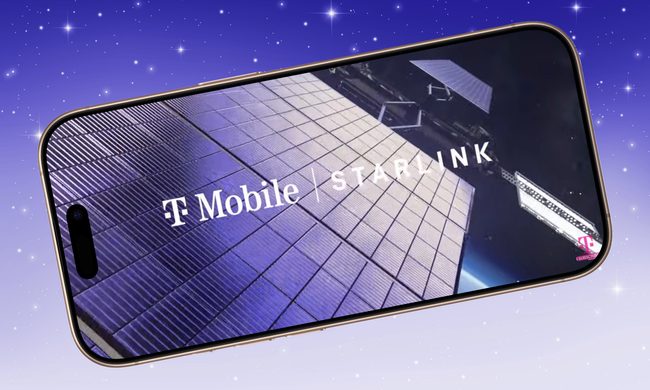
Showcase of T-Mobile Starlink service on an iPhone.

Elon Musk’s Starlink has already changed how millions of people access the internet, especially in places where traditional broadband struggles to reach. Now, the satellite internet service could be preparing for an even bigger leap — becoming your mobile carrier.

According to a Financial Times report, SpaceX has told investors it’s considering launching a retail Starlink mobile service in the US. Instead of simply partnering with wireless carriers, the company could begin selling mobile plans directly to consumers, putting it in direct competition with Verizon, AT&T, and T-Mobile.

Read more