1. Home
  2. Computing
  3. News

Google’s iconic ‘feeling lucky’ button is under threat from you-know-what

Add as a preferred source on Google
A Google logo sign at the top of a building.
Andrew Martonik / Digital Trends

Google’s “I’m Feeling Lucky” button has been a familiar part of its homepage since the launch of the search engine 27 years ago, but the company could be about to ditch it.

The web giant is currently testing with select users how to integrate its AI chatbot into its homepage. One option is to replace the “lucky” button with one that reads “AI Mode.” Selecting AI Mode leads to a more conversational interaction regarding your search, eliminating the need to sift through a long list of search results. Google announced the feature earlier this month.

Recommended Videos

Let’s just remind ourselves about what the I’m Feeling Lucky button does, as there’s a chance that you rarely, if ever, use it. In a nutshell, it bypasses the results on desktop search, taking you directly to the webpage that most closely matches your query. 

There’s not much data on how many people ever hit the “lucky” button, though back in 2007, former Google executive Marissa Mayer estimated that 1% of all Google searches went through it. But with more people searching on mobile (where the button is absent) or performing searches via the address box on desktop, it’s likely that even fewer people select the button these days.  

Google is also considering putting the AI Mode tab at the right end of the search box, which, if fully implemented, would allow the lucky button to live another day. 

It’s not the first time that the lucky button has come under threat. In 2010, the company launched Google Instant, a feature that displayed search results in real time as users typed their queries, with the aim of making searches faster and more intuitive. While the button remained in place, it was covered by the results that cascaded over it as the user typed. Google ditched Instant in 2017, with the ‘lucky’ button once again clearly visible for everyone.

This time, however, the threat seems more serious. Can Google’s I’m Feeling Lucky button survive the ever-expanding tentacles of AI? Watch this space.

Trevor Mogg
Contributing Editor
Not so many moons ago, Trevor moved from one tea-loving island nation that drives on the left (Britain) to another (Japan)…
Apple’s M6 chip isn’t even here yet, but you’ll see M7 Macs early in 2027
Apple is reportedly already accelerating its next-generation silicon roadmap, even before the M6 has launched.
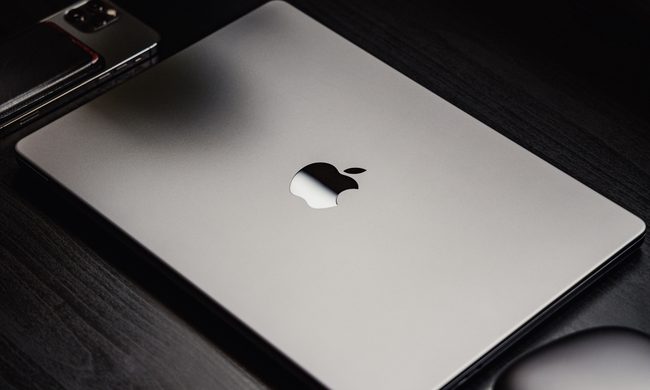
Apple MacBook

The M6 chip is still expected to debut later this year, but Apple may already be preparing for what comes next. According to Mark Gurman's latest report for Bloomberg, the company is aiming to introduce its first M7-powered devices as early as the first half of 2027, hinting at a much faster silicon refresh than many expected.

M7 could arrive alongside new Macs and iPads

Read more
The entry-level MacBook Pro could get a design refresh in 2027, and it’s about time
Five years on the same chassis, and now both tiers of the MacBook Pro are getting a new look at once.
MacBook Pro in space grey sitting on a desk.

Apple has a new MacBook Pro lined up for launch early next year, according to Bloomberg. The company will introduce a 14-inch laptop in the first half of 2027. 

The biggest surprise, however, will be a brand-new design language. The outlet describes it as "a revamped entry-level MacBook Pro, code-named K104."

Read more
Study finds humans will talk to AI ghosts of the dead as reincarnations, and it’s pretty grim
The first AI ghost study is in. The results are about as complicated as you'd expect.
VR Headset, Person, Face

A new study from the University of Colorado Boulder confirms something that sounds both impressive and concerning. People find interacting with AI simulations of their dead loved ones deeply meaningful, and most will come away wanting to do it again.

The researchers call it a "generative ghost," which is a clear reference to generative AI, but I’d still prefer to call it unsettling.

Read more