

The road to the future runs through the present, and it’s not a straight line. This week, we’re focusing on how Audi is negotiating the twists and turns on the way to an electrified future.
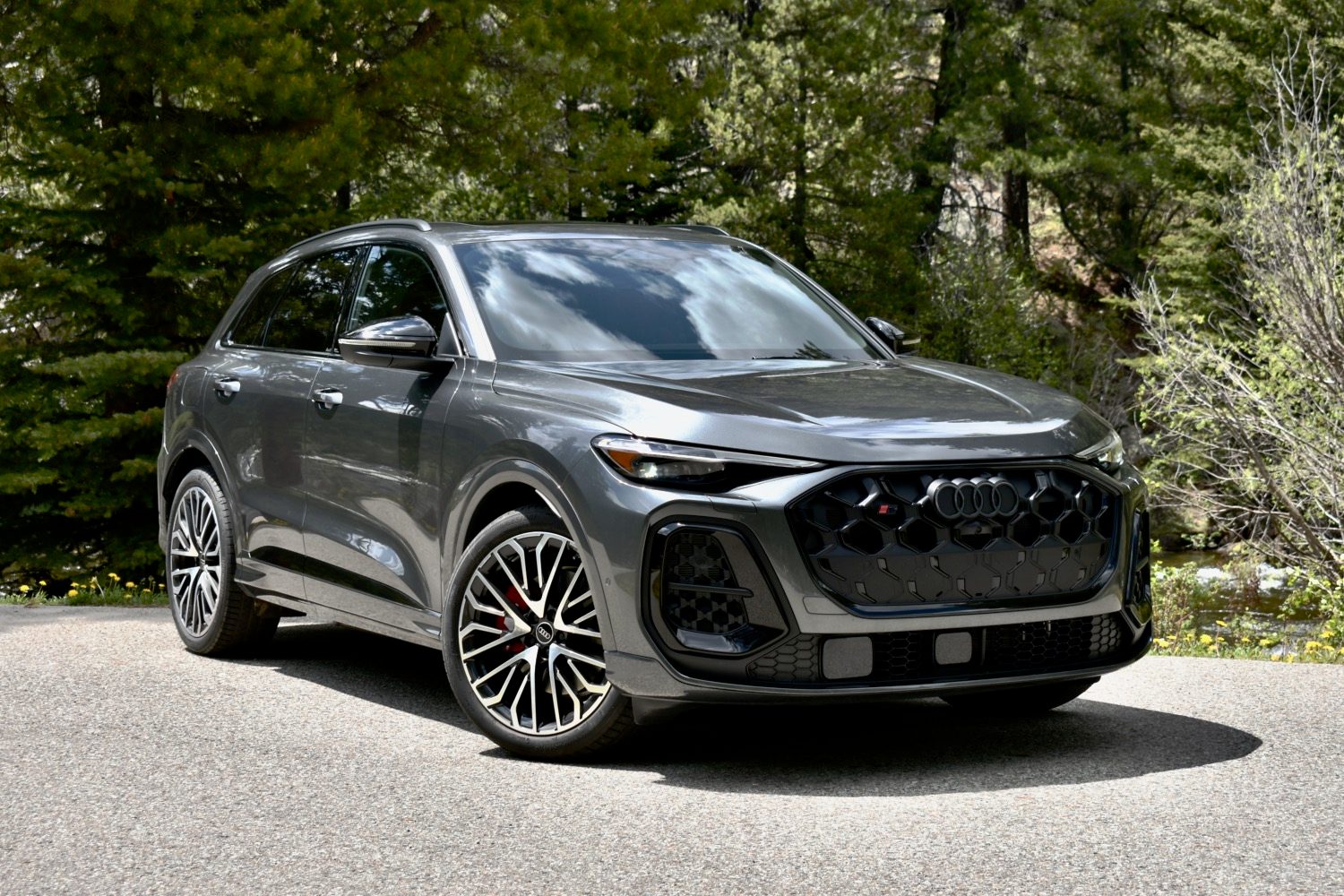
EVs are here to stay at Audi, but a gasoline crossover SUV is still the automaker’s bestselling model, and it’s not ready to risk those sales just yet. That’s why the 2025 Audi Q5 received a top-to-bottom overhaul for this model year, bringing its tech features and styling up to date without altering the what has proven to be a very popular package. By maintaining parallel lineups of electric and internal-combustion cars, Audi hopes to give customers more choices. But that doesn’t completely level the playing field.
The new Q5 may have yesterday’s powertrain, but Audi isn’t holding back on tech. It features the same electrical architecture, operating system, and three-screen dashboard display as the latest Audi EVs, like the Q6 e-tron. So aside from a little engine noise, there’s little difference in what you can see and interact with from the driver’s seat.
It’s not just the infotainment systems. The Q5 and Q6 e-tron are close in size, with similar space for passengers across their two rows of seats. The Q6 e-tron has a bit more cargo space, but not as much as you’d think given the lack of a bulky engine, transmission, and driveshafts. The two SUVs also have similar styling but, having now driven both, we can say that the Q5 is the more pleasant of the two.
More than a difference of powertrain tech
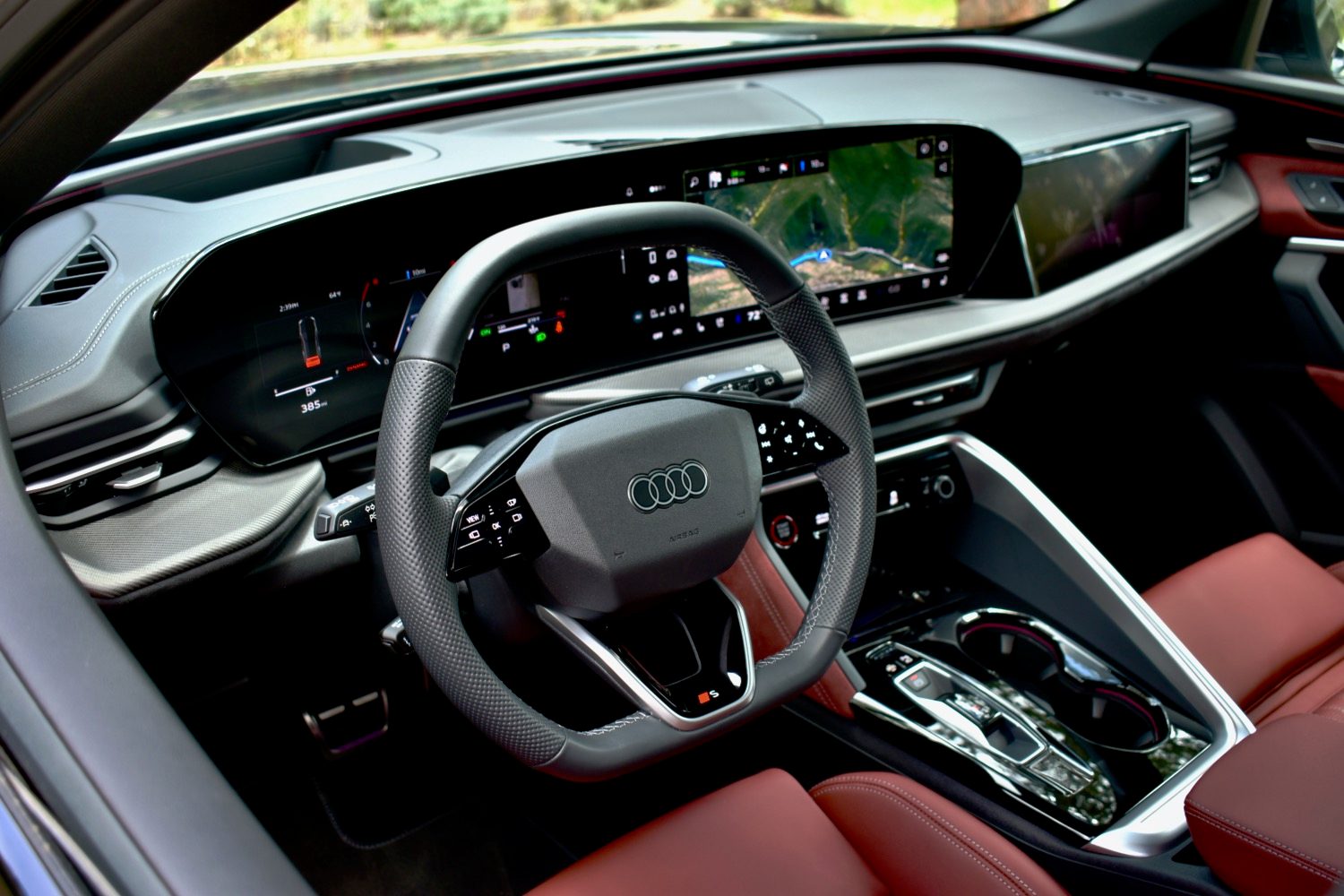
The interiors may look similar, but the materials used in the Q5 felt nicer to the touch. And the gasoline SUV had a much more refined chassis, with crisper handling and plusher ride quality, than its EV counterpart. The base Q5 is also quicker than a base Q6 e-tron in a straight line (quicker versions of the EV are available), although the rough shifts from our test car’s dual-clutch transmission had us missing the smoother acceleration of an EV, even if it took a few more tenths of a second to reach 60 mph.
There’s also more differentiation between the Q5 and its sportier SQ5 counterpart than the Q6 e-tron and the SQ6 e-tron. The latter didn’t do much to justify its price premium over base models, but the SQ5 at least had a somewhat more vivacious character. The e-tron GT proves that Audi knows how to build a sporty EV, and there are plenty of other examples like the Ford Mustang Mach-E and Hyundai Ioniq 5 N. But these SUVs show that it’s harder to build that level of differentiation into a mid-range electric offering like Audi’s “S” models than more extensively-engineered performance EVs.
And while some EVs have closed the price gap with combustion models, the Q6 e-tron’s $65,095 base price is a big step up from the $53,795 starting price of a Q5. Audi has done a great job of maintain parity on tech and features between gasoline and electric models, but that means the Q6 e-tron will likely appeal mainly to brand loyalists who specifically want an EV. It’s hard to imagine many powertrain-agonistic customers choosing it after driving a Q5 — or looking at its window sticker.
Policy uncertainty has automakers hedging their bets
Audi’s approach is typical of the current moment, though. In the United States, at least, automakers are settling into holding pattern on EV adoption as they look to balance unpredictable rates of EV sales and the fallout from Trump Administration policies with the need to capitalize on investments already made in EV production.
The industry is currently holding its breath as the Trump Administration undertakes a trade war with China that could affect the supply of rare earth minerals that are a key part of the EV supply chain. Automotive News reported earlier this week that automakers were “in full panic” over the rare earth situation. A framework was reportedly reached later in the week, but that’s subject to further negotiation and potential future reversals by the mercurial U.S. president.
Trump’s policies are ostensibly aimed at bringing more auto manufacturing back to the U.S., but as another big piece of news from this week shows, that doesn’t necessarily benefit EVs. General Motors announced that it would task its Orion Assembly plant in Michigan to build gasoline SUVs and pickup trucks, rather than the EVs previously planned.
The move, part of a $4 billion investment that will also bring production of the gasoline Chevrolet Blazer and Equinox to the U.S. from Mexico, was criticized by the Sierra Club, which accused GM of all but abandoning a previous “aspiration” to sell only electric light-duty vehicles by 2035. But at an investor conference Wednesday, GM CFO Paul Jacobson defended the move as a necessary response to both Trump’s tariffs and strong demand for gasoline vehicles.
And on Thursday, Trump signed an order revoking a California regulatory waiver allowing the state to end sales of most new internal-combustion vehicles by 2035. This is a rerun of policy from the previous Trump Administration, which also sought to curtail California’s emissions authority. California and 10 other states quickly filed suit in response, but for now the situation creates yet more uncertainty for automakers.