1. Home
  2. Computing
  3. News

Watch these AI humanoid robots play soccer like Mbappé … sort of

Add as a preferred source on Google
China's first 3-on-3 humanoid robot soccer league kicks off in Beijing

Watching these humanoid robots battle it out on the soccer field, you quickly realize that Kylian Mbappé and his fellow professionals really have little to worry about. At least, for now.

The footage (top) was captured last week in Beijing at the RoBoLeague World Robot Soccer League, China’s first-ever three-on-three humanoid robot soccer league.

It shows shows a semi-final game fought between the Vulcan Team from Tsinghua University and the Blaze Light Team from Beijing Information & Science Technology University.  The AI-powered robots in all of the games were fully autonomous, with no human intervention or remote control allowed during play.

For humanoid robots, they’re pretty impressive when it comes to kicking a ball around. But compared to their professional counterparts, they’re still something of a lost cause. 

Watching humanoid robots play soccer is great entertainment, however. Some of them don’t appear to have any idea what’s going on, while others stumble around as if they’ve been imbibing some kind of made-for-bots booze. Where they do excel over their human counterparts, however, is in the way they quickly get back on their feet after taking a tumble, eschewing the kind of absurd theatrics that you often get in pro soccer games.

And while the robots’ movements are sometimes clumsy, with frequent falls and pileups, they do nevertheless demonstrate an impressive ability to autonomously respond to fast-changing scenarios on the field.

The RoBoLeague is primarily designed to showcase China’s advances in robotic technology, with the best players able to demonstrate skills like agility, coordination, balance, strategic decision-making, object interaction and, of course, fall recovery. 

The contest is also a warm-up for next year’s World Humanoid Robot Games, where we’ll see robots facing each other across a range of sports.

The humanoid robot sector is a highly competitive one and huge sums of money are being poured into their development. While China is making some notable advancements, U.S.-based companies, among others, are also working hard to create bots able to perform human tasks efficiently with a view to putting them in the workplace, or even offering them as home helpers. 

Trevor Mogg
Contributing Editor
Not so many moons ago, Trevor moved from one tea-loving island nation that drives on the left (Britain) to another (Japan)…
Brave’s new Container feature is a lifesaver for anyone juggling multiple accounts
With this feature, you won't need to open three different browsers
Brave browser 3D logo

Brave has added Containers to its desktop browser, giving users a built-in way to keep different accounts, sessions, and browsing activity separate. The feature is available in Brave 1.92 for Windows, macOS, and Linux, and is rolling out in phases over the next few days.

Containers have been a highly requested feature, especially for users who regularly switch between work, personal, developer, or creator accounts. Once enabled, they let users open tabs in separate spaces where cookies and site storage are not shared outside that container.

Read more
Intel may bring back older desktop CPUs because DDR5 is getting too expensive
Older Intel Core CPUs from 10th to 14th Gen may get a second life
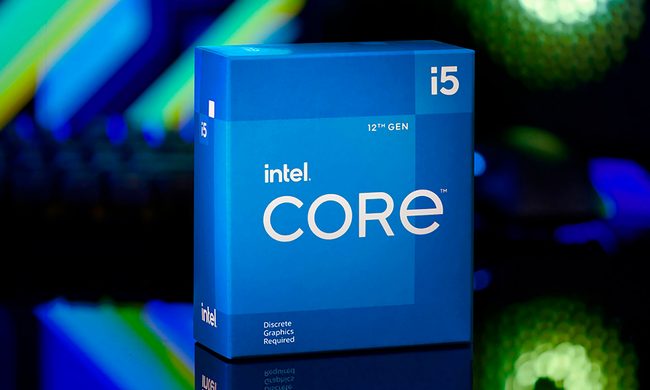
Intel Core i5-12400F box sitting in front of a gaming PC.

Intel may be preparing an unusual response to the ongoing memory crunch. According to Chinese outlet ITHome, citing ChannelGate, the company’s latest production plan includes restarting production of 13th-gen and 14th-gen Core processors.

The move is expected to increase supply across Intel’s 10th, 12th, 13th, and 14th Gen CPU families, especially in mainland China. For DIY PC builders, the timing is important. DDR5 memory prices have climbed sharply, making newer platforms harder to justify for anyone trying to build an affordable gaming PC.

Read more
Amazon wants to design in-house chips for Kindles, Fire TV, and Echo speakers
Apple did it first. Amazon is doing it now, starting with 40 million chips a year and a partner most people have never heard of.
Amazon Kindle Scribe dark mode featured image.

Apple's decision to design its own chips reshaped the consumer electronics industry. Amazon may be about to make the same call, just about two decades later.

Supply chain analyst Ming-Chi Kuo reports that Amazon is preparing to shift away from externally sourced processors for its consumer electronics lineup, marking what he describes as the company's first major processor procurement change in 20 years. The transition is expected to begin in 2027.

Read more