

Can’t keep up with the nonstop Facebook news and feature updates? Well we did for you. Here’s this week’s roundup of news you may have missed, including a slew of new Facebook features that may or may not see the light of day in the near future.
Events get invited to the Timeline redesign
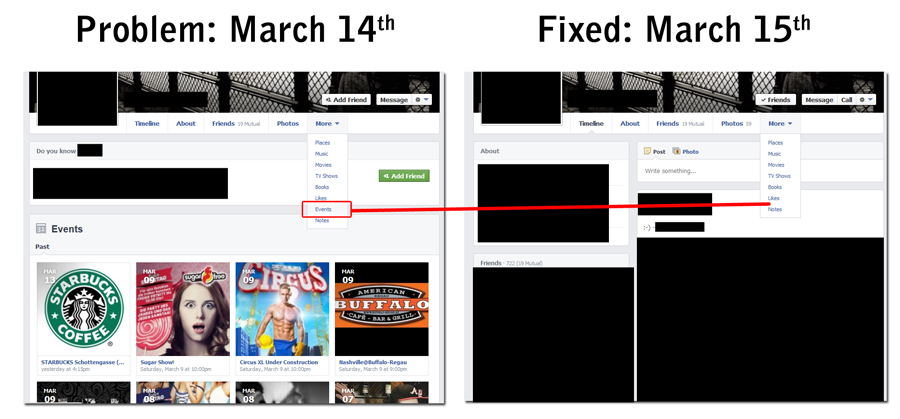
With so much seamless sharing going on in Facebook, there are bound to be privacy holes that share too much. Europe v. Facebook, a non-profit organization that keeps tabs on Facebook and any of its privacy issues discovered that the Facebook Timeline enabled friends of friends to see a full list of events that users had been invited to. The issue is that updates to the Timeline, which were rolled out starting March 13 to limited users as a test, bypassed the friend-to-friend privacy setting. The consequences were that friends-of-friends were getting a revealing look into the user’s extracurricular activities. Facebook has recognized the problem after Europe v. Facebook reached out to the social network. The issue has since been fixed.
Facebook will roll out reply buttons
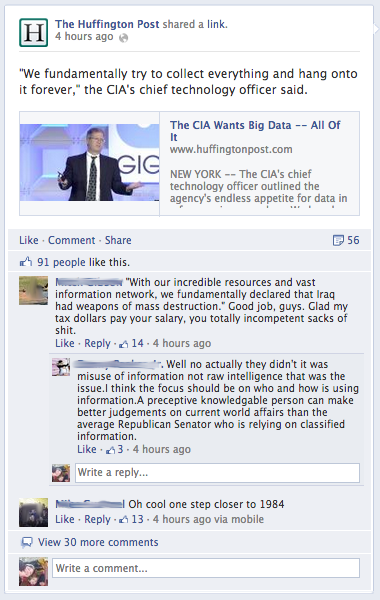
Comments are threaded in a way that in long discussions like on brand pages, you can’t tell who’s addressing whom without requiring them to tagging the person you’re trying to reply to. Finally, this is about to change, says TechCrunch. Profiles or brand pages with more than 10,000 followers will get the reply feature, which indents replies in the threaded style that forums have been using since the advent of the Internet. At the same time, Facebook is testing and may also release an algorithm that bumps the best comment threads to the top of the post.
Facebook loosens up cover photo restrictions

Facebook’s policy on cover photos (which very few users has had to worry about anyway) is getting far more lax that it used to be as of March 6, reports Inside Facebook. This includes Facebook removing the ban on calls to action, a user’s contact information, and other self-promotional content you’d probably often find on a banner ad. The only rule that’s going to be enforced is that cover photos with more than 20 percent of it covered in text remain against Facebook’s policy. If Facebook catches you one of its reps will take it down. But with more than 1.1 billion users, odds are you could get away with it for awhile.
Facebook testing mobile notifications to remind you it exists
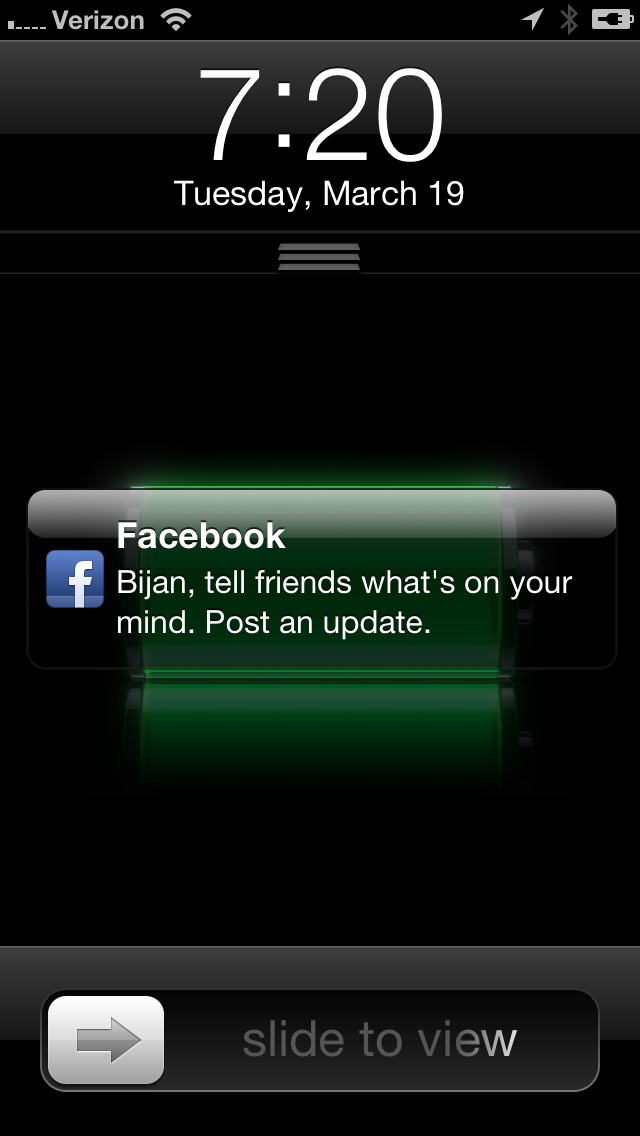
Facebook has confirmed with Mashable that it’s testing among limited users a new mobile push notification that asks users to update their status if they haven’t done so in a while. As if we didn’t already have a significant problem with push notifications being wildly abused.
Facebook is an ego-booster, in a good way
A study by Cornell suggests that taking a look at your Facebook profile after a rough day might do you some good. Facebook works as a “self-affirming” ego-booster. Every time you check out your profile and browse through the friends that have liked and commented on your profile, you’ll be able to weather criticisms knowing that you’re still “loved by a network of friends and family” on Facebook. “”The extraordinary amount of time people spend on Facebook may be a reflection of its ability to satisfy ego needs that are fundamental to the human condition,” lead researcher Jeff Hancock told the Daily News.
Browsing social networks, the study found, doesn’t only apply to Facebook. Hancock suggests that it even applies to online dating. “Perhaps online daters who are anxious about being single or recently divorced may find comfort in the process of composing or reviewing their online profiles, as it allows them to reflect on their core values and identity.”
If it doesn’t go viral in three hours, it never will
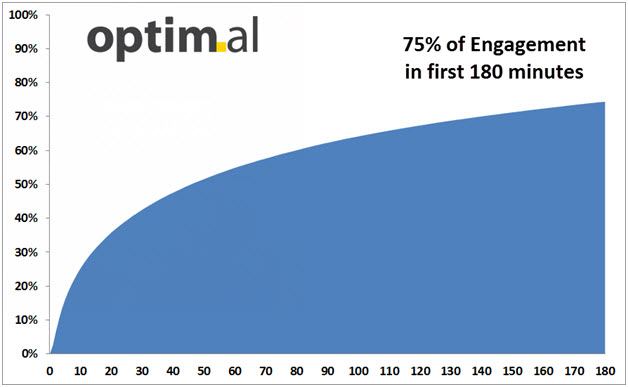
The window or timeframe in which a Facebook post would go viral is three hours after posting, says Facebook analytics company Optimal. Specifically 75 percent of the Facebook engagement (likes, comments, shares) happens in that three hour timeframe, while 50 percent of the engagement takes place within an hour.


