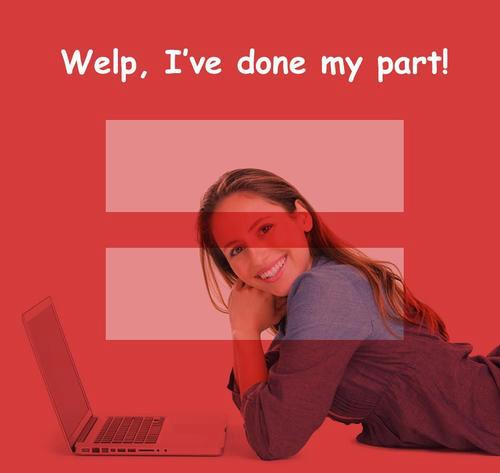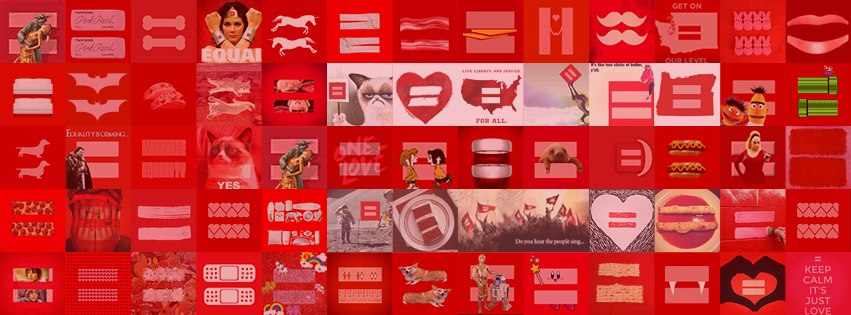
We covered the rise of the red equal sign marriage equality Facebook meme a few days ago, and now data from Facebook and Google shows how the ubiquitous picture took over the Internet (if but only for a moment).
Facebook data scientist Eytan Bakshy wrote a blog post with some interesting details about the rise of the equal sign meme. He analyzed the amount of increased profile picture changes and made estimates of how many of those changes were thought to be the red equal sign.
“The first thing we wanted to do is understand how the events played out over time. While millions of U.S. Facebook users update their profile photos on a given day, we found that significantly more users – roughly 2.7 million (120 percent) more, updated their profile photo on Tuesday, March 26 compared to the previous Tuesday.”
 Once Bakshy and the Facebook data team looked at how the picture caught on over time, they took a look at who was changing their profile pictures. Here’s a graph Bakshy posted showing the age spread of profile picture-changers. In the first graph, the red line shows the week of March 26 (the week of the meme) and the black line shows the week prior:
 As you can see, younger people were more apt to change their pictures.
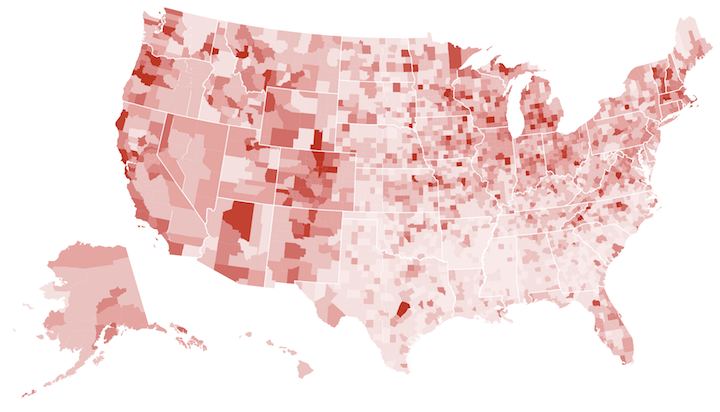
But age and time aren’t the only variables the data team looked into – Facebook also wanted to find out where the people who supported the campaign were located. Based on their findings, the team put together a map of the highest concentrations of changed profile pictures, with red representing the areas of most change:
 Bakshy’s note provided some valuable insight into the phenomenon, but if you take a look at Google Trends, it’s not likely this meme will last too much longer. Results for the search term “equal sign” see an explosion of interest on March 25, the day the meme was introduced, and a peak on March 26, which is when it really took off (and the first day of the Supreme Court hearings). And then, you see them harshly drop off – related search terms like “equal red sign” “facebook equal sign” and “pink equal sign” also took off in search popularity, experiencing similar trajectories. And if you took a gander at Facebook, you might notice that friends who recently sported the equal sign profile pic have gone back to their plain old mugs … or they will soon.
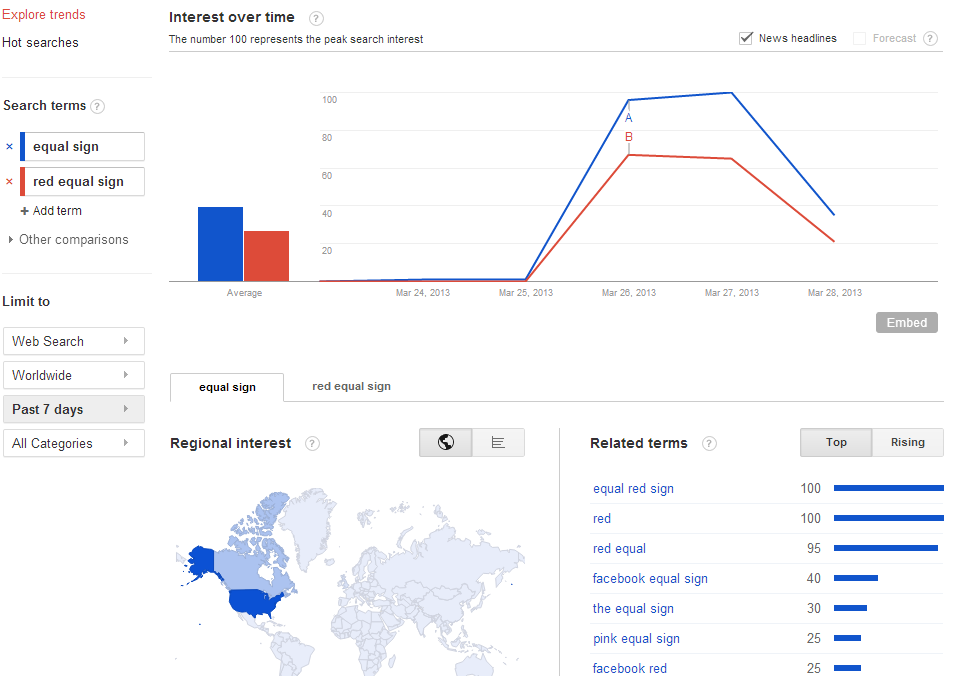
Even though the equal sign meme is bound to have a fairly short shelf life, the sentiment behind it is likely to endure. Although marriage equality is a contentious issue in the Court, the fact that most of the people changing their profile pictures in a gesture of solidarity are young fits with the idea that opposition to same-sex marriage is a notion that’s becoming outdated. Of course, the entire incident also speaks to our Internet slacktivism and the fishbowl that Facebook can become.