
  1. Home
  2. Computing
  3. Web
  4. Legacy Archives

MyIDkey fingerprint-protected, voice-searchable USB drive available for pre-order

Add as a preferred source on Google
myIDkey1
Image used with permission by copyright holder

Following an overwhelmingly successful Kickstarter campaign in March, and getting three times the funding it asked for, the USB-sized “password depot” and encrypted flash storage, myIDkey, is just about ready for mass production. Arkami, the company behind the nifty little device, brought a pre-production unit of the myIDkey to the CEA Line Show in New York City this week, and we checked it out for ourselves. 

As you can see in the above photo, the actual device is on the chunky side for a USB drive, but it’s easily pocketable. Since the company is still finalizing its cap design, CEO Ben Chen didn’t show us that portion of the device. That said, the myIDkey does have a little OLED screen that displays your passwords and ID numbers, as well as a fingerprint reader (like the ones you’d find on business laptops) that authenticates the user, preventing just any old person from getting access to the sensitive information stored on the drive.

Recommended Videos

To make it easy to navigate your data on the USB drive, you can press on the microphone button and look for the password by the company’s name (i.e. say “Amazon”), or you can scroll through the profiles stored on your device with the arrow button. 
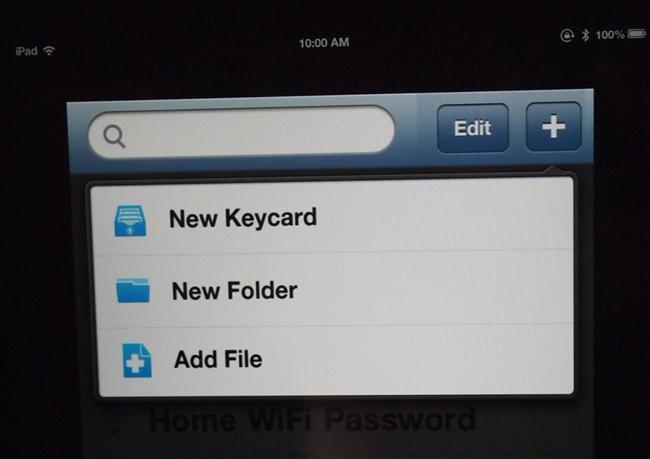
myIDkey app
Image used with permission by copyright holder

We saw a non-working unit of the myIDkey at the CEA Line Show, so we couldn’t give these features a test run. However, Chen gave us a quick tour of the mobile app that manages the content stored on the device. The app and the myIDkey can communicate wirelessly through Bluetooth or you can plug the device directly to a computer with a USB port to edit the login information and files you want to store on the device. 

myIDkey app2
Image used with permission by copyright holder

You can store both personal data and files on the myIDkey, which will be protected with military-level AES256 encryption that Chen said no one has been able to crack. Since the device requires your fingerprint to access the content stored on the drive, even if someone were to steal your myIDkey, they wouldn’t be able to open your files. Besides, after a set number of failed fingerprint access, the device will automatically wipe your content, and you can still retrieve your information if you’ve previously synced with the myIDkey cloud.

Arkami is taking pre-orders for the 16GB myKeyID. It’s available for $170 a pop at its website and will ship in September.

Gloria Sin
Former Contributor
Gloria’s tech journey really began when she was studying user centered design in university, and developed a love for…
Topics
Gemini Notebook’s new Collections arrive just as Google turns it into a bigger workspace
Google is cleaning up notebook organization as the former NotebookLM expands across Gemini and Search
Gemini Notebook branding on a MacBook

Google has barely finished renaming NotebookLM, and it’s already addressing one of the headaches that comes with building a large research library.

Collections are rolling out to all Gemini Notebook users, giving them a way to group related notebooks while keeping everything visible under My Notebooks. The dashboard gets some structure without asking users to rearrange the library they’ve already built.

Read more
Samsung’s humanoid robot ambitions are real, but factories come first
Samsung’s new robotics division has humanoids in its sights, although its immediate business is far more practical factory automation
Robot Touch Human Finger

Samsung wants a place in the humanoid race, but its new robotics push begins with machines built for factories rather than homes.

The CEO-led RX robotics division will initially focus on manufacturing robots. Samsung has separately identified humanoids as a priority, although it hasn’t announced a commercial model or explained where one fits into the division’s immediate plans.

Read more
WhatsApp’s Liquid Glass redesign is finally coming to Mac after months of waiting
WhatsApp's Mac app is getting Apple's Liquid Glass-inspired makeover
WhatsApp

WhatsApp has been steadily adopting Apple's new design language across its apps, but Mac users have largely been left watching from the sidelines. That is finally beginning to change.

The messaging platform has started rolling out its Liquid Glass redesign for the WhatsApp Mac app, bringing the desktop experience much closer to what iPhone and iPad users have been seeing over the past few months. The update introduces a refreshed interface with redesigned navigation elements, updated menus, and a cleaner layout that aligns with Apple's latest software aesthetic. According to WABetaInfo, the rollout has begun through the latest Mac App Store update and is currently reaching a limited number of users.

Read more