1. Home
  2. Wearables
  3. Computing
  4. News

Meta’s ‘Hypernova’ AI smart specs will be an ‘experimental’ device

Shipments are forecast to be extremely modest at first.

Add as a preferred source on Google
Meta's currently available Meta Ray-Ban smart specs.
Meta's currently available Meta Ray-Ban smart specs. Meta

Meta is highly likely to unveil advanced “Hypernova” smart glasses at its annual Connect event when it kicks off on September 17.

But despite the hype surrounding the rumored product, the often-reliable analyst Ming-Chi Kuo suggested on Tuesday that the incoming smart specs will be an “experimental” device for Meta, with limited shipment expectations of just 150,000 to 200,000 units in the two years following their launch, which should take place before the end of this year.

Recommended Videos

In a post on X, Kuo said that global shipments of smart glasses are forecast to hit around 14 million units next year, indicating that Hypernova’s market share will be negligible, thereby “positioning it more as an experimental product for Meta.”

The analyst said artificial intelligence (AI) will be Hypernova’s “most important selling point,” but added that the integration of AI with augmented reality (AI) applications “is still in its nascent stages” and therefore could hold it back.

Kuo attributed Meta’s conservative shipment forecast for Hypernova mainly to the device’s limited AI capabilities, combined with its estimated price of around $800.

Citing another hurdle, the analyst said that the decision to use Liquid Crystal on Silicon (LCoS) microdisplay technology to achieve scalability for mass production “presents hardware design challenges related to form factor, brightness, response time, and battery life.”

Kuo concluded that Meta’s strategic goals for releasing Hypernova this year are: “1) To launch ahead of Apple to build its brand image, 2) To gain early experience in developing the ecosystem, and 3) To understand user behavior.”

Meta has already launched smart glasses in the form of the Ray-Ban Meta series. The Ray-Bans are primarily designed for capturing photos and videos, and also offer open-ear audio for listening to music and taking calls, but they lack a heads-up AR display.

The Hypernova glasses, on the other hand, are likely to feature a small monocular heads-up AR display for showing notifications and navigation, and interacting with Meta AI. They could also include a neural wristband to interpret subtle finger and wrist gestures for control.

From what we know, Meta’s new smart glasses look like an early but significant step toward fully immersive, AR-enabled, and AI-powered smart glasses.

Trevor Mogg
Contributing Editor
Not so many moons ago, Trevor moved from one tea-loving island nation that drives on the left (Britain) to another (Japan)…
You can now walk through space and gaze into a black hole at this VR exhibit
Smithsonian Starstruck lets you drift past dying stars and see the origin point of the universe for as little as $18 a person.
Smithsonian Starstruck featured

Most planetarium shows ask you to sit still and look up. The Smithsonian's new VR exhibit takes a different approach, letting visitors walk through the vast expanse of the universe, drifting past stars, planets, and a black hole to get a physical sense of its true scale.

A $29 ticket to the edge of the galaxy

Read more
Apple’s rumored camera AirPods Pro may have hit a major roadblock
Bloomberg had them nearly done. Kosutami says suspended. The truth is somewhere Apple hasn't shared yet.
AirPods Pro 3 case view top

In May, Bloomberg reported that Apple's camera-equipped AirPods Pro had reached "advanced" testing and could be heading toward early mass production. As someone who has used both AirPods Pro 2 and AirPods Pro 3, I was looking forward to them.

This week, a leaker has contradicted that. Kosutami, a prototype collector and occasional Apple leaker, posted on X that the project has been "suspended." No additional details were provided. The post appeared to correct an earlier June update in which Kosutami had described the product's development "case" as "concluded," suggesting the revision was meaningful (via MacRumors).

Read more
Your Galaxy Watch is losing a health feature, and the replacement needs another gadget
Samsung is killing Vascular Load on Galaxy Watches
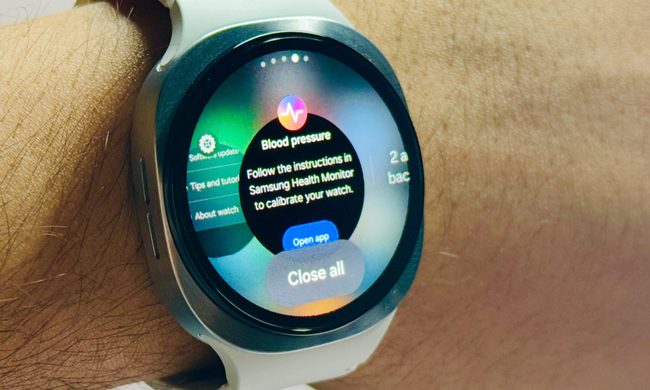
Blood pressure on Samsung Galaxy Watch 8.

Samsung’s Galaxy Watches have been leaning harder into health features with every generation. Sleep scores, heart metrics, blood pressure, and much more are all big selling points. Samsung is removing the standalone Vascular Load feature for Galaxy Watch users in the United States.

According to a Samsung Health notice spotted by users on Reddit (via SammyGuru), the feature will no longer be available starting in late July with Samsung Health 7.0 and the One UI Watch 9 update. Samsung’s notice reportedly says existing Vascular Load records will also disappear from Samsung Health once the feature is removed. Users who want to keep that history need to export their personal data in advance through Samsung Health settings.

Read more