“The Droid Ultra proves that Motorola is paying attention to the industry, but doesn't need to follow everyone else. It looks like a great new high-end Verizon phone.”
- Great screen
- Fun new gesture controls
- Clean Android user interface
- Glossy design is fingerprint magnet
- Droid Maxx has far better battery life
“Why you can trust Digital Trends – We have a 20-year history of testing, reviewing, and rating products, services and apps to help you make a sound buying decision. Find out more about how we test and score products.“
The Droid Ultra proves that Motorola is paying attention to the industry, but doesn’t need to follow everyone else. It looks like a great new high-end Verizon phone.
Motorola and Verizon have had great success with the Droid brand, particularly in the past couple of years with the Droid Razrs. Though the three new phones announced today are yearly updates to existing models, they’ve dropped the Razr part of the branding to just go with Droid. Today the Droid Ultra, Droid Mini, and Droid Maxx smartphones were shown. Available next month for $20o, the Droid Ultra will likely be the most popular of the line, and builds on what’s worked before: a slim, attractive design, solid battery life, an HD screen, and just enough signature features to stand out without going overboard.
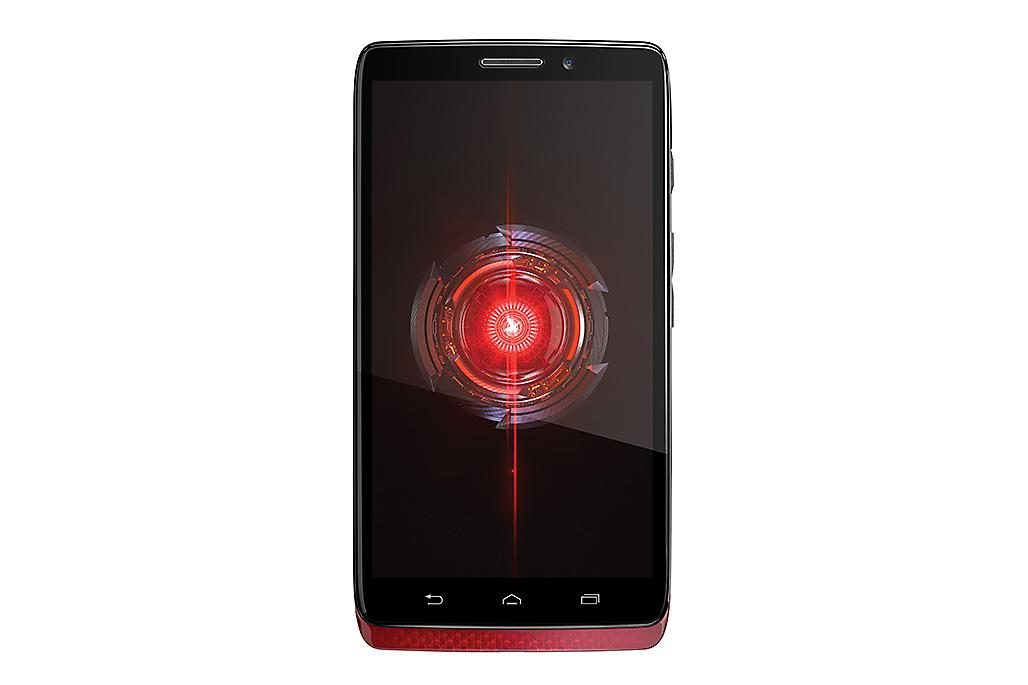
The Ultra has the same design sense as previous Razrs, now further slimmed and streamlined. Verizon touts it as the thinnest 4G LTE smartphone available, and at around 7mm thin it’s hard to doubt this claim. It feels feather light and like something we could use one-handed despite the 5-inch screen. The curved edges and the smooth coating make it very comfortable to hold. Sadly, touching the Ultra means marring its beauty almost immediately.
When the Ultra detects that it’s resting on a flat surface it will show the time if you just nudge it.
Alone among the new generation of Droids, the Ultra is available in red. The 3D pattern on the back (which will come in red or black) is attractive and hides the Kevlar material underneath. But because the phone is glossy it attracts and shows fingerprints on the front and the back. This isn’t as big a problem on the display, but it does make the Ultra look grubby when it’s supposed to look futuristic and beautiful.
Despite being a Motorola phone that runs nearly stock Android Jelly Bean, the Ultra bears physical Home, Back, and Recent Apps buttons instead of going strictly on-screen. This is somewhat surprising given that Google owns Motorola now, but we’re not complaining.
The bright and vivid 5-inch, AMOLED display is gorgeous and pixel dense with wide viewing angles. The display technology is even more relevant here because of Motorola’s new feature: Active Display. When the Ultra detects that it’s resting on a flat surface it will show the time if you just nudge it. Have other notifications? Tap and hold the icon to see text and decide if you want to open or ignore it. Active Display utilizes white text, and so only the pixels needed will light up, saving battery. (AMOLED screens only light up the pixels that are needed, giving darker and deeper blacks than any other screen.)
There are a lot of fun little features built into the Ultra. There aren’t as many as a Galaxy S4, but enough to show that Motorola is paying attention to the trends without slavishly following them. Another we like is Droid Zap for sharing photos with friends within 300 feet. You need a Droid Ultra, Maxx, or Mini to send photos, but any Android phone can accept them (as long as you have the app). Droid owners can even send a link to the app directly to friends.


The camera app itself isn’t as robust as we’d like, but at least it launches fast. You don’t even need to tap the icon, just twist your wrist twice to launch. The shutter appears speedy and the 10-megapixel images are decent. We’ve only seen examples taken in mixed/crappy lighting so far and we’d need to test further to see if we can pull better images from it with tweaking.
In our short hands-on time with the Ultra, we were impressed by the speed but didn’t get a chance to push the phone too much. Given the eight cores in the processor, we expect absolutely no performance problems.
Motorola estimates that the Ultra will last up to 24 hours with average use. If that’s not enough for you, the Droid Maxx is here to give you 48 hours of battery life. It cost $100 more.
The Droid Ultra will sell for $200 on contract. You can pre-order it here. While it isn’t groundbreaking when compared to other superphones like the Galaxy S4 or HTC One, it keeps pace with those devices while remaining distinctly Motorola. For fans of this brand and this line of phones that’s great news. And you won’t need to wait too long to get your hands on one. Both will be available in late August.
Highs
- Great screen
- Fun new gesture controls
- Clean Android user interface
Lows
- Glossy design is fingerprint magnet
- Droid Maxx has far better battery life