According to a recent study published in the official journal for the American Academy of Pediatrics, approximately 380,000 children under the age of 18 in the United States have been treated for an injury related to a falling television in a 22-year period between 1990 and 2011. Specifically, a falling television injures a child every half hour within the United States; that’s more than 17,000 children per year. In addition, the rate of television related injuries has gone up by 95 percent and the volume has increased by approximately 125 percent over the duration of the study.
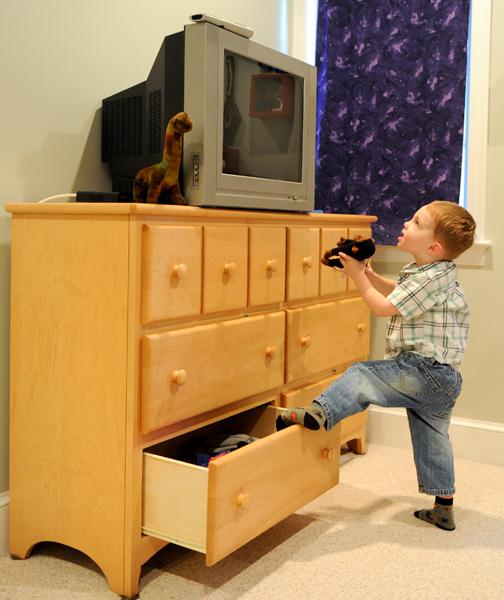 The vast majority of these injuries are likely related to families recycling an older, heavy CRT television within another room of the household after purchasing a new HDTV for the main living space.
These televisions are often placed on top of a dresser or chest of drawers, thus the possibility of accidentally knocking the television over is always prevalent when using the furniture. Specifically, there has been a 344 percent increase in the number of injuries related to a television falling from a bureau, armoire, dresser or chest of drawers over the duration of the study.
In addition to placement, the number of televisions within a typical American home has changed significantly over the last twenty years. For instance, U.S. households with multiple televisions have doubled since 1990 and more than half of all American households have at least three televisions. When television size was documented within the case notes at the hospital, nearly two thirds of the falling televisions causing the injuries were 26 inches and smaller. There was no discernible increase in televisions over 27 inches in size falling on children, likely because smaller, hand-me-down televisions have been placed within children’s rooms.
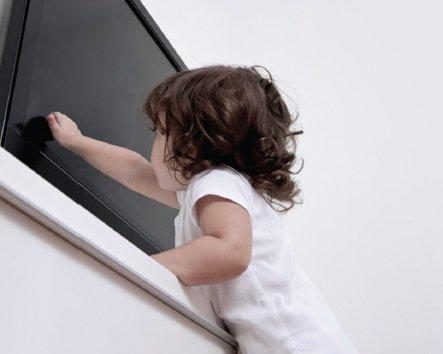 Regarding the age of the children, nearly two thirds of the injuries were seen on kids less than five years old. Children between the ages of 5 to 10 accounted for 25 percent of the injuries and the remaining 11 percent happened on children between 11 to 17. In addition, boys were more likely to be injured than girls.
The most common part of the body injured by a television was the head and neck, specifically 63 percent of the time. In addition, children under the age of five were significantly more likely to injure their head or neck due to a falling television, likely less aware of their surroundings. The most common injuries included lacerations and soft-tissue damage as well as concussions and closed head injuries.
Noted within previous studies, there have been documented cases were children pull out the drawers on a dresser in order to climb the furniture and turn on the television. Since the majority of the weight of a traditional CRT television is at the front of the hardware, this causes the dresser to easily tip forward and potentially cause a serious injury. In order to combat this from happening, the American Academy of Pediatrics recommends anchoring the television and furniture to the wall in addition to choosing more appropriate placements for heavy televisions. Those types of safety straps for televisions are already popular in homes located within earthquake-heavy areas and furniture anchors are often sold when a parent is attempting to baby proof their home.