1. Home
  2. Gaming
  3. Legacy Archives

California Trio Charged with Xbox Tampering

Add as a preferred source on Google

Two owners of a Los Angeles game store and a third man have been charged with felony violations of the Digital Millennium Copyright Act for modifying original Xbox gaming consoles to copy pirated games onto the machines for future play. If convicted, the trio face up to five years in prison.

The three men are being accused of “conspiring to traffic in a technology used to circumvent a copyright protection system and conspiring to commit criminal copyright infringement.” Allegedly, the two owners of the Acme Game store on Los Angeles’s Melrose Avenue (Jason Jones, age 34, and Jonathan Bryant, age 44, both of Los Angeles) sold original Xbox consoles which had been modified by a third man (Pei “Patrick” Cai, age 32, of Pico Rivera). The modified Xbox consoles contained modification chips and large-capacity hard drives to enable users to copy rented or borrowed games onto the console for future play.

Recommended Videos

The alleged modding operation was reported to authorities by the Entertainment Software Alliance, which characterizes Acme Games as “major pirate game retailer.” The ESA says private investigators sent to the store in May 2005 were able to purchase a modified Xbox console pre-loaded with pirated games. Subsequently, U.S. Immigration and Customs Enforcement agents paid $265 to have an Xbox console modified and set up with a new hard drive containing 77 pirated games.

According to the complaint, Acme Games owners ran modified Xbox consoles as demonstration systems and would promote the advantages of the modifications to potential customers, who would then be solicited to pay from $225 to $500 for the modifications, depending on the nature of the changes and the number of games to be pre-loaded onto the new drive. The complaint alleges Cai would then pick up consoles to be modded, perform the changes at his home, and return the consoles to the store to be picked up by customers.

Geoff Duncan
Former Contributor
Geoff Duncan writes, programs, edits, plays music, and delights in making software misbehave. He's probably the only member…
The next Xbox may be backward compatible with every past Xbox generation, if publishers agree
A leaked memo details Microsoft's next console could play games from every Xbox generation, but there's a catch.
Xbox logo

A leaked internal memo suggests the next Xbox console, codenamed Project Helix, could play games from every generation the company has ever released. If true, that would make it the largest game library on any console, especially since it's also said to support PC games.

Backward compatibility for four console generations

Read more
Xbox may have a surprisingly smart plan for keeping physical games alive
Xbox’s leaked roadmap could rescue your old games from the disc-drive grave
Book, Publication, Comics

The fate of physical game discs seems to be set in stone, with an all-digital library becoming increasingly inevitable. Microsoft, though, may at least give Xbox owners a way to bring their shelves full of physical games along for the journey.

A leaked Microsoft roadmap sent to game publishers details the planned rollout of Xbox’s Disc-to-Digital program alongside a much larger backwards-compatibility push. The document reportedly targets August for general availability, October for the full launch of original Xbox games on PC, and a gradual Xbox 360 rollout beginning in 2027.

Read more
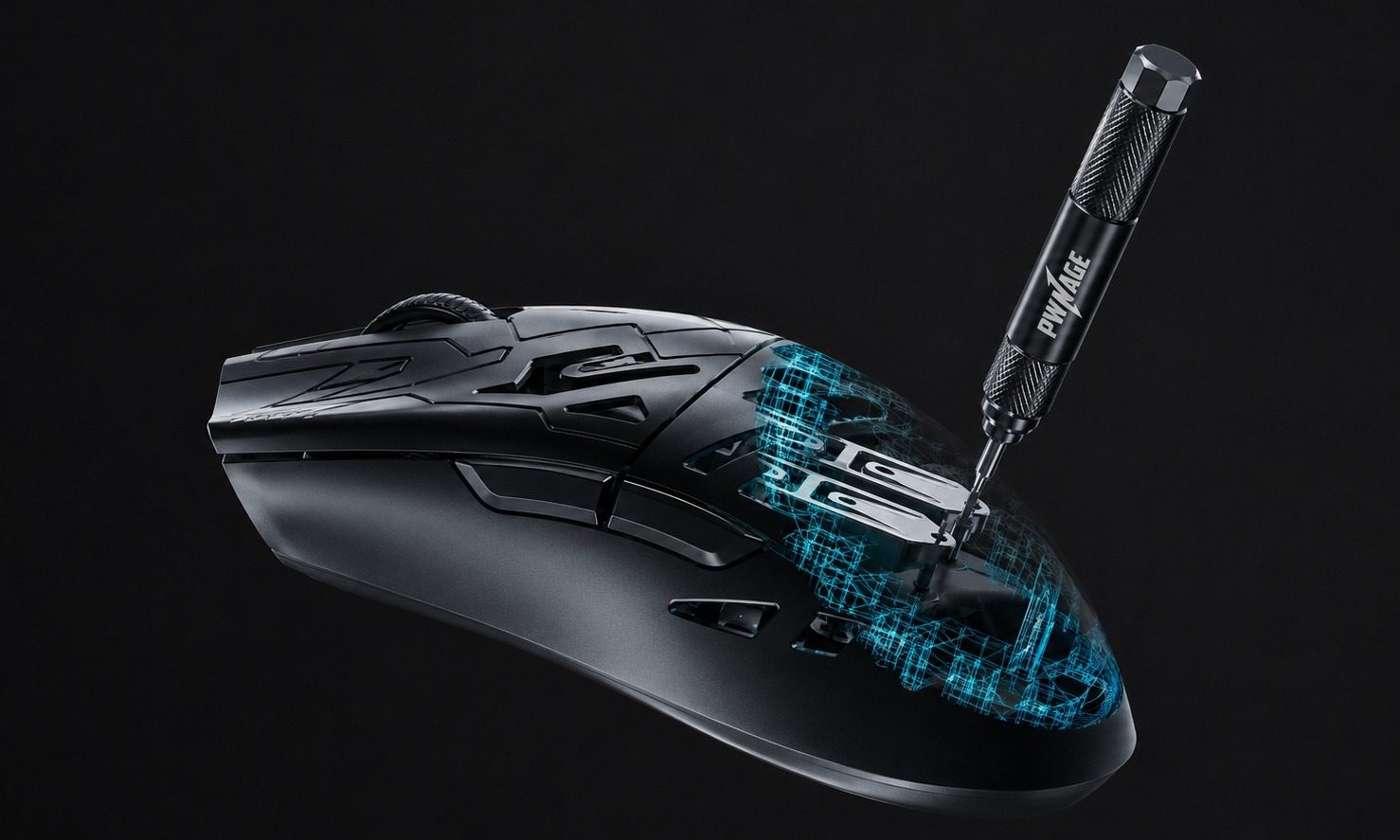
Pwnage’s new gaming mouse lets users adjust click force and travel with a screwdriver
The 49-gram Pwnage Vanta also features a movable sensor and 8,000Hz wireless polling
Computer Hardware, Electronics, Hardware

Gaming mice usually let you adjust sensitivity, polling rate, and button assignments through software. Pwnage’s new Vanta goes a step further by letting you physically change how each primary click feels.

The company describes the Vanta as the world’s first lightweight gaming mouse with mechanically adjustable clicks. Turning a pair of screws changes how much force and movement the left and right buttons require, without replacing the switches or adding more electronics.

Read more