Let’s face it: most of the best graphics cards are already super expensive. But imagine if things got even worse? What a dreadful thought.
Unfortunately, according to the latest reports, all kinds of high-end chips might get pricier, starting with the next generation of products. This would be a result of TSMC reportedly raising the prices of its next-gen process node.
TSMC’s next-gen wafers might cost up to 50% more
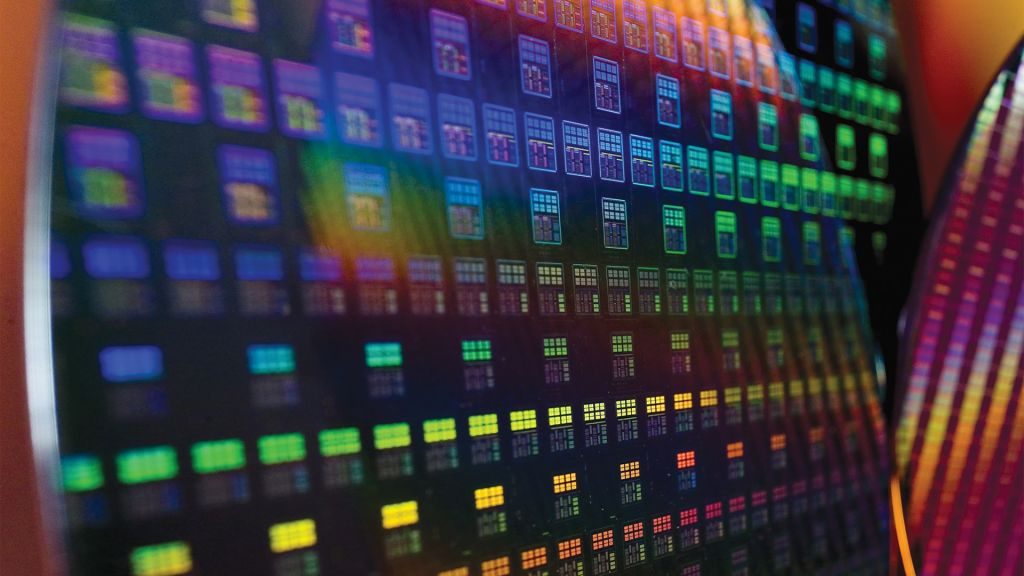
TSMC is the giant behind products made by Nvidia, Apple, AMD, and even Intel, acting as the world’s largest contract chip manufacturer. Its “process nodes,” like N3 or N2, refer to the cutting-edge manufacturing technology used to shrink transistors, making chips faster, more power-efficient, and often more expensive to produce.
Being the largest source of chips in the world, TSMC gets a lot of business and a lot of freedom to set its own prices. This only lends credibility to this worrying report from China Times, shared by Dan Nystedt on X.
The latest Nvidia graphics cards were built on a 5nm process node, but TSMC is already producing a 3nm node, and 2nm is coming soon. These nodes, more advanced with each generation, are now said to go up in price in a major way.
The N3P 3nm node is said to be about 20% more expensive than the previous (5nm) generation. Meanwhile, 2nm is now said to up that price by a whopping 50% — and that’s versus the N3P process and not the 5nm node that’s currently used in consumer products. The final price increase could be massive.
Nystedt reveals that TSMC customers, Qualcomm and MediaTek, already paid significantly more for the N3P node; Qualcomm is said to have paid an extra 16%, and MediaTek: A whopping 24%. This price difference can stem from many factors, and volume discounts are not unusual in this sector. However, even giants like Nvidia might not be able to get much of a price cut out of TSMC this time.
China Times claims that N2 yields have been solid, meaning that there’ll be plenty of them to go around. But as demand is enormous, TSMC doesn’t need to meet any given customer halfway — it can charge as much as it wants to.
This is bad news for gamers.
Who will bear the cost of these price increases?

Chips start life as silicon wafers, which are thin slices of highly purified silicon that are processed with billions of microscopic transistors. These wafers are then cut into individual chips, which become the brains inside CPUs, GPUs, and countless other devices.
In a graphics card or processor, multiple chips may be used together, sometimes in a “chiplet” design where several smaller dies are linked instead of relying on one massive slab of silicon. That approach helps reduce costs, improve yields, and make better use of each wafer, which is especially important as wafer prices climb.
For companies like AMD, Intel, and Nvidia, those higher prices raise difficult choices. They can either absorb the additional expense, pass it on to consumers through higher product prices, or find efficiencies elsewhere, such as reducing die size or relying more on chiplets. A smaller die size doesn’t necessarily mean worse performance, as improvements in manufacturing let engineers pack more transistors into the same area. This often translates into faster speeds and greater efficiency, even if the chip itself takes up less physical space.
So, assuming the report turns out to be true, can we expect to see price increases in the consumer market starting with the next generation of CPUs and GPUs? It’s hard to say. Until we hear an official confirmation from either TSMC or one of its customers, all we can do is speculate. However, I wouldn’t be surprised if we see a price increase once GPUs switch to the 2nm node.
PC users are getting priced out of gaming

The problem here is that there’s just not that much wiggle room left when it comes to components aimed at consumers.
If TSMC does indeed raise the prices of its wafers by 50% in the next generation, that’s a massive jump — but GPUs and CPUs are already expensive. Nvidia’s RTX 5090 starts at $2,000, but its real price is usually closer to $2,500 and above. Then there’s the RTX 5080 that’s priced between $999 and $1,300, and the RTX 5070 Ti, which you’ll often find at its $749 MSRP these days.
That’s a lot of money to pay for just one component. If these price increases become reality, many gamers will have to opt out of buying high-end GPUs and settle for something more mainstream, like the RTX 5060.
The good news is that frame generation tech gives these cheaper GPUs a lot more firepower — but it’s not present in every game, and arguably, you’d want a GPU that can run games without relying on AI. However, this is now the world we live in, and with price hikes such as these, we’ll all have to embrace the likes of DLSS and FSR more than ever before.
I’d imagine that the price increase would be felt at the high-end, with huge price adjustments on the RTX xx90 and the RTX xx80. However, the models lower down the stack might not be spared, and if the RTX xx60 goes from $300 to $400, that’ll still be a major problem.
Right now, it’s too early to panic, and there’s certainly no need to start buying GPUs now in fear of price increases. It’ll be a while before the 2nm process is even used in consumer products. However, when that day comes, let’s hope that manufacturers feel generous and they don’t pass on the entire cost of the price increase onto the customers.